Eight State Parks in One Day

Today I started on another trip to visit Washington State parks, this time in the south central part of the state. My friend Dave picked me up early from home and we first went in search of a restaurant open early for breakfast. We found one in Auburn, the Rainbow Cafe, arriving there at 7 a.m. just as they opened. I splurged on a huge blueberry pancake while Dave had a hearty omelette.

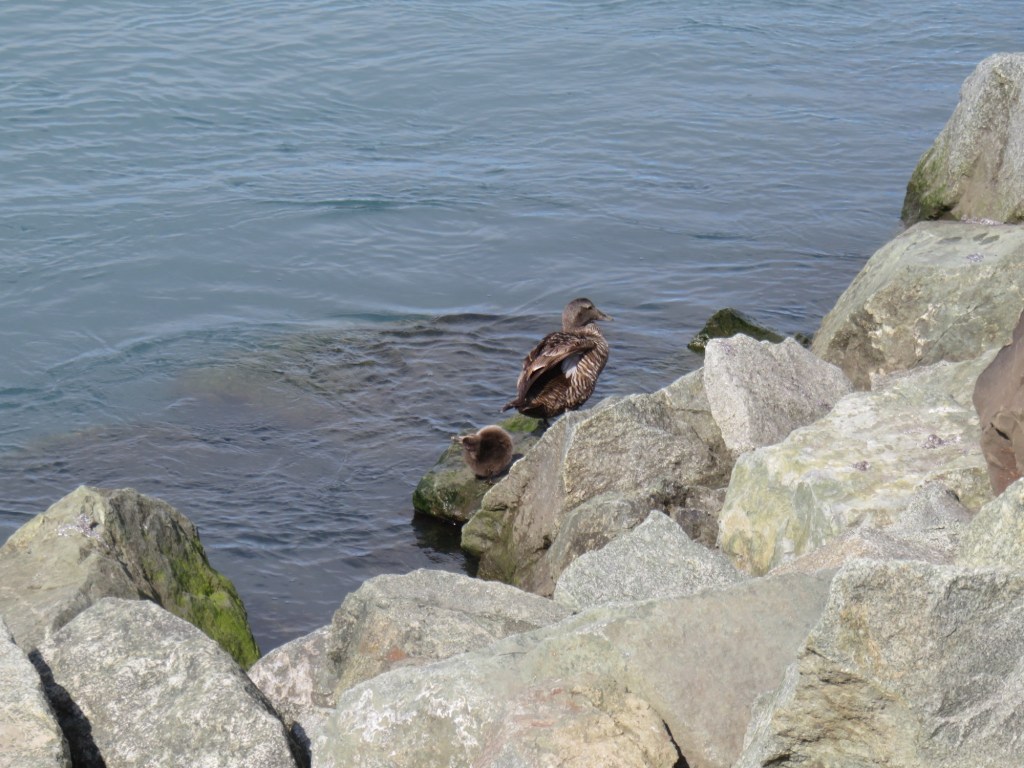
Once breakfast was out of the way, we continued our drive south, hitting I-5 and heading to the first park of the trip, Rainbow Falls State Park, west of Chehalis. The falls were small, but the south fork of the Chehalis River was nice. We had the park almost to ourselves and it was a lovely warm morning. And we did a little birdwatching. There was a trailhead in the park to the Willapa Hills State Park Trail, which was the second “park” of the trip. We walked on the trail for a few feet to say we had been on it too.
Next was a tiny little park called Jackson House Historical Park, the site of a log house built in the 1850s by the first European settlers north of the Columbia River. It was a 30 minute drive away in Chehalis. We were the only visitors at the time, but a park employee was doing lawn maintenance. We couldn’t go inside, but we looked through the windows to see an old spinning wheel and other tools of the day. Then we were on to the third park.

Jackson House

Ike Kinsey State Park, named after a Cowlitz Tribe member who owned the land, was the next on our list and our favorite of the day. It’s located on Mayfield Lake, with a swimming beach and nice fishing pier. There were paddle boarders, kayakers, and fisher people on the glassy lake. It was quite warm by noon. We looked at fish in the lake from the fishing pier and enjoyed the sunshine.

From there, we continued south to Lewis and Clark State Park, then Seaquest. Both were beautifully wooded parks, and we watched a mother Robin feed her chicks in a nest in a bush while sitting at a picnic table at Lewis and Clark. Seaquest is the location of the state’s Mt. St. Helens visitor center, but it was closed for remodeling. But we did get a glimpse of the volcano through the trees.

The last two parks of the day were a little disappointing. Paradise Point is right next to and under the I-5 freeway. We didn’t even get out of the car, although a river ran through the park and it was woodsy. Battle Ground Lake State Park was crowded with people wanting to swim in the little lake after work on this sunny and warm spring day, so we didn’t linger there either. And we were tired from all the driving.

We used Google Maps to find a nearby Best Western Hotel in Battle Ground for the night. After checking in, the manager recommended a restaurant called Pita House nearby for a Middle Eastern dinner. It was very good food, especially since we hadn’t eaten lunch. A good first day of the trip!

Ecuadorian Frogs

Today, Saturday, is my final day in Ecuador. I start heading home very early tomorrow from the Quito airport. The power was out overnight from 12 to 3 a.m. again. It has been a relaxed day with breakfast at 6:30, then some time watching birds and talking with other guests at the breakfast table. Then at 9 a.m., just when the power was due to go out again, we left for a tour of a frog research center called Wikiri. Mercedes had arranged the tour for us and a taxi to take us there. It was a 45 minute ride to a smaller town outside Quito.

Wikiri Frog Park’s welcome sign and a glimpse of our guide on the right edge of the photo

Our guide, Pedro, was a young Ecuadorian who spoke very good English. He took us on a 2-hour tour of the facility which was quite impressive. Most of the terrariums with frogs were housed in nice used shipping containers placed in a circuit around the campus. We learned lots about the native frogs of Ecuador, of which there are somewhere around 400 species, and the work being done to conserve and study them. we even ,earned about the food that’s grown for them, from little flies to cockroaches. And we sampled some baked meal worms, which were not bad at all, and flour made from crickets and spiced with various spices.

When the tour finished, the taxi driver who had brought us was waiting outside to pick us up. We also brought along some crickets that Mercedes had ordered from Wikiri to feed her 7 frogs.

We arrived back at Puembo Birding Garden hotel about 12:45 and the power was still out, even though it should have come on at 12. Mercedes and her daughter warmed up our lunch somehow, which the other guests had eaten a little earlier. It was chicken tamales and salad, with blueberry sherbet for dessert, all very good.

We spent the afternoon relaxing in the dining area, watching the birds and talking with a couple from Houston who were about to start a birding tour on Monday. It was about 75 degrees and sunny, and so much more comfortable than the heat and humidity of the Amazon. The power finally came back on about 2:45 p.m.

Tonight I’ll pack and try to get to sleep early after dinner at the hotel. A taxi is coming to take Nathan and I to the airport by 5 a.m. tomorrow morning for my 7 a.m. flight to Miami and then Dallas, then Seattle. Nathan will stay another night at an airport hotel and then return to Cuenca on Monday.

Andean Condors and Shining Sunbeams

We woke up this morning, Friday, at 5:30 during a power outage. But Mercedes had warned us last night so we were ready. I got dressed by the light of my headlamp. Today was the day for a birding tour of Antisana National Park. Mercedes put out breakfast food for us to serve ourselves, including croissants, granola, yogurt, juice and fresh fruit. The power returned at 6:00 and we ate breakfast outside, near the bird feeders. The weather was clear and the temperature was in the low 50s, very refreshing after the heat and humidity at Yachana. Driver and birding guide Luis, the same one who brought us to Quito yesterday, picked us up at 6:30.

We drove through a few towns on the way to the park, climbing all the time. The park is above the tree line, and is classified as páramo. There’s a dam reservoir named Mica Lake at the highest point you can drive to and that was our ultimate destination. But we stopped many times along the way to find various birds, climbing in altitude all the time.

At the lake, we walked along a path to a point where we overlooked the lake and had a good view of the birds in the water. There were several types of ducks. We could also see a mama and baby llama, several alpacas, many deer and several horses from that point. The lake is the source of some of Quito’s water.

After returning to the car, we drove back down out of the park, stopping to see more birds. Not far outside, we stopped at the Tambo Condor restaurant, famous among birders for its view of Andean Condors as they soar above a cliff on the other side of the valley. We ate a good lunch there among many other birding groups while looking out their large windows at a few condors and three or four species of hummingbirds at the restaurant’s feeders, including the aptly named Shining Sunbeam that’s mostly orange and has rainbow colors on its back.

It was a good day not only for birds and sightseeing, but also for my Spanish practice because Luis understood some English but didn’t really speak any, so I talked with him only in Spanish. The drive back to Puembo Birding Garden took about 90 minutes and we arrived about 3:30. We thanked and said goodbye to Luis. I’m still tallying up all the birds we saw, but it was a lot.

From the Amazon to the Andes

Thursday was our day to travel from Yachana Lodge to Quito. The power had been out for 3 hours overnight plus there was a thunderstorm with rain overhead sometime in the very early morning. I didn’t get quite enough sleep. But we packed up and brought our backpacks to the dining area before our 7 a.m. breakfast, and spotted a few birds from the deck with Jefferson and Guillermo again. Breakfast was pancakes and fried eggs, toast, pineapple, watermelon and tamarindo juice, all very good.

At 8 a.m. we got into the Yachana truck for the last time and drove about 40 minutes to a river bridge that had collapsed a couple of months ago. It appeared like the steel had just given up and collapsed. The day’s driver, Luis, was waiting on the other side of the river. Nathan, Robert and I got into a canoe on our side and then Robert and another man used poles to push the boat to the other side. Voila, problem solved the Ecuadorian way! We said goodbye to Robert and loaded our backpacks into Luis’ Kia.

Luis is a birding guide who had been arranged by Mercedes, the owner of our Quito hotel. We set out on the road to Quito, stopping a few times along the way to look for birds. We also stopped for lunch at a restaurant in the city of Baeza. I had trout a la plancha and some fried plantains (patacones) for lunch. At the highest point of the drive, we saw the volcano Antisana which was snow-covered and beautiful.

Antisana volcano

We arrived at our hotel at 4:30. It’s in a wealthy-looking neighborhood of Quito and is called Puembo Birding Garden. It’s popular among birders arriving in Quito.

Our dinner at the hotel is scheduled for 7 p.m. and it will be interesting to see if it measures up to the good food we’ve had so far. I’ll be too tired afterwards to write more and we’ll be losing power later, so I’m signing off on this post early.

A Day of Local Culture

Each night before going to bed here at Yachana, I’ve been purposefully taking a cold shower. It’s the most refreshing part of the day and allows me to get going much faster in the morning. I woke up before the 6 a.m. sunrise again this morning (Wednesday), quickly got dressed and walked up to the dining and river overlook area to see birds. Jefferson and Guillermo were already there and invited me out on a short bird walk before breakfast. Actually it was more of a ride in the Yachana truck to a birding area a ways down the gravel road. Again we saw quite a few birds and some new ones for me. More than 400 species of birds have been seen in the Yachana area. Amazing!

Just returned from a bird walk

We returned for a 7:30 breakfast, with Nathan passing time in the dining area by talking to Hilary, the American volunteer. At the end of breakfast, Robert described the day’s three activities: visiting a local farmer, seeing the health clinic being built by the Yachana Foundation, and then visiting a local Kichwa healer in the afternoon.

The Yachana truck took Robert, Nathan and I at about 9 a.m. to the farm, where the farmer, Fabian, told us about the native stingless bees he has that pollinate and make special medicinal honey. He also showed and talked about the cacao and other fruit he grows and we were able to sample them all. Native Ecuadorian oranges have green peels, which is interesting.

About 10:30 we were driven to the Yachana health clinic that is still being built, and Douglas McMeekin was there to explain the funding, staff and volunteers they’re looking for to get it running. We also saw the Foundation’s permaculture projects. Douglas has invested 30 years of his life to this endeavor and it’s impressive.

We returned to the lodge for a lunch of tilapia fish, a staple of their diet because it’s easy to raise in ponds. Before lunch was served Nathan helped Robert with some audio recording equipment that will be used to record Yachana’s bird songs. Then about 3:30 Robert, Hilary, Katty (an Ecuadorian staff member), Nathan and I were driven to the Napo River. There, a motorized boat awaited to take us to the Kichwa village that was about 10 minutes away down the river. So we climbed aboard.

In the village Jose, the 84-year-old healer, performed a cleansing ceremony for each of us, meant to restore a healthy balance. The ceremony involved smoke from a traditional Kichwa cigar and a small bunch of leaves brushed over us. Robert provided a description of the background before Jose started.

A few seconds of Nathan’s cleansing ceremony

After the cleansing, we went up into the home of her and his wife, where Rosa, his wife, showed us how boiled yuca root was pounded into chicha, a fermented liquid that’s a staple of the Kichwa diet. As the last demonstration in the village, we were shown how to use a blow gun and spear, important tools the Kichwa use still to kill local wild animals for food.

Then we returned in the motorized boat, stopping to drift down the river a bit while watching a beautiful sunset at 6 p.m. Dinner was at 7:30 and was another delicious meal with tiramisu as dessert.

Sunset on the Napo River

Although it was very hot and humid again today, it was easier to take because our activities were less strenuous. But it reached 94 degrees again. We’re just more used to sweating constantly.

It’s 9 p.m. now and the power just went out. I probably won’t be able to publish this until Thursday morning.

Thursday update: the power came back on at midnight but the internet never became available before we left Yachana Thursday morning, so that’s why this post was delayed.