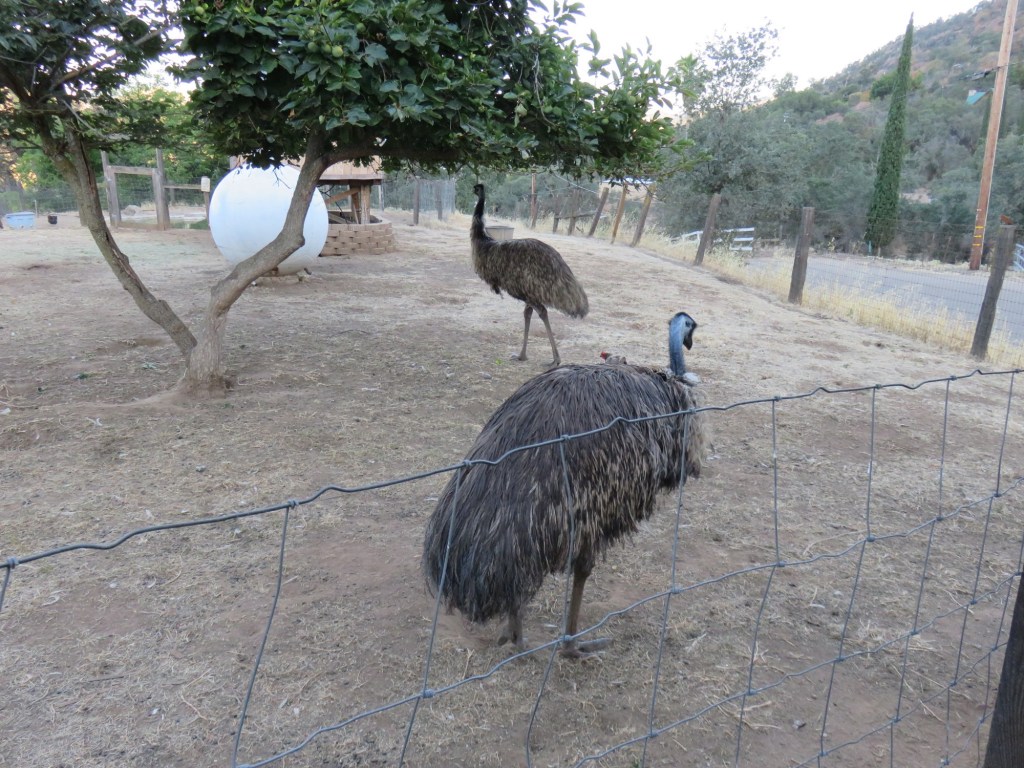
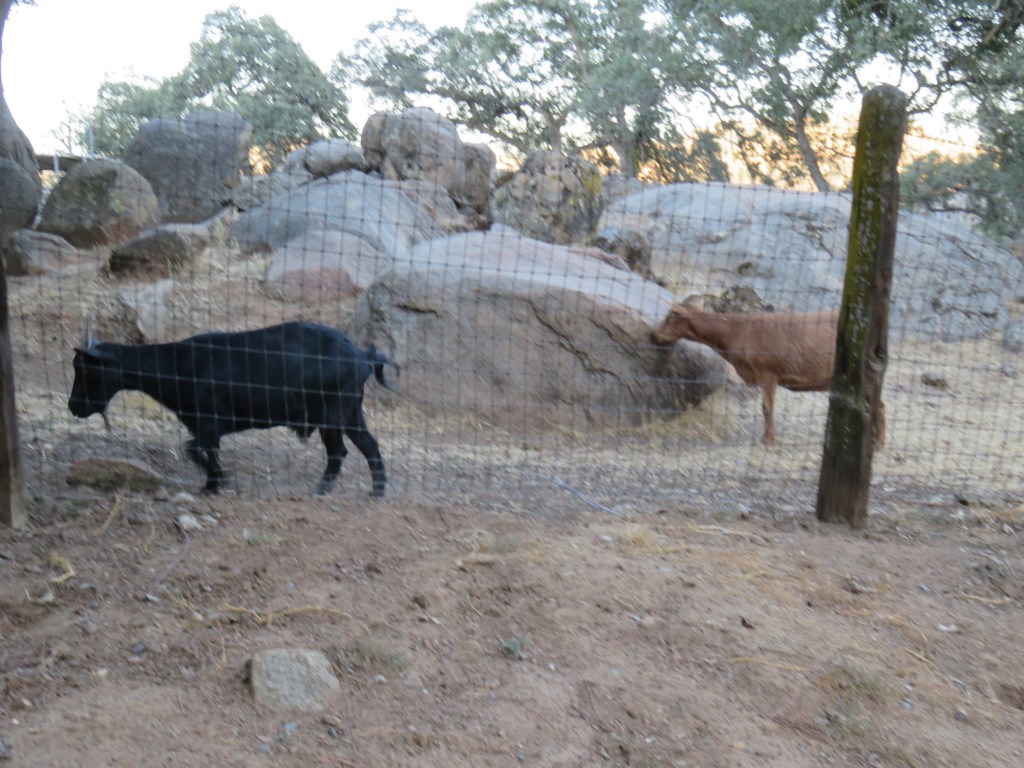
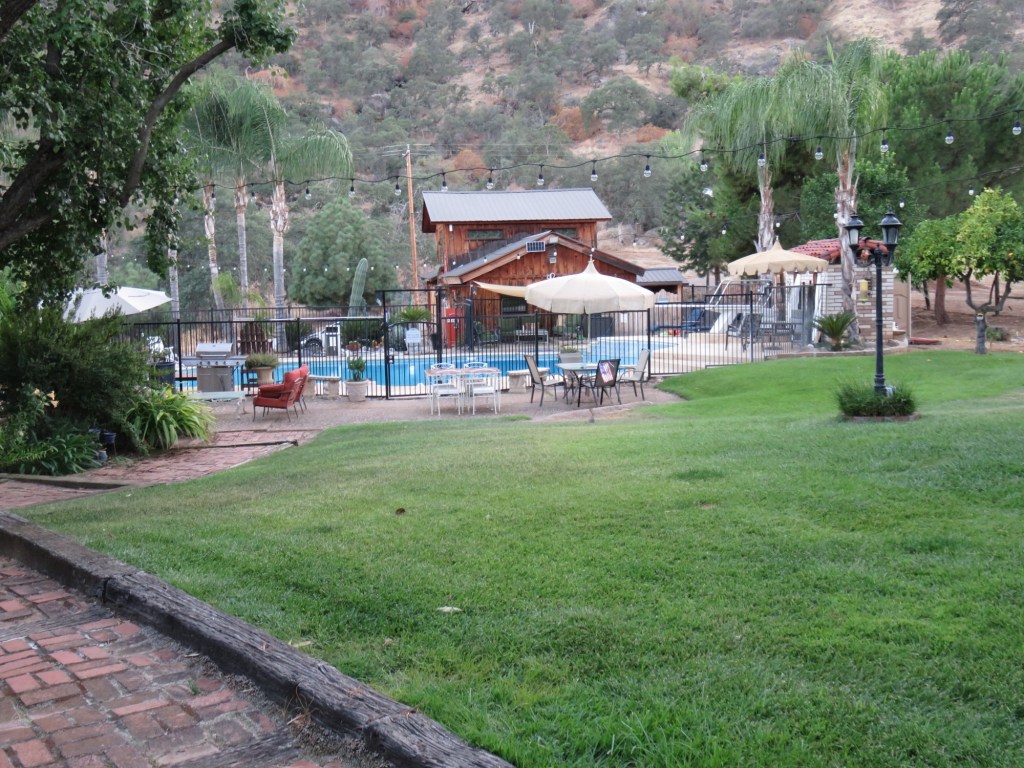
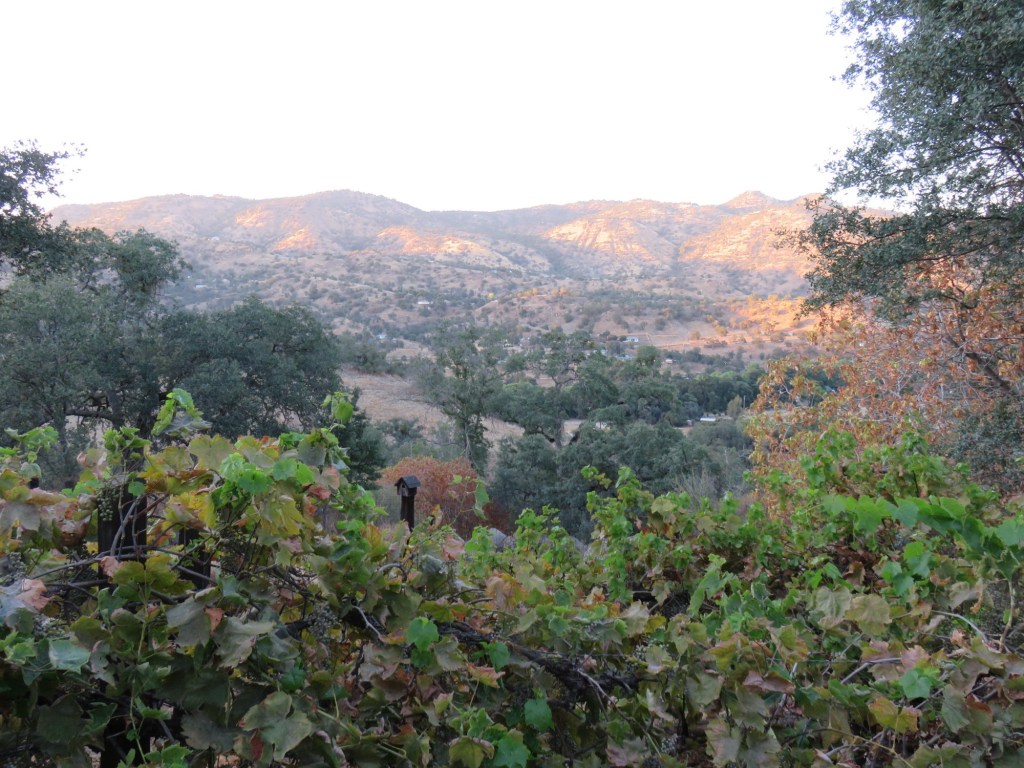
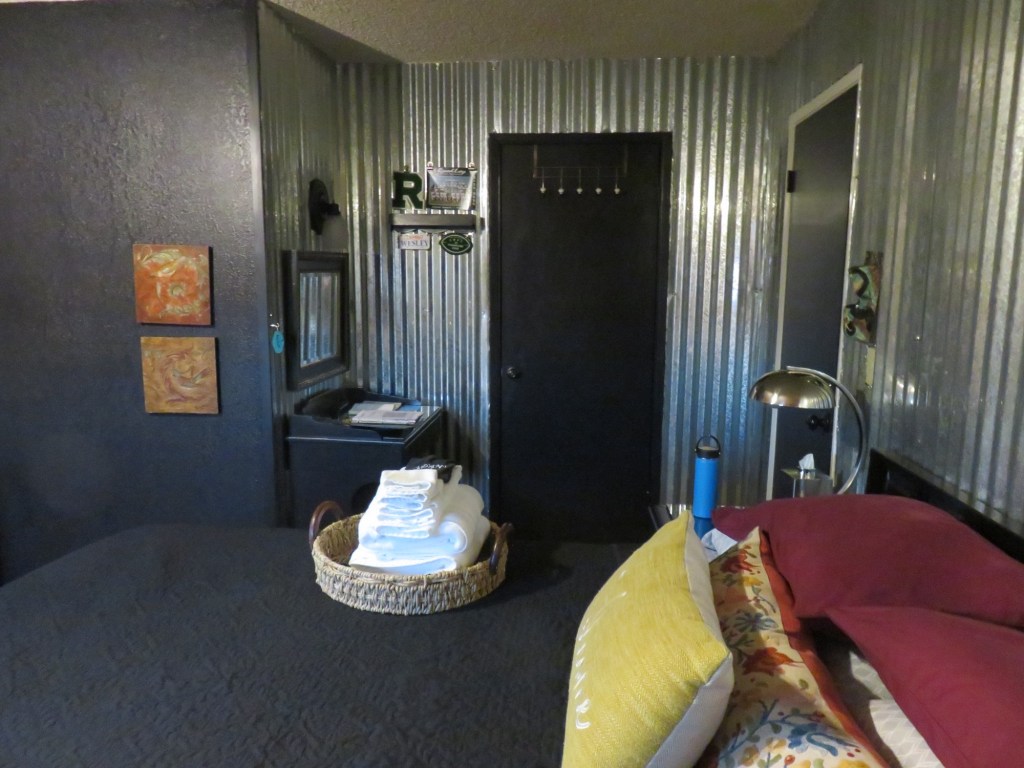
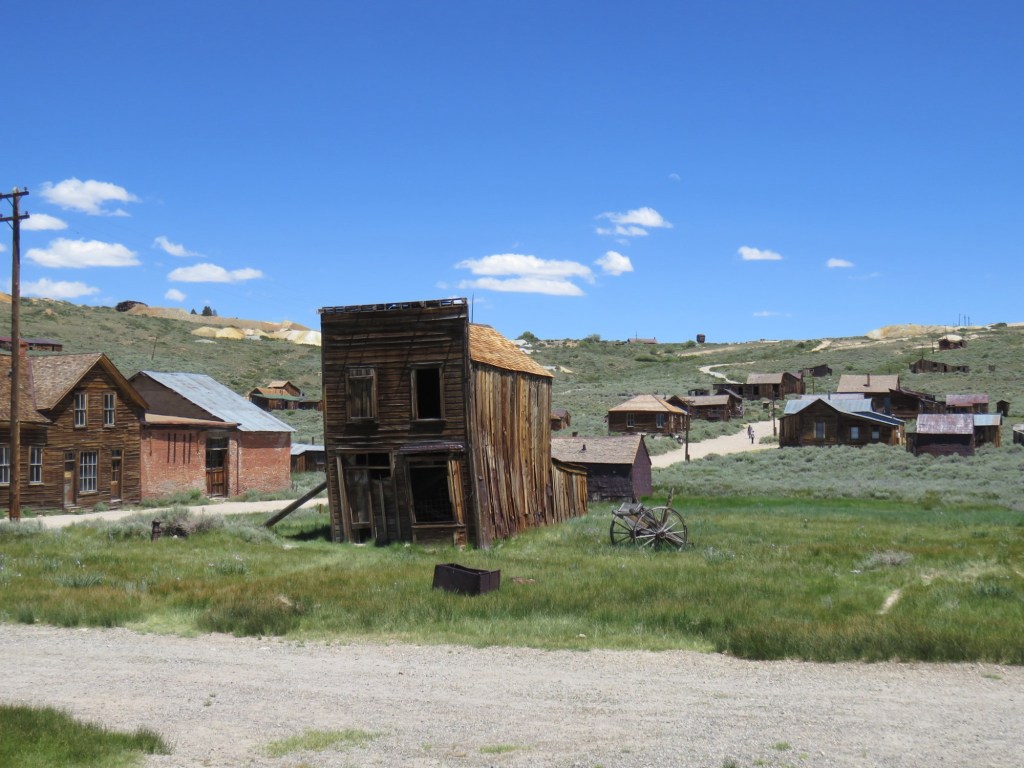
Waking up early once again, this time at the bed and breakfast in Yokuts Valley, Stephanie and I walked outside in the yard to find birds in the early sunshine. We were happy to see, among others, Oak Titmouse and Hooded Oriole among the bird species there. Then our host, Mike, prepared a good breakfast of scrambled eggs and pancakes with homemade jams, while talking with us about Sequoia National Park and other topics. Soon after, we packed up and took leave of the accommodations, on our way to the park on this last day of our trip.
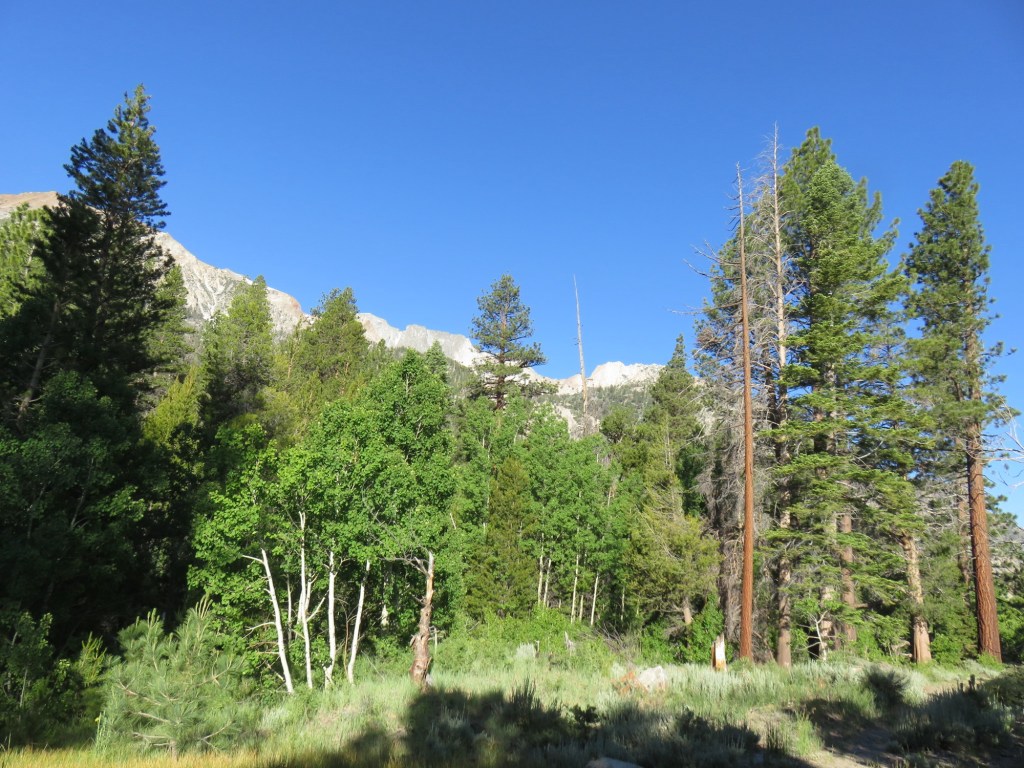
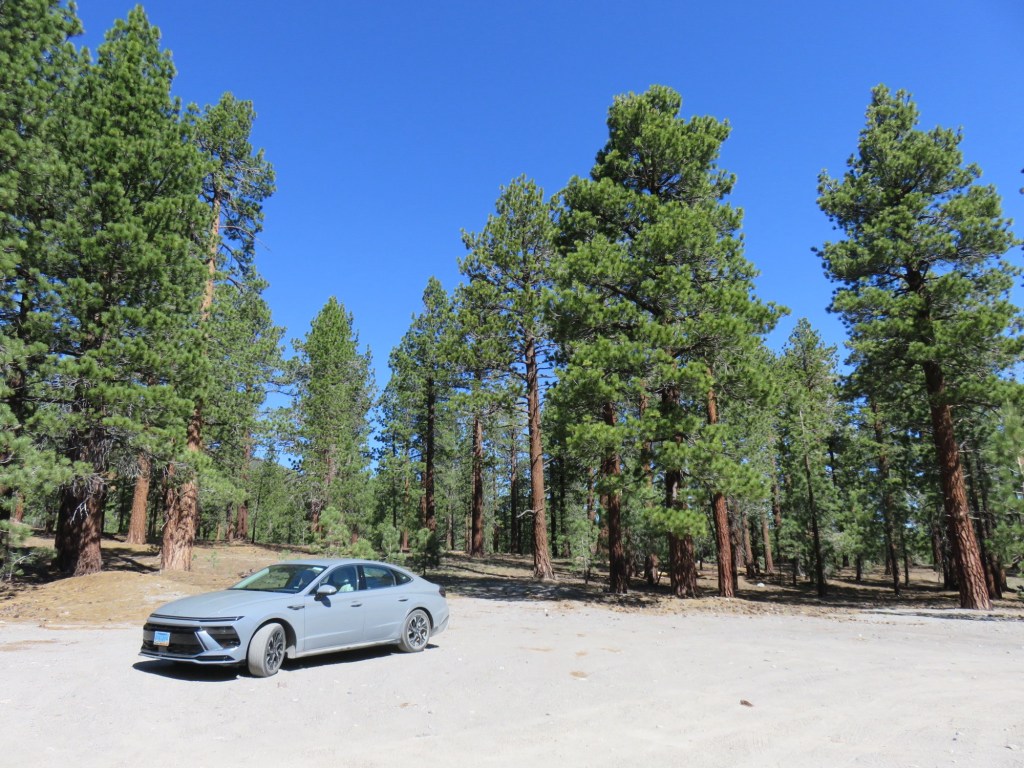
Arriving in Sequoia National Park, which is at a pretty high elevation, we were distressed to see that large swathes of trees had burned. Interpretive signage that we saw later in the park noted there were several large fires at different parts of the park between 2015 and 2023.
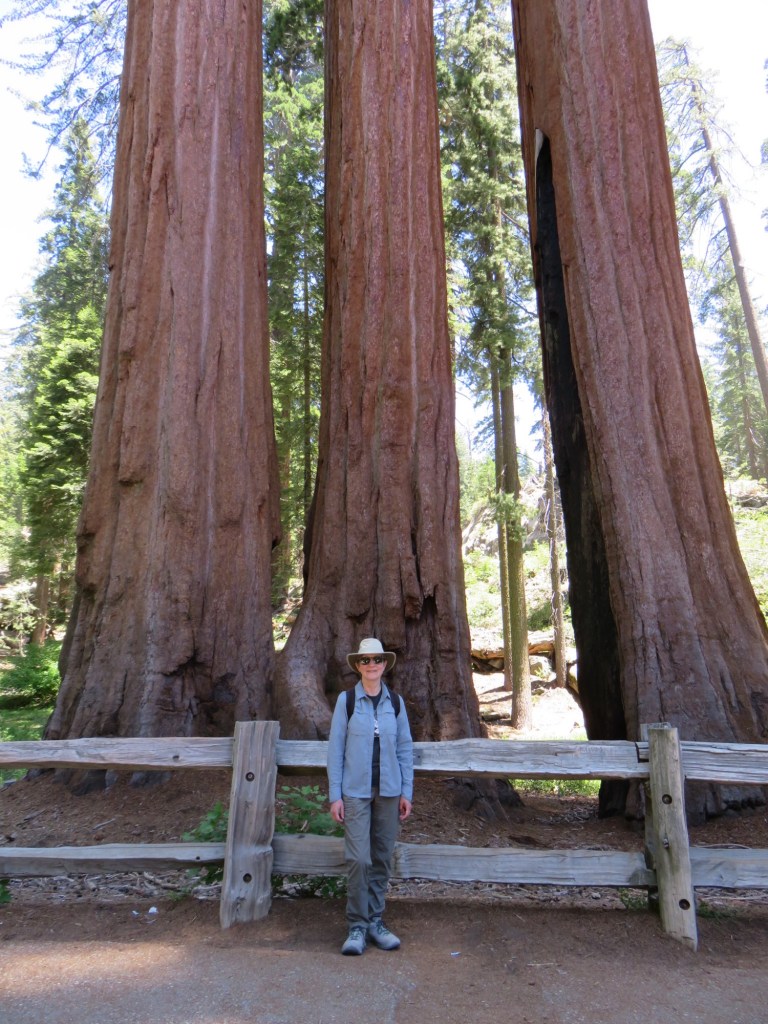
We first went to the Lodgepole Visitor Center to get some information on parking and crowded times. Then we drove to see the General Sherman Tree, a huge sequoia that is the largest tree by volume in the world. (The General Grant Tree that we had seen in Kings Canyon Park yesterday is the third largest.) We walked down from the parking lot on a half-mile paved path downhill to view the tree. After seeing it and taking photos, we walked a little farther down to take a free shuttle bus back uphill to the parking lot, since neither Stephanie nor I were feeling particularly energetic for the somewhat strenuous uphill hike. The shuttle bus was great.
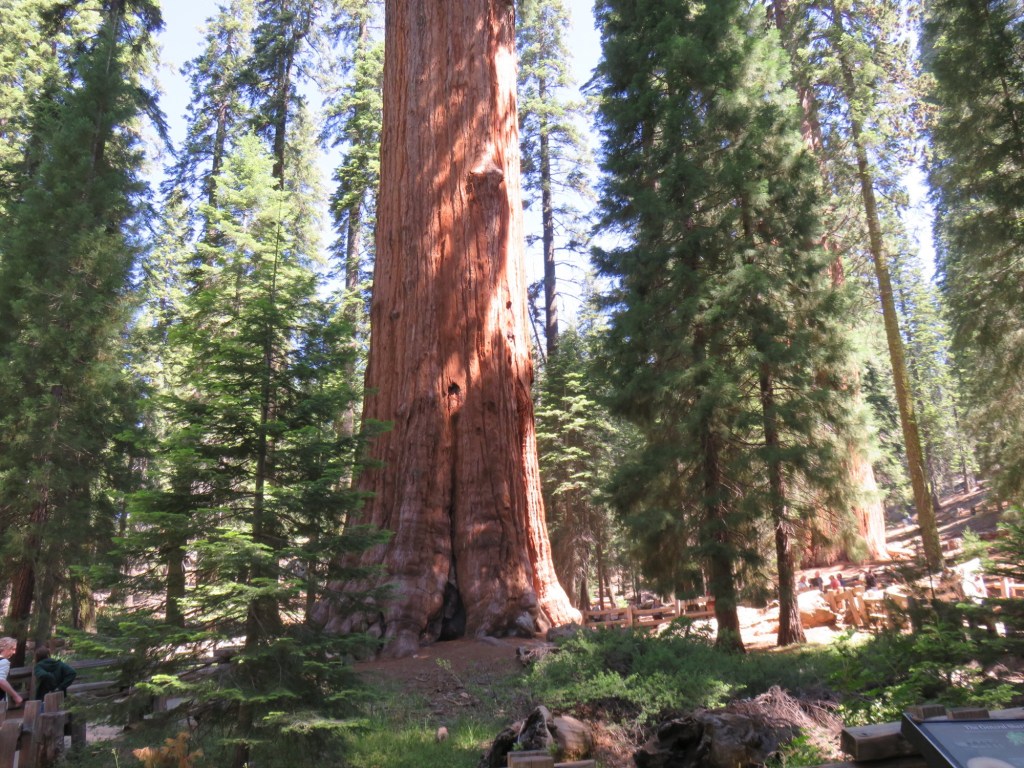
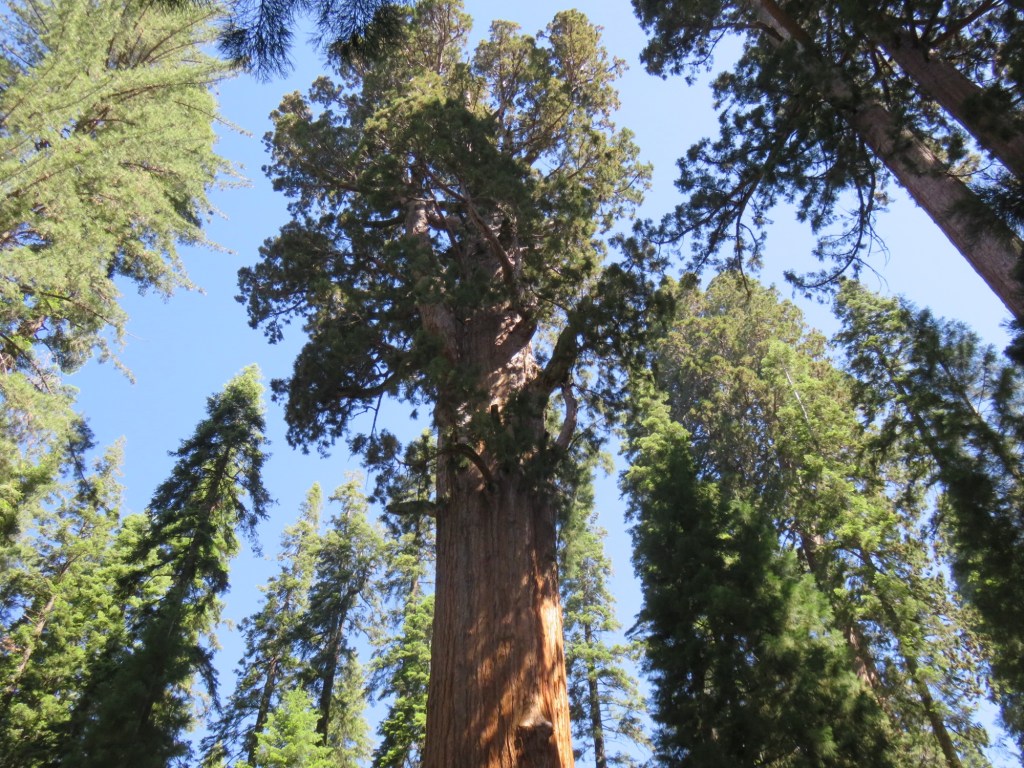
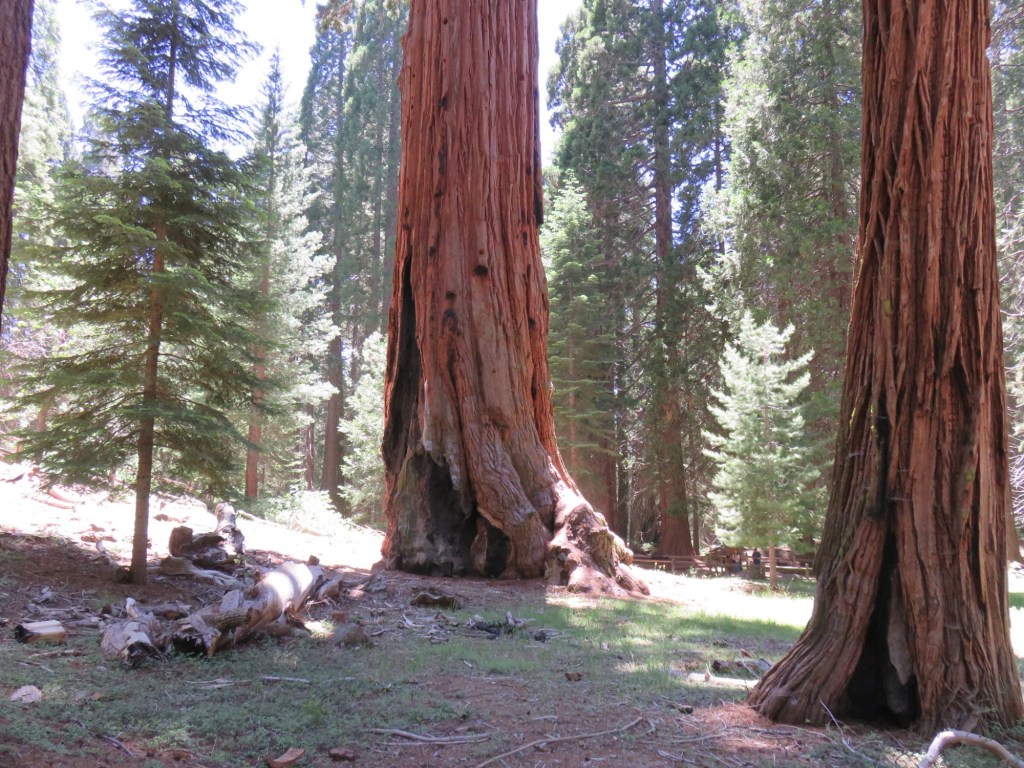
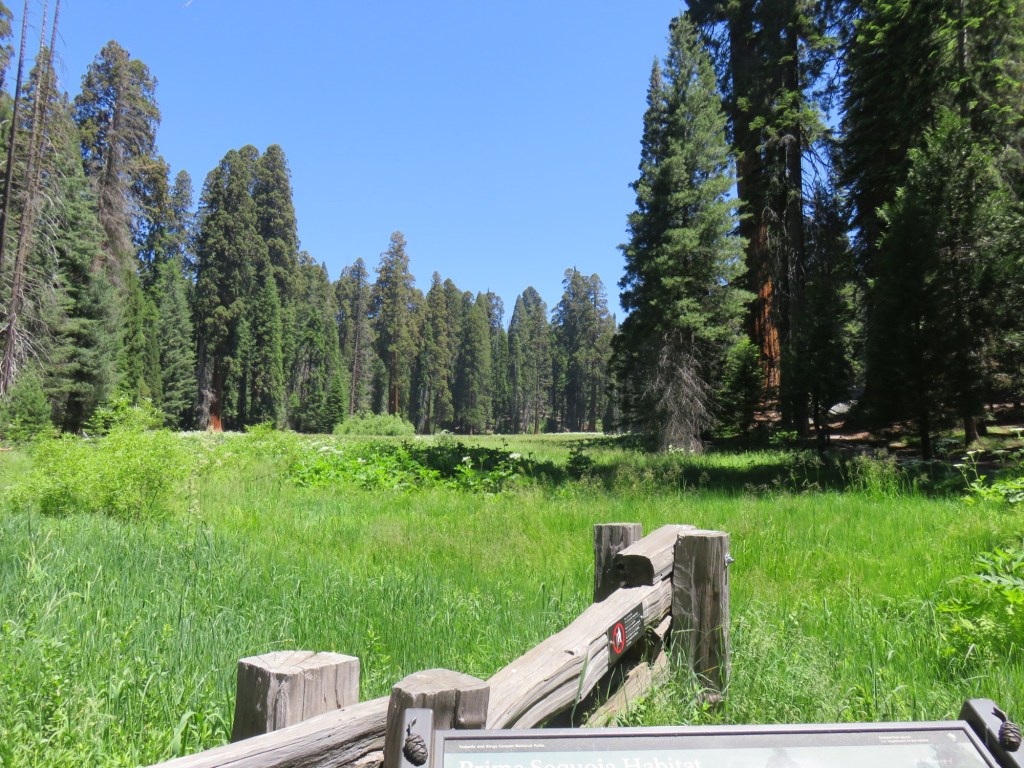
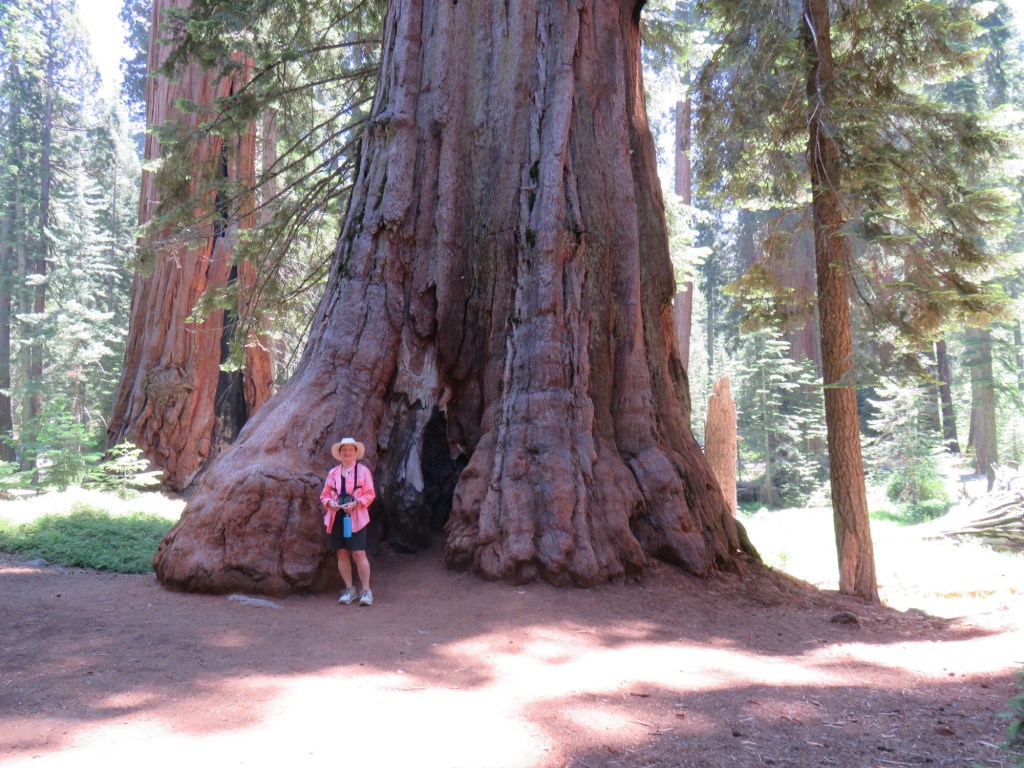
Next we wanted to view the Giant Forest Museum and walk the Big Trees loop trail, which circled around a pretty meadow and through many more sequoias. We slowly walked the path, identifying birds along the way and feeling awed at the huge trees.
It was after 1 p.m. by that time and we were really hungry. We stopped to get a snack at Lodgepole Visitor Center, then left the park and drove over an hour to the agricultural city of Sanger, which is on the way to Fresno Airport. In Sanger we found a Mexican restaurant in the old downtown and ate lunch while watching a World Cup match in Spanish on the restaurant TV. Stephanie had heard recommendations of Mexican ice cream too, so we asked the young employee lady in the restaurant to point us to a Mexican ice cream store nearby and we immediately went to get dessert there, enjoying unique popsicles, called paletas, in the store La Real Michoacana. Outside, it was nearly 100 degrees at 4 p.m.
From Sanger, we drove to the Fresno Airport, returned our rental car, and found our way to the gate for our flight. Fresno is a relatively small airport and since we both are enrolled in TSA Precheck, it was easy and fast to get through security and to the gate. We were a couple hours early for our evening flight, but it was nice to relax at the quiet gate area. Our flight was on time, about 2 hours long, and uneventful. An Uber brought us back to Stephanie’s in a warm Seattle summer evening, and I drove home from there, reaching my house just before midnight. My Sonny kitty was happy to see me.