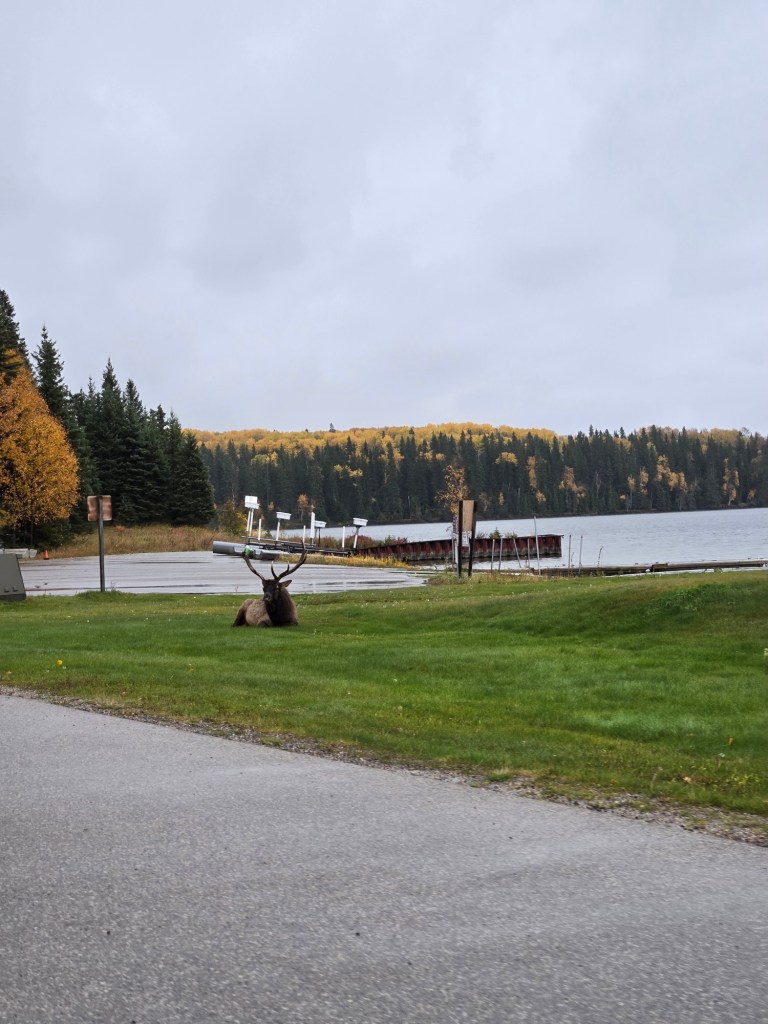
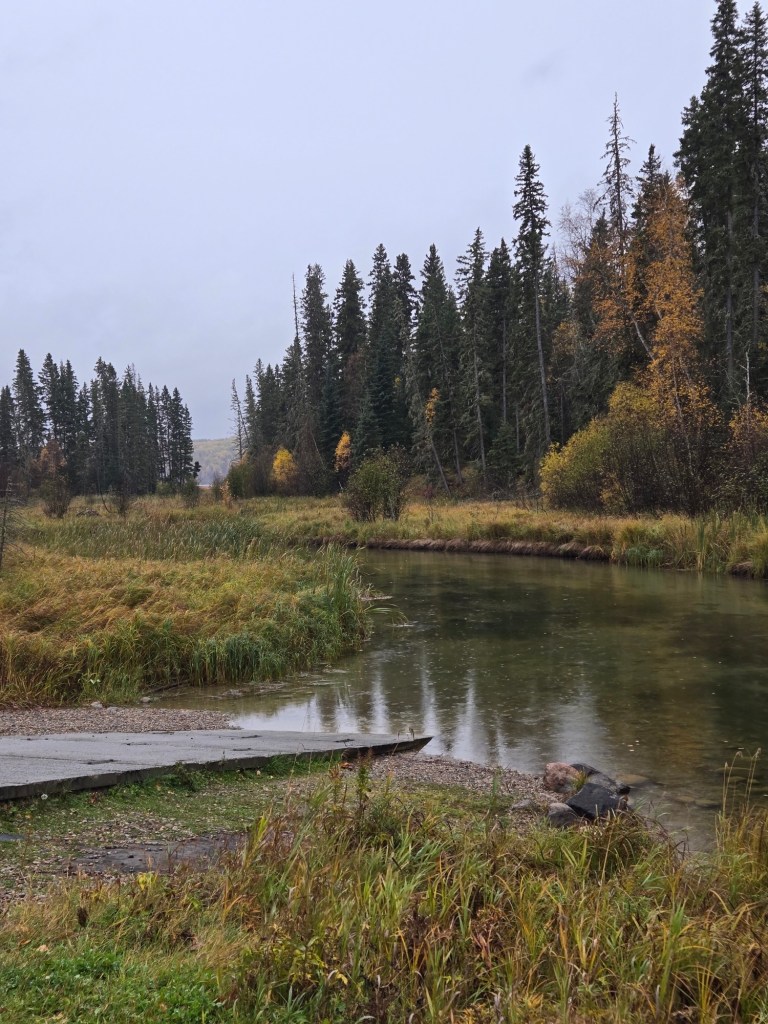
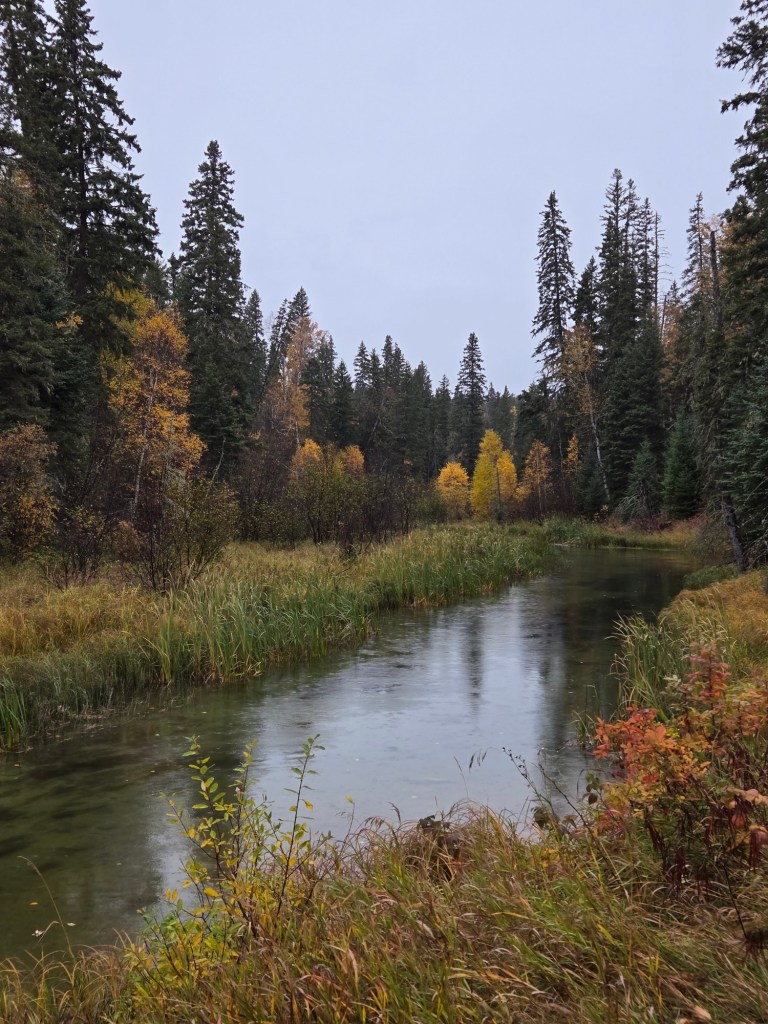
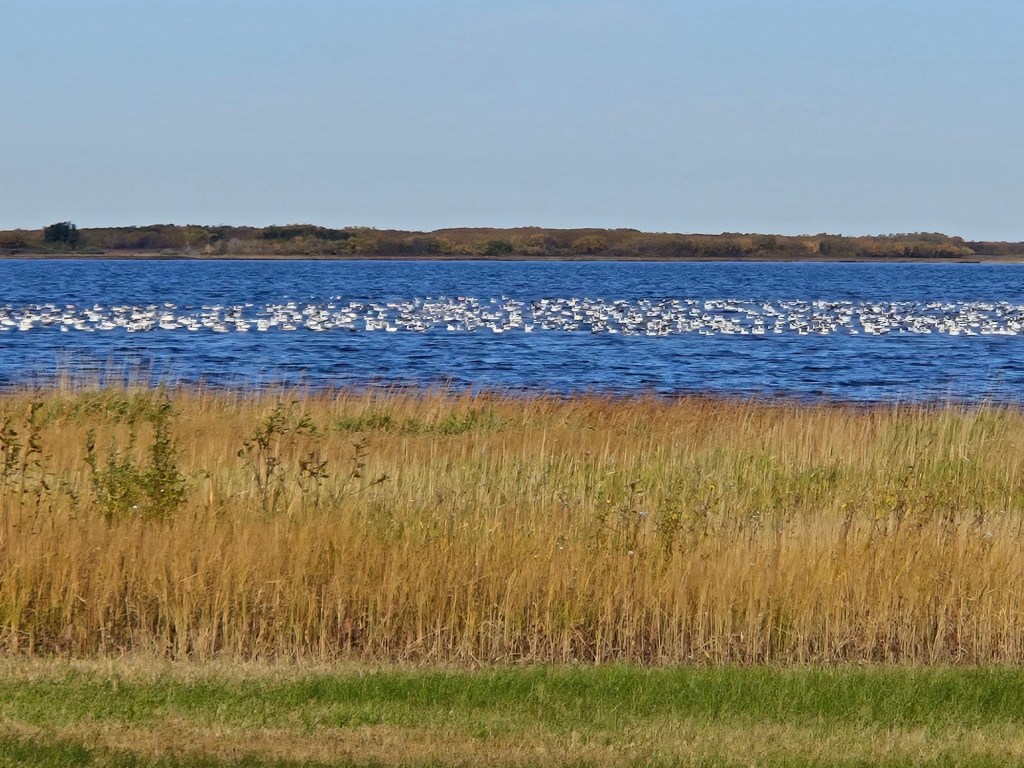
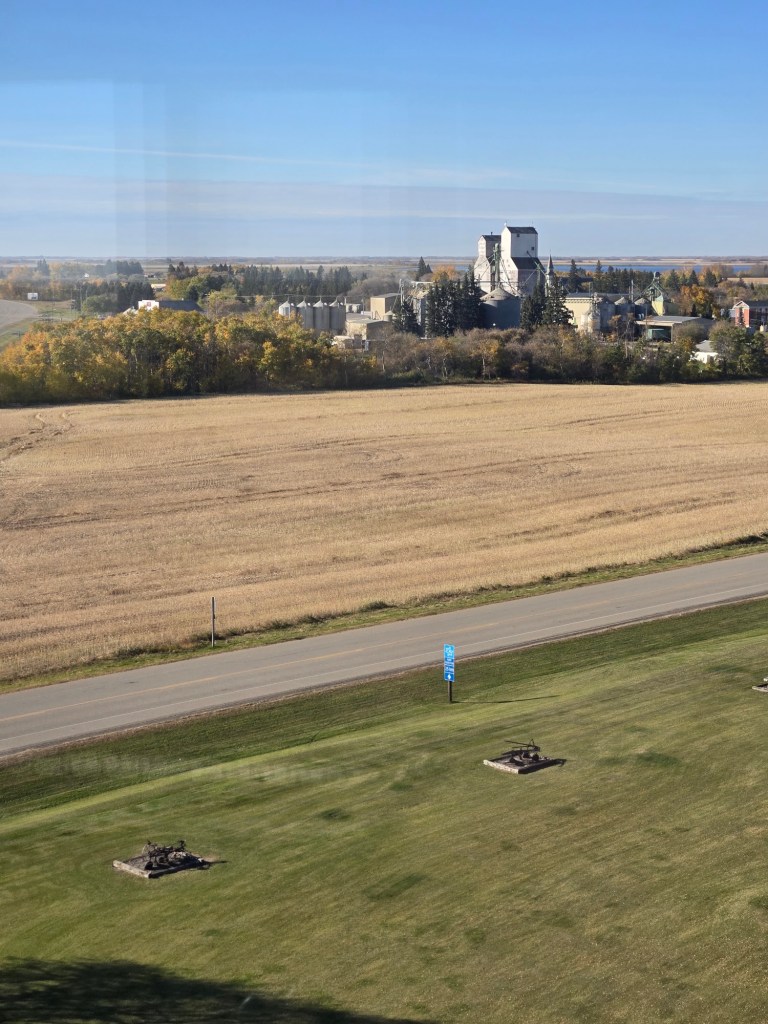
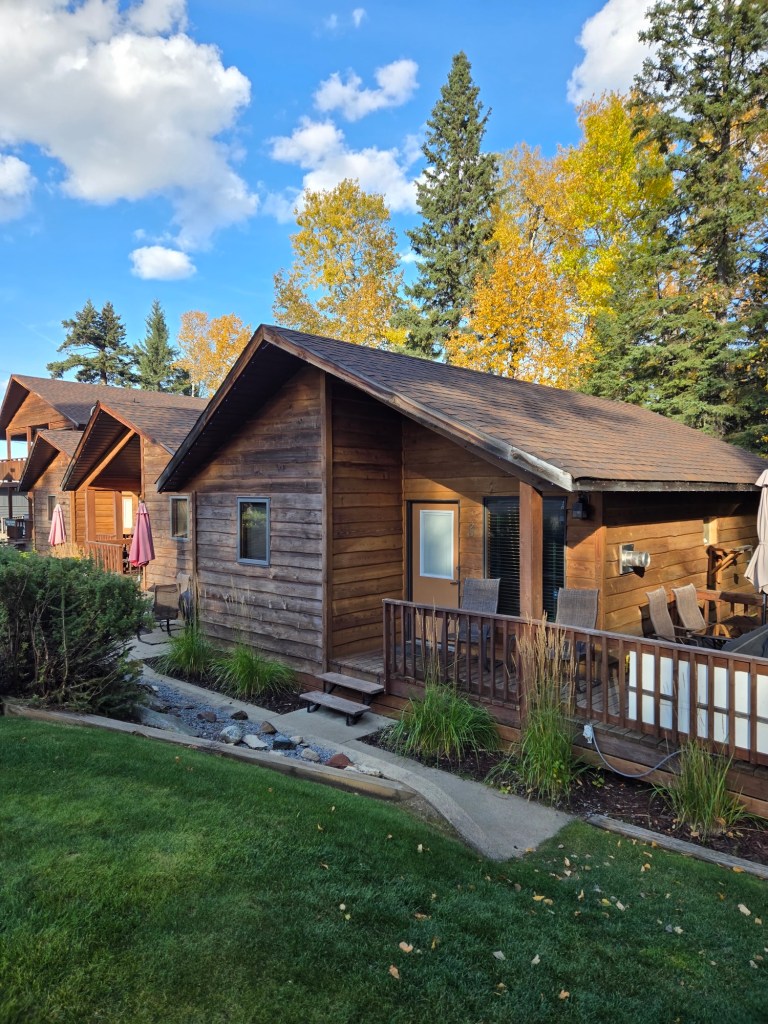
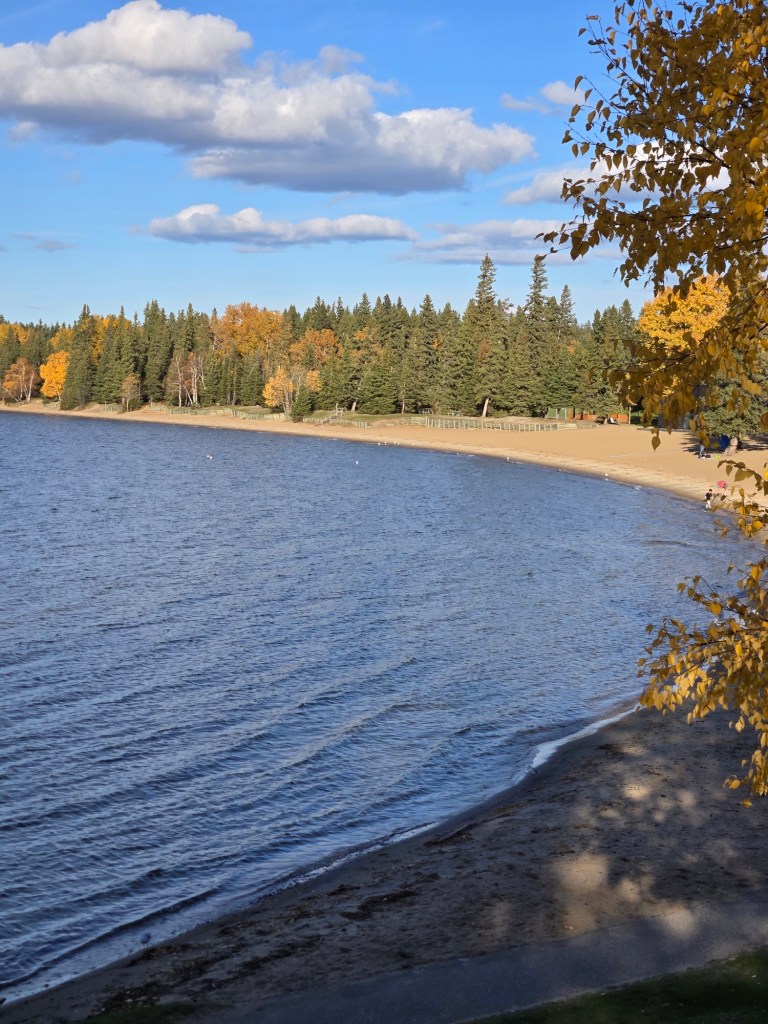
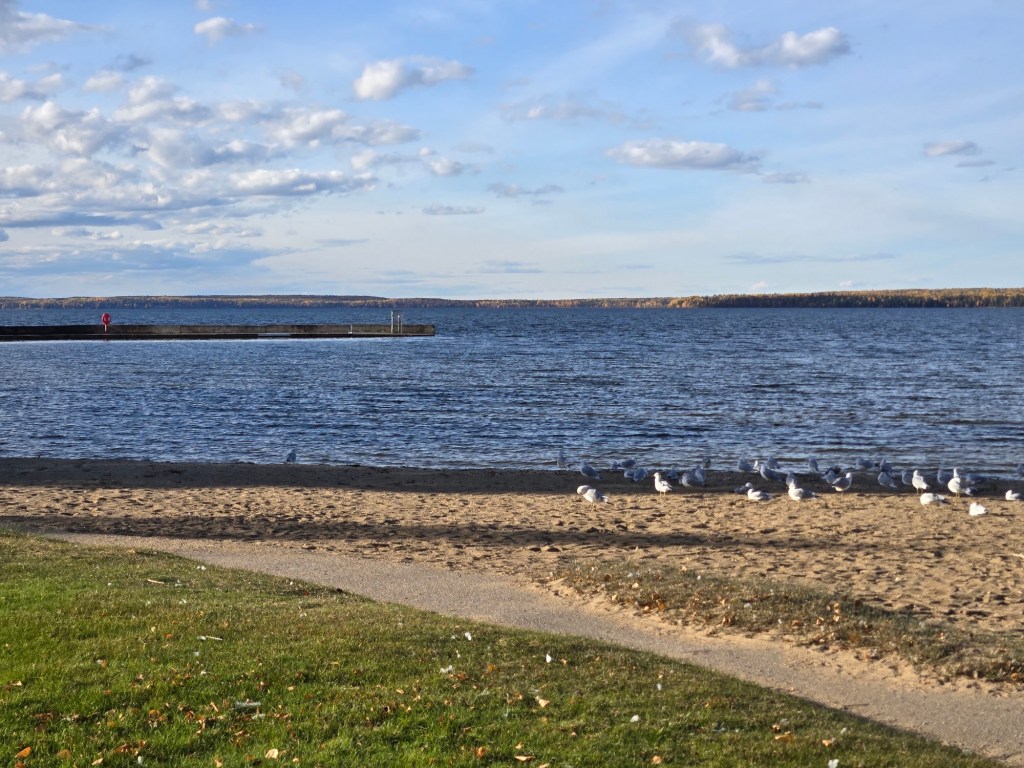
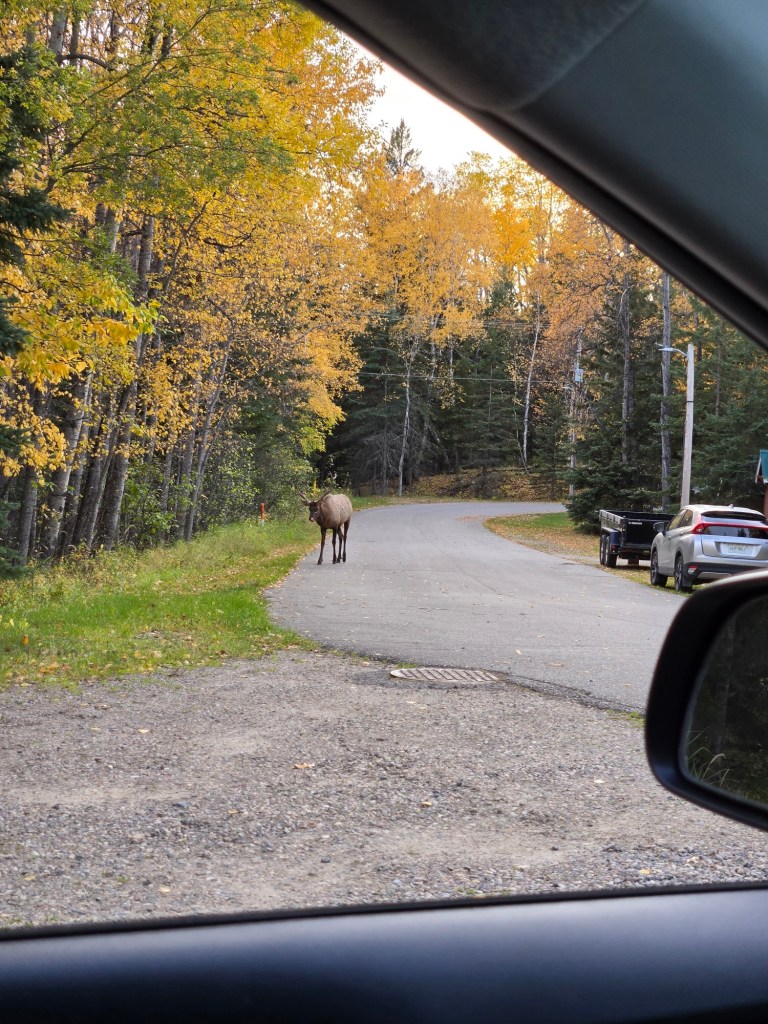
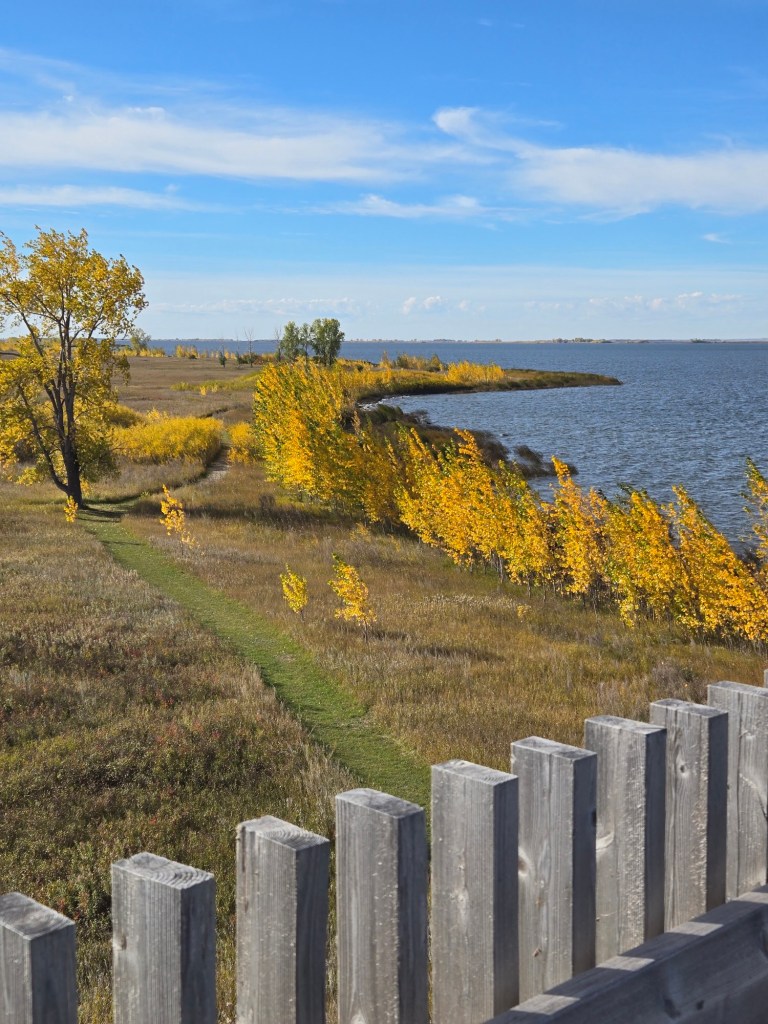
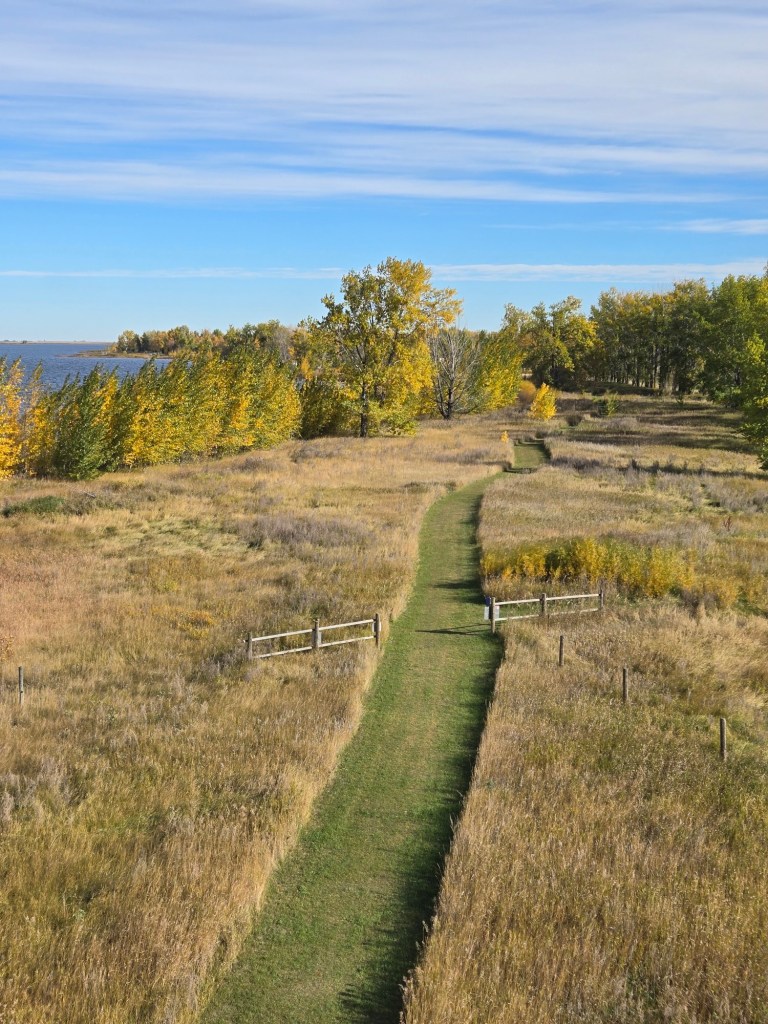
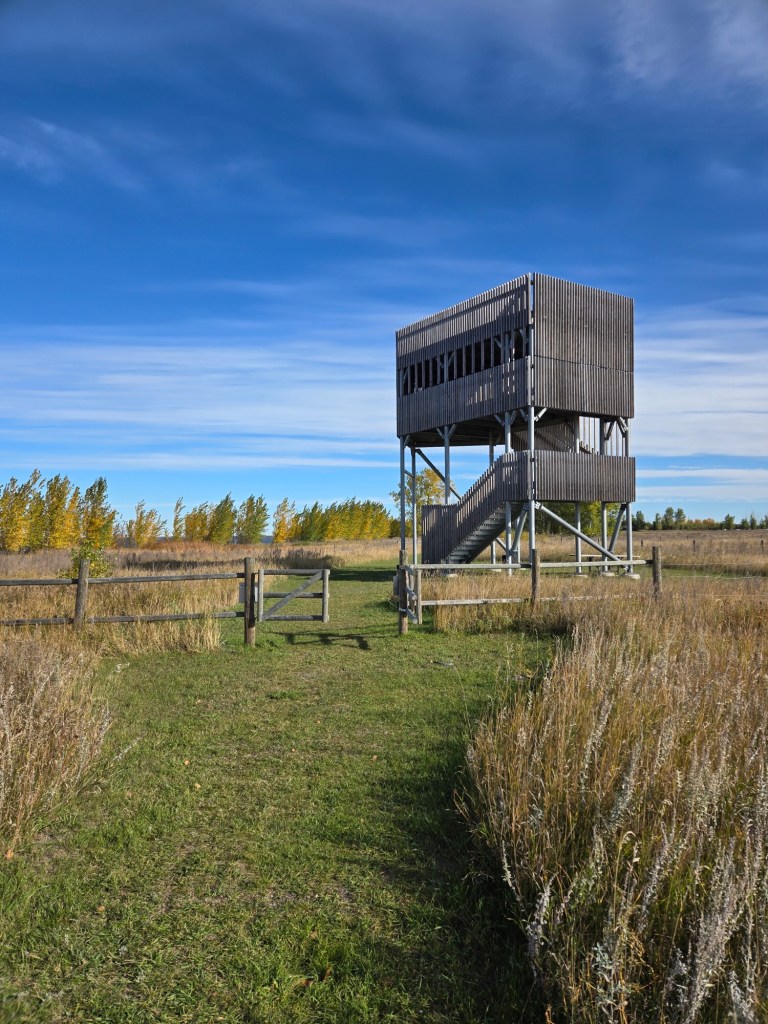
Today was the last day of our trip around the Olympic Peninsula. But before arriving at home, we had two more state parks to visit. So after breakfast at the hotel, we took off eastward, away from the Pacific beaches. Our first stop was Lake Sylvia State Park next to the town of Montesano. The lake was formed many years ago when loggers dammed Sylvia Creek to form a pond for logs and to produce power. When we visited today, the lake appeared to be quite low, but was evidently stocked with fish because we saw 9 or 10 people fishing from the shore and catching something.
Not much water in Lake Sylvia The swimming area was mostly waterlessSome Canada Geese guarding the picnic tables
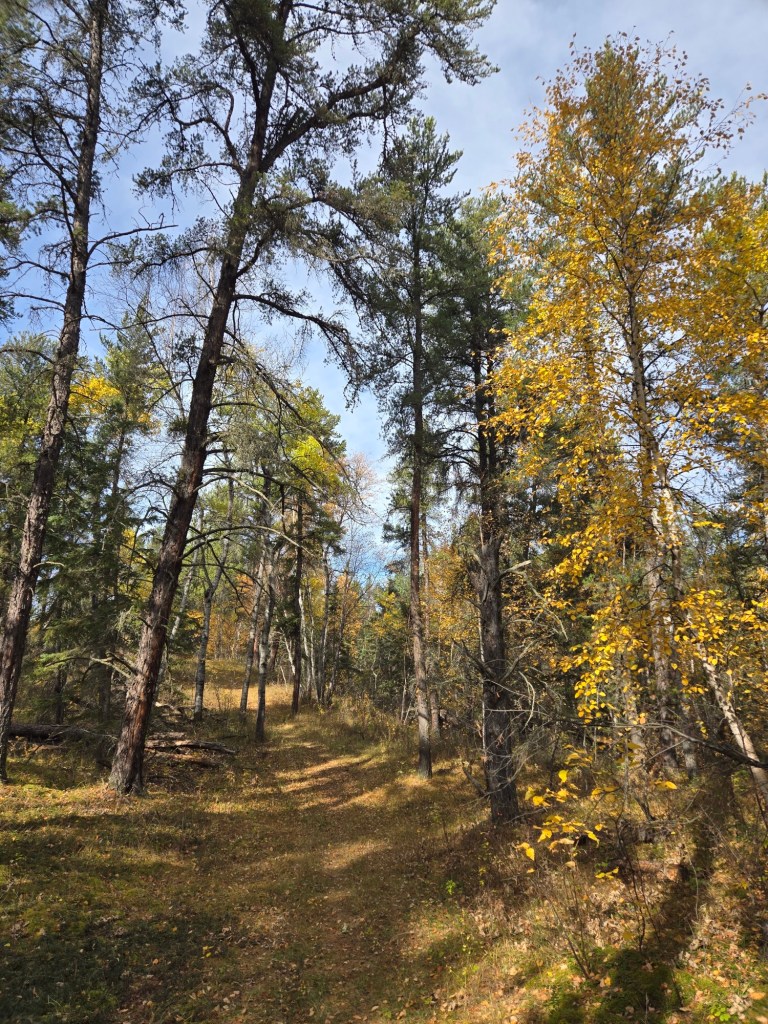
We spent just a few minutes at Lake Sylvia and then drove further east to Schafer State Park that’s located on the Satsop River. We liked this park better and were greeted with a woodpecker loudly drumming on a nearby dead tree. We located it way at the top of the snag and saw it was a male Hairy Woodpecker, probably drumming to attract a mate. We walked along the River trail and into the mostly empty camping area. The Satsop River was quite beautiful and peaceful.
Satsop River A large picnic shelter at Schafer State Park
That was our last park of the trip. From there, we drove to the freeway heading east to Olympia and north to the Seattle area. Happily, we avoided rush hour traffic because it was still late morning. By lunchtime, we were back in Dave’s hometown and enjoying a final restaurant meal. Then I retrieved my car from his garage, we said goodbye until next time, and I returned home.
After writing yesterday’s blog entry, we decided to go to Rialto Beach in the afternoon before going to dinner. It’s not far from La Push and Forks. And a spectacular beach it was! The tide and the surf were high, which brought the ocean close. But even better were the flattened rocks under our feet, piled up driftwood thrown up on the shore by storms and tide, and the exposed trees on the shore. The rocks had been worn flat and smooth by the power of the surf and formed a thick, loose layer under our feet. They would have made great skipping rocks if the water had been calm. There were many, many driftwood logs all along the shore, inviting you to sit or explore them. The trees were aged and blown bare at the bottom, but dark green and rugged on top. It was all enchanting and, after walking a ways on the beach, we sat on a log to watch the surf, sky and birds.
Rialto Beach
Then today, we hit the road after a leisurely breakfast in Forks. Just a few miles south was Bogachiel State Park, a forested and mossy green park dedicated to camping, although it was mostly empty on this Tuesday morning in May. We parked in a very small day use area and listened to the birds singing in the forest around us.
Bogachiel State Park
From there it was about a 2-hour drive south, first along Highway 101 that bends inward to Lake Quinalt then returns toward the beach, then down the Moclips highway. From Moclips, the next three parks were fairly close together. First was Pacific Beach State Park, where the tide was out and the beach was long, flat and sandy. We walked out toward the water and worked to identify the various species of shorebirds we saw running on the sand and probing for food. The second was Griffith-Priday State Park, which was simply a parking lot and trails to the beach and Copalis River, with few other facilities. Finally, there was Ocean City State Park, which has nearly 180 camping sites near the beach and is located just a couple of miles north of the city of Ocean Shores. (I didn’t take any photos of these parks.)
After those visits, it was lunchtime. We drove into Ocean Shores and found a small cafe for lunch. We also found a hotel with reasonable prices with breakfast included, the Lighthouse Inn, with ocean-facing rooms. There’s a lighthouse-type observation tower on the top of the hotel that we climbed a spiral staircase to enter, after we had dropped off our bags. The tower gave us a good view over the nearby dunes, beach and ocean.
View from the towerZoomed-in view
In the afternoon, we walked along a paved path that weaved through the dunes in front of the beachfront hotels. There weren’t many people out but were quite a few birds in the dunes.
View of the Lighthouse Inn from the path through the dunes
We ate dinner at a fish restaurant on the main drag of Ocean Shores, both of us enjoying Cobb salads with salmon added.
Today Dave and I took off for a trip to the Olympic Peninsula. The first few days of May have enjoyed sunny and warm weather, and today continued the streak. The ride on the Edmonds to Kingston ferry was gorgeous and calm.
View from the ferry near Kingston
Our first stop on the peninsula was Anderson Lake State Park, near Chimacum, which is only open during the summer. It was pretty and somewhat birdy, but the lake was suffering from a toxic algae bloom which made the water brownish green and dangerous to come in contact with. We did a little bird watching and then moved on.
Anderson Lake
We stopped in Sequim to pick up sandwiches for lunch at a grocery store and then parked at a city park and ate in the car. Next to the parking lot there were several retired people playing pickleball in the sunshine.
As we drove west on Highway 101, we next saw beautiful Lake Crescent. Its clear, very blue water was a big contrast to Lake Anderson’s.
Lake Crescent
Our next stop was La Push on the Quileute Reservation. I had never been there before. The Quileute Tribe is in the process of moving their town, rebuilding it on higher ground, due to sea level rise from climate change. We stretched our legs in town and viewed the Pacific Ocean from our parking spot. A few Brown Pelicans flew by, as well as lots of gulls, and we saw a few Pelagic Cormorants in the water.
Ocean view from La Push
We’re staying in the town of Forks for the night, just inland from La Push, and famous from the Twilight vampire series. If no vampires attack tonight, we’ll move on to see more state parks further down the coast tomorrow.
On Sunday before breakfast, the ship docked at Wrangell. It was dry and overcast, but became partly sunny later in the morning. After we finished breakfast, we followed our naturalists, walking through town to the Chief Shakes house, a Tlingit long house on a small point in the harbor. After looking at the totem poles there and the harbor at low tide, we walked to the Wrangell Museum and spent a while viewing the exhibits there as well as their museum shop. A sculptor carving a totem pole was nearby outside, at work, with fragrant cedar wood shavings surrounding his work. I needed to upload a blog post, so Stephanie and I walked across town to the library, which was closed on Sunday but their wifi was still available. We sat outside on a bench while I published the post. After enjoying coffee and chai tea, respectively, at a dockside coffee place, Stephanie and I returned to the ship for lunch.
Coming in to WrangellOur ship in the sunshine, docked at Wrangell, with a mid-sized Hurtigruten cruise ship behind
After lunch, we walked to Petroglyph Beach, a 30 minute walk. There are rocks on the beach there that have been carved with designs but nobody knows how old they are, what they mean, or who carved them. During the walk, we saw a large Alaska Ferry at a pier next to Wrangell. We walked back to our ship and it departed from Wrangell around 4:30 p.m. As we cruised to our next destination, we ate dinner and then listened to a panel of crew members talk about their background, jobs, and life on the ship.
A petroglyph rock at Petroglyph Beach
Monday morning was sunny and still when we got up. In the still water, we watched a humpback whale feeding by coming up underneath a school of small fish with its mouth open. (But I didn’t get a picture of it.)
We ate breakfast and then went kayaking in a quiet bay that had lots of harbor seals in it. They would silently raise their heads above the water to watch us. As we kayaked along the shore, we also saw a mink running among the rocks and driftwood. The ship’s crew were offering rides on the pontoon boat, so we went out on that after returning our kayak, and were able to see more cute harbor seals.
Cove where we kayaked
While we ate lunch, the ship got underway to the Haida village of Kasaan on Prince Edward Island. Once docked, we walked up the pier to the shore where we were met by a young man named George, a Haida tribal member. As we walked with him through their wooded village, we stopped at several totem poles and he talked about them, as well as visiting a long house and the home of a community member who was carving a dugout canoe.
George (in orange) explaining one of the Haida totem poles to our group
We returned to the ship and got underway to our final port, Ketchikan. But before dinner, the captain stopped the ship because he saw a humpback whale nearby that was repeatedly slapping its tail on the surface of the water. It continued tail slapping many times to the delight of our naturalists and all the passengers, who turned out on deck to watch. One of the naturalists was able to identify the whale via a photo of the tail in the Happy Whale app on her phone as a whale that had previously been spotted in Hawaii.
The final dinner of our cruise included the captain’s toast to the crew at the end, and a special dessert: a sourdough biscuit with sweet syrup topping that was a traditional food of the Allen family, the Native Alaskan owners of the cruise line, called a Buck Island donut after an island where they used to hunt.
Tuesday morning, our disembarkation day, found us in the Ketchikan harbor docked next to two enormous cruise ships. We finished packing up our belongings, put our bags outside of our cabins to be taken ashore by the crew, and then we ate our final meal aboard the ship. After breakfast, we walked up the ramp into downtown Ketchikan and walked among the crowds of passengers from the large ships. We walked through Creek Street, with shops in old buildings cantilevered over a river, and stopped in a drug store so I could buy a decongestant to battle a cold I had just come down with.
Our boat docked next to the enormous ships in Ketchikan
A shuttle van from Alaskan Dream Cruises picked up Stephanie and I plus two of our fellow passengers to take us to the airport ferry. It’s a funny little ferry that runs every few minutes, taking vehicles and walk-on passengers to the island where the airport is located. We took the 5-minute ride across the channel, then walked up to the airport. Our Alaska Airlines flight home was full and on time, getting us to Seattle in about 90 minutes. We returned to sunny and warm weather, happy to be home after a wonderful trip.
The ferry to the airportLooking up at the ferry’s bridgeKetchikan airport across the channelOur route
On Wednesday, the last activity at Glacier Bay National Park’s Bartlett Cove was a polar plunge for any cruise passenger who was brave enough to do it. I wasn’t so brave but Stephanie was one of 6 who took the challenge. Donning swimsuits and life jackets, those hardy folks jumped off a floating dock, then just as quickly got back out.
We started underway again and had another delicious dinner onboard. Mine was halibut with a spinach and strawberry salad, plus dessert of lemon meringue pie. After dinner the two naturalists briefed us on what would be happening the next day, then we went to bed.
I’ve forgotten to mention previously: the cabin toilets use salt water to flush, taken from water around the ship. At night, if we don’t turn on the bathroom light, we can see the toilet water sparkle with bioluminescence when we flush. It’s pretty fun to watch.
Thursday morning we arrived in Juneau just before breakfast. The weather was dry and relatively calm. There were only two giant cruise ships that had followed us into port (not many) so we looked forward to our activities. Our boat docked close to downtown. After breakfast, we left the ship and walked to a waiting bus that took us to Mendenhall Glacier National Park, about 30 minutes outside Juneau.
Juneau from the ship
At the park Stephanie and I wanted to see birds and other wildlife, so we walked along a boardwalk path that crossed a creek and pond. As we approached the creek, we saw a black furry head that turned out to be one of three small black bear cubs and their mother. They were in the woods maybe 50 feet away from the boardwalk. The mother immediately signaled her cubs to climb a tall deciduous tree while she looked nervous at the bottom, standing guard. They climbed away to the top and other people joined us looking at them from the boardwalk. Stephanie and I backed up to lessen the pressure on the mother and we watched from a distance. In a few minutes, while the cubs remained high in the tree, the mother bear returned to grazing grass near the creek and boardwalk. Stephanie and I took another path away from the bears.
Mother black bear
We walked along some other paths toward the glacier and visitor center, enjoying the views and birds. After about 90 minutes at the park, we reboarded our bus to return to town.
Mendenhall Glacier
Our next stop was the Alaskan History Museum. We took in the exhibits for the next hour or so, then walked to the ship in the rain. Back onboard, we made ourselves sandwiches from ingredients laid out on the lounge’s bar. Later in the afternoon, one of the naturalists gave a short presentation in the lounge about the salmon life cycle and strategies the bears use to catch them.
The lounge area of our ship, the Baranof Dream
Friday was our day to visit Tracy Arm and Endicott Arm, two long fjords with glaciers at the end. Thursday night, we had anchored near the opening of the two fjords. It was a quiet and calm night without the sound of the ship’s engines, little wind and no movement. The deckhands and captain raised the anchor early, before 6 a.m., but Stephanie and I were already up, looking for birds and animals along the shore, so we watched the excitement of raising the anchor too. Then we hung out in the bridge for a while after the ship got underway.
As we progressed in the narrow fjord of Tracy Arm, its dramatic rock walls got closer together and we saw more small ice bergs and pieces along the way. It was beautiful. We couldn’t go its entire length to the glacier due to the large amount of ice in the passage, but we admired the beautiful scenery and all the ice as the ship turned around and went back the way it came.
We were eating lunch as we entered Endicott Arm but were interrupted by two exciting wildlife sightings: a pod of more than 6 orcas swimming by and then two moose standing on a grassy point. Both were unusual and we felt lucky to see them.
Endicott Arm was wider than Tracy Arm, without so much floating ice, so we were able to reach the end and view the Dawes Glacier, which was magnificent. We took a ride in the hard bottom pontoon boat to get up close to the glacier, seeing and hearing the glacier calve smaller pieces off. The calving looked like an explosion of snow and ice, creating a loud boom and large swells. We were far enough away to stay out of the danger zone and the calving was exciting.
After returning us to the ship, the deckhands went back out on their own in the small boat to collect a piece of ice, “a bergy bit,” from the water. They then challenged us to guess when it would melt and write down our guesses, for a prize to whoever was closest.
Dinner was delicious as usual and I enjoyed a salad, scallops and cheesecake. We went to bed while the ship made its way to Saturday’s starting location further south.
Early Saturday morning, the ship dropped anchor in a place called Ideal Cove, a small protected bay. After breakfast we had the choice of going on a hike or out in kayaks. Stephanie and I chose to kayak in the cove and we put our rain gear on. Two deckhands helped us don life jackets and get in the double kayak on a platform on the back of the ship. We were pushed off the platform and free to paddle around anywhere within sight of the boat. We did a loop around the cove in calm water, looking for wildlife, while it drizzled lightly.
Ideal Cove
After lunch and a little nap, we all got into three jet boats that had arrived at our ship and were tied up at the back. The jet boats sped us to the LeConte Glacier, which is not far from Petersburg. It’s a fast moving glacier, progressing forward 75 feet per day. We saw lots of beautiful blue ice bergs that had calved from the glacier and gotten stuck in a shallow place at the mouth of the fjord and then the glacier itself, which is 2000 feet high at the end. There were also quite a few seals on ice bergs in the fjord, a place where orcas don’t go so the seals feel safe to have pups there. The jet boat tour took about 90 minutes, after which they brought us back to the boat.
During dinner on the boat, the Baranof Dream transited through a narrow channel between two islands, starting near the city of Petersburg. We benefited from a couple hours of cell phone connectivity while passing by Petersburg. My salmon dinner ended with chocolate mousse, and everything was very tasty. After dinner, a briefing by the naturalists gave us a preview of the next day’s activities. Then we went to bed.