Another sunny day dawned in Chelan this morning. After enjoying the hotel breakfast, we hit the road to see three state parks. We ended the day with four more parks under our belts but on the negative side, I lost my camera. So the photos you’ll see in today’s post are Dave’s.
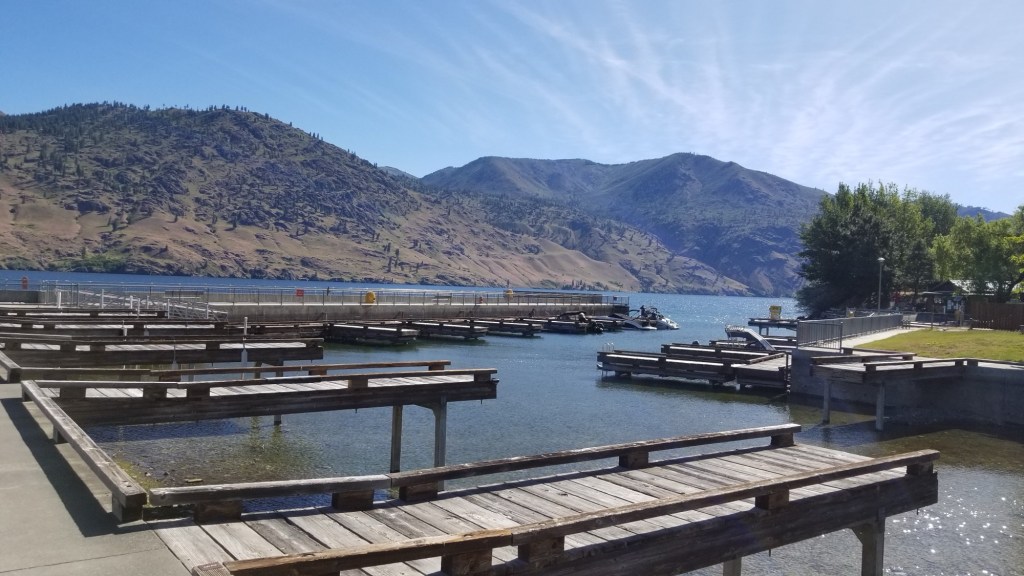
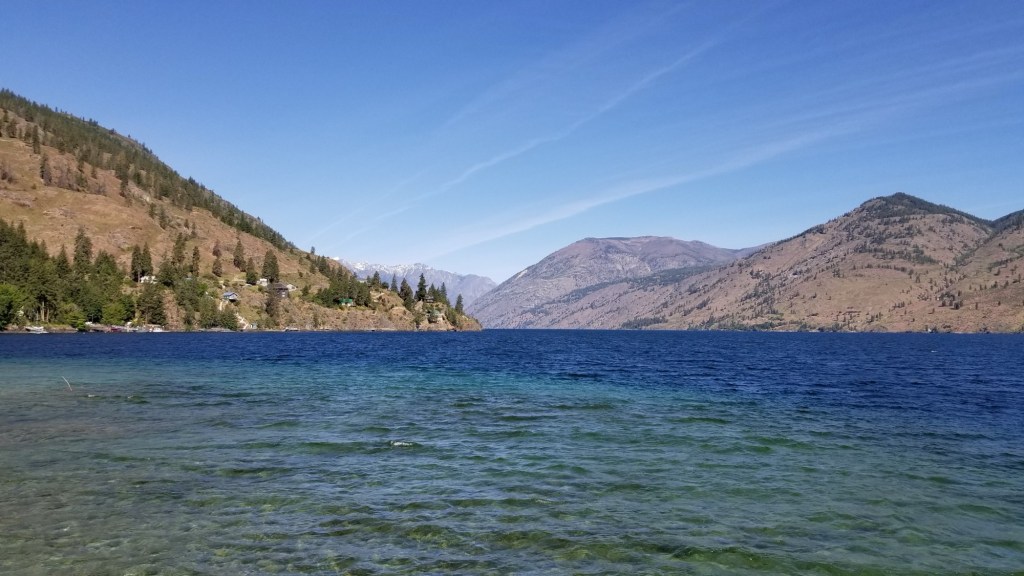
We began by going north along the western edge of Lake Chelan to visit Lake Chelan State Park and Twenty-five Mile Creek State Park. Both were very nice lakeside parks with docks. Twenty-five Mile Creek Park had an impressive concrete breakwater protecting a small marina from waves coming from the north. They must get some powerful north winds and waves there!
The marina at Twenty-five Mile Creek ParkNotice the change in the water color showing the end of Twenty-five Mile Creek’s shallow delta
The creek is named that because it marks the approximate halfway point of Lake Chelan’s 50-mile length. And the western lake front road ends just a little beyond this point. We turned south, back to the city of Chelan., where we stopped at the Safeway store to pick up some groceries for lunch and dinner.
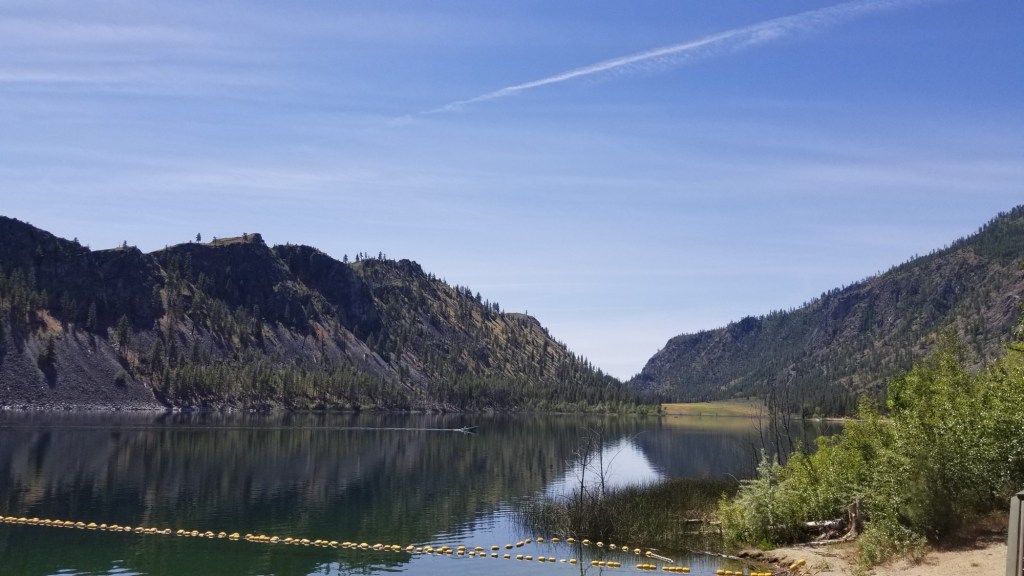
Then we headed to Alta Lake State Park near Pateros. There we found a beautiful small lake nestled in the bowl of rocky peaks all around. It was birdy too, including several American Coots each with a cute chick following behind. But it was here, somewhere, that I left my small digital camera behind. I was too focused on the birds and not enough on my gear, which included my binoculars, cell phone, hat, backpack and the camera. I didn’t discover the loss until 35 miles later at the fourth park of the day.
Alta Lake
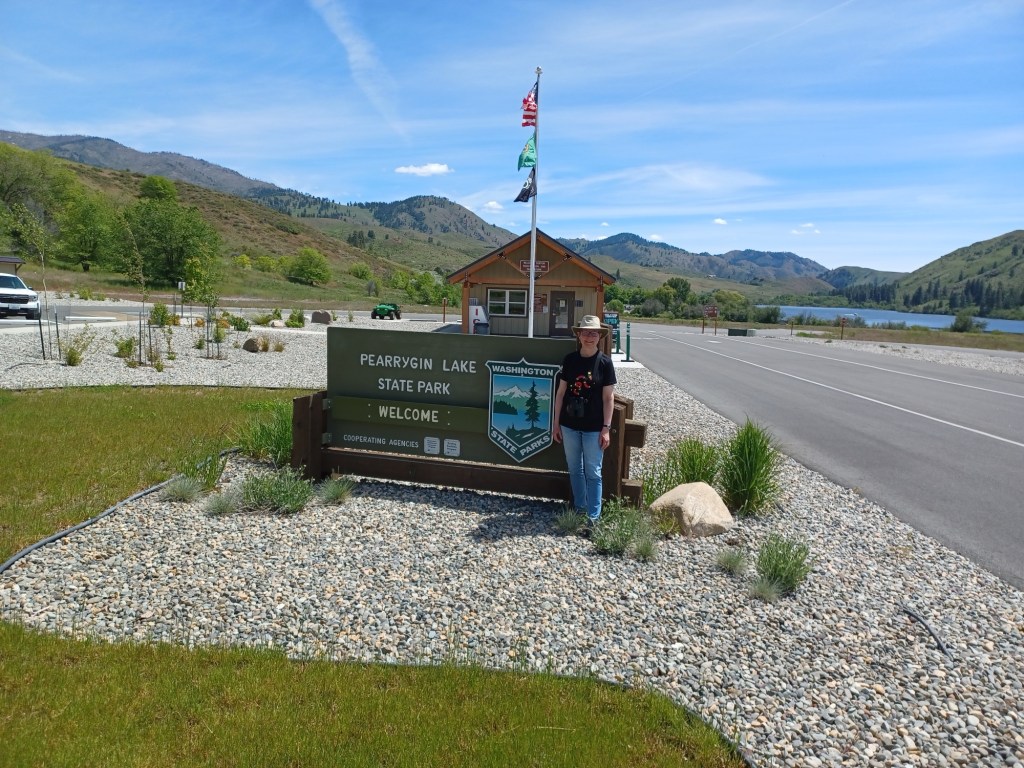
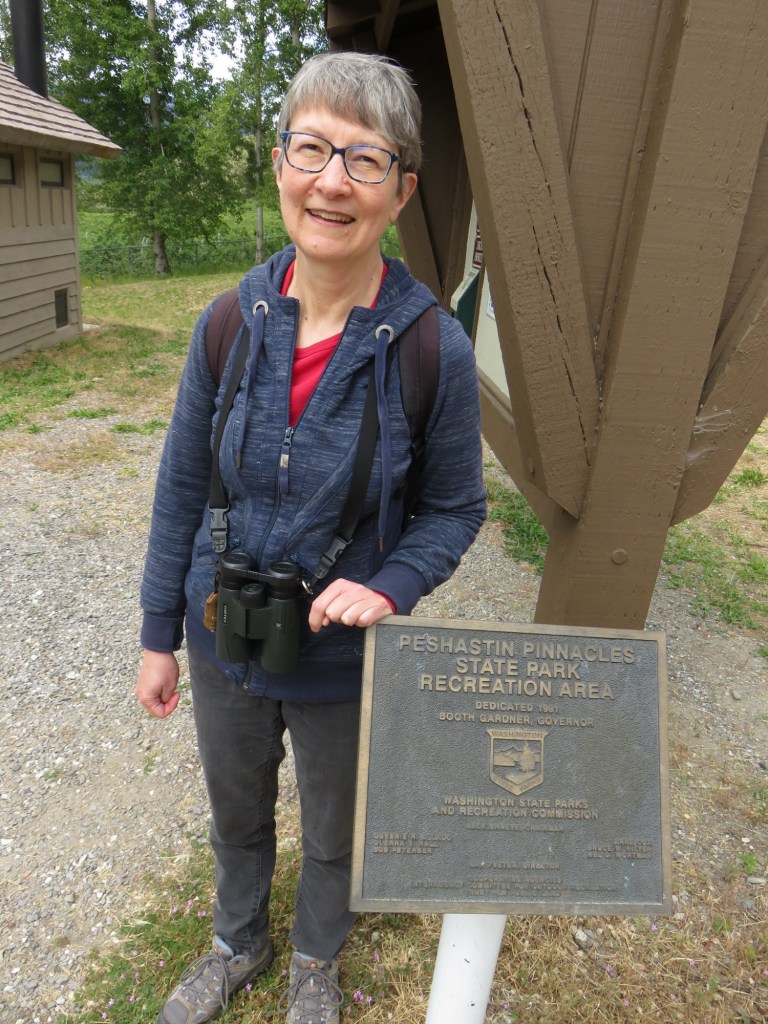
We drove through the Methow Valley, through Twisp and Winthrop, and noticed that Pearrygin Lake State Park was just a couple miles beyond Winthrop, so we decided to add that park to the day’s visits. When we stopped to take a photo of me and the park sign, I discovered that I no longer had my camera and also decided it wasn’t worth going back for because the 35-mile drive had been tiring and the Alta Lake park rangers didn’t answer the phone so I couldn’t verify that it had been turned in as lost. So it’s just lost (after serving me well for many years) and I’ll need to use my phone’s camera for the rest of the trip.
Me at Pearrygin Lake State Park after the discovery of the loss of my camera
We returned to Winthrop and decided to stay in the Abby Creek Inn at the edge of town, next to the Methow River. It was a pleasant 73 degrees there in the afternoon. Our dinner was made up from the various grocery items we had picked up in Chelan.
Last night we decided to go off-script from our itinerary today since we had visited two more state parks yesterday than planned. We decided to make today a no-park day and instead take the Lady of the Lake ship on Lake Chelan to the far north end of the lake and see the tiny town of Stehekin. So after breakfast at the hotel, we drove the short distance to the dock and bought ourselves tickets for a day tour to Stehekin and back that left at 8:30 a.m. It was a beautifully sunny morning, although cool and windy.
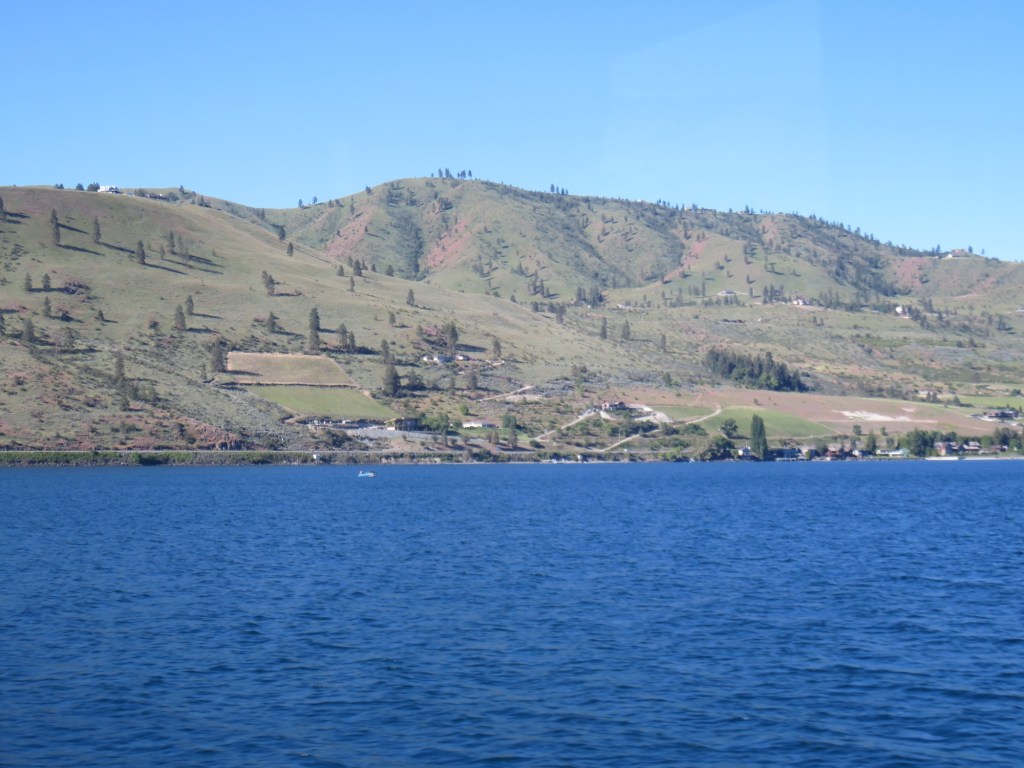
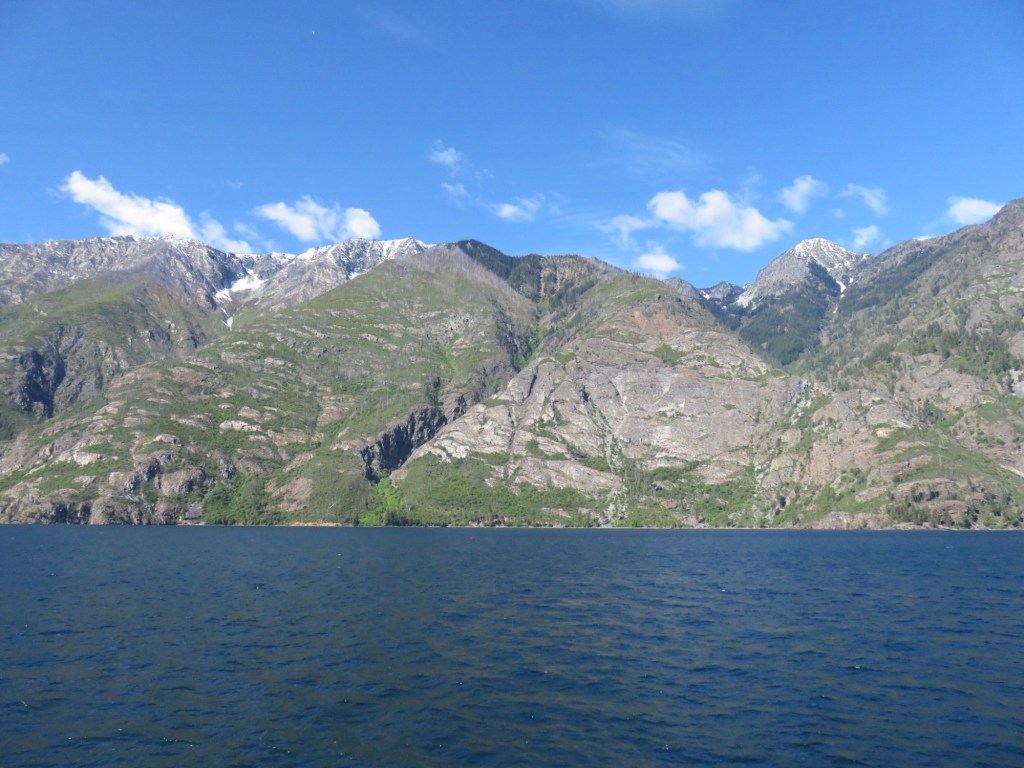
A smaller and faster boat then the Lady of the Lake was scheduled to run today, named the Lady Express. It was a 2.5 hour ride north to Stehekin with several stops along the way to pick up and drop off passengers. There was great Eastern Washington scenery along the way.
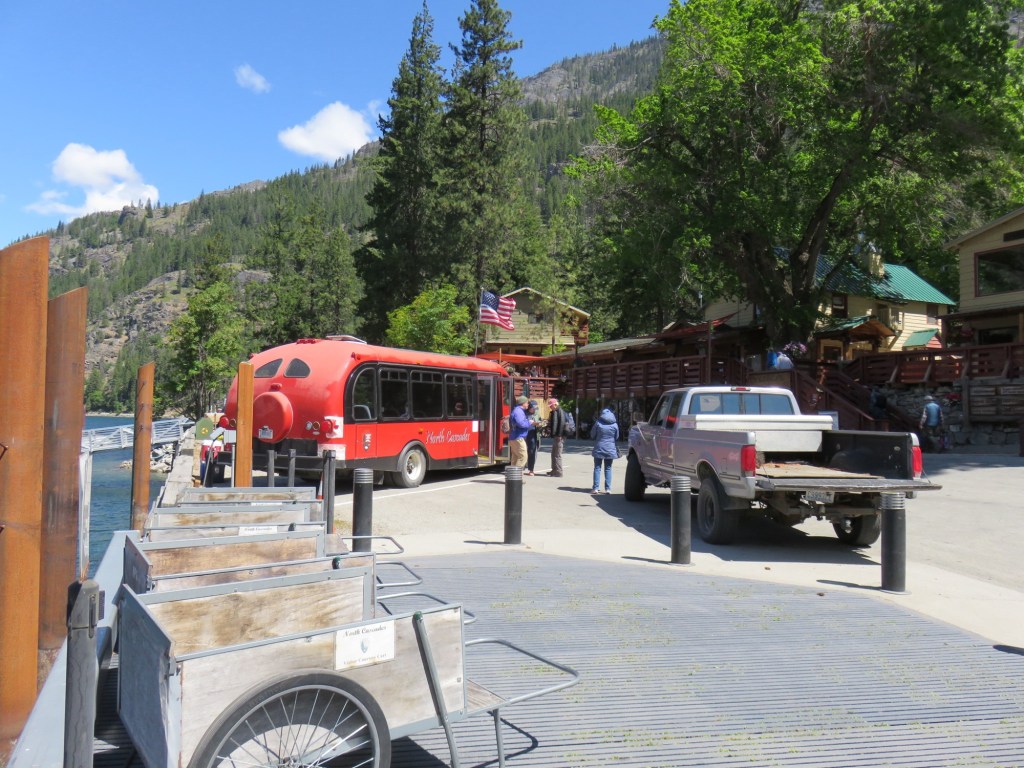
Once at Stehekin, a town of about 85 people that swells in the summer season, we took a short bus tour to Rainbow Falls about 3 miles from the dock.
Our bus for the waterfall tour and “downtown” Stehekin in the background Rainbow Falls
There’s not too much in Stehekin: a general store, post office, lodge, national park office, and then some houses in the woods, some of which are rentals for tourists. The bus drove past all those, dropped a few people off at a bakery and gift shop, then stopped at the waterfall. We had 15 minutes to take it in, then the bus returned us to the bakery where we had another 15-minute stop where we could buy food, drinks or gifts. Dave and I ate the lunch snacks we had brought along while sitting in the sunshine there. Then the bus drove us back to the dock to reboard the Lady Express for our return. We spent a total of 90 minutes in Stehekin.
The return boat ride was a little faster, since we only made one intermediate stop along the way. We were back in Chelan before 3:30. The temperature had warmed up to nearly 70 degrees and the wind had ceased, so it was a pleasant afternoon. We picked up a couple dinner items at the local Safeway and went back to the same hotel where we had been last night.
Tomorrow we’ll be back to the planned state park itinerary.
Today I started another trip to explore more Washington State parks, this time the ones in the northeast corner. My friend Dave and I departed around 6 a.m. from my place, after Dave had navigated through pre-rush hour traffic on I-405 from his place up north. We first stopped at the neighborhood Starbucks so he could caffeinate, then we headed out for Snoqualmie Pass. At the summit, were the first in the Summit Pancake House when it opened at 7 a.m. for breakfast. It was cold enough to see our breath outside, but dry and only partly cloudy.
On the way up to Blewett Pass, we stopped to do some birdwatching at Swauk Cemetery, where we saw a few nice birds that aren’t necessarily found on the west side of the state, like Western Meadowlarks and both Mountain and Western Bluebirds. We also stopped to gawk at the small buffalo herd at a nearby farm.
On the eastern side of Blewett Pass, we stopped at the first park of the trip, Peshastin Pinnacles. It was new to me, but Dave had climbed some of the rock pinnacles there when he was younger. It was sunny and pleasant and provided a nice view of the valley containing the town of Cashmere.
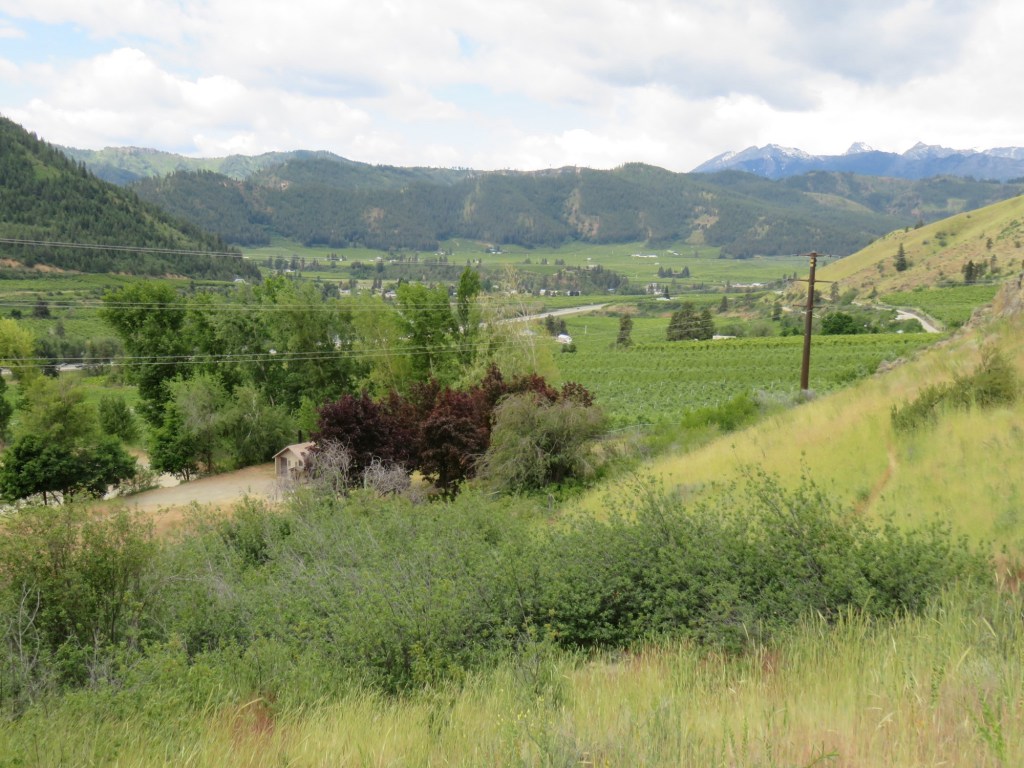
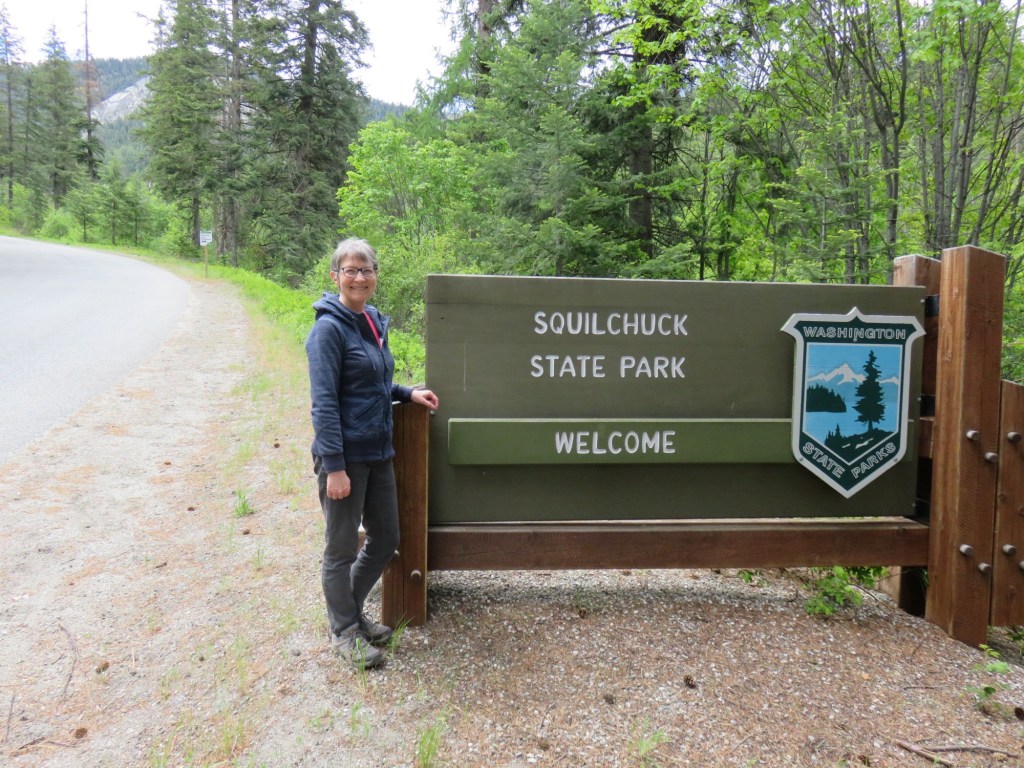
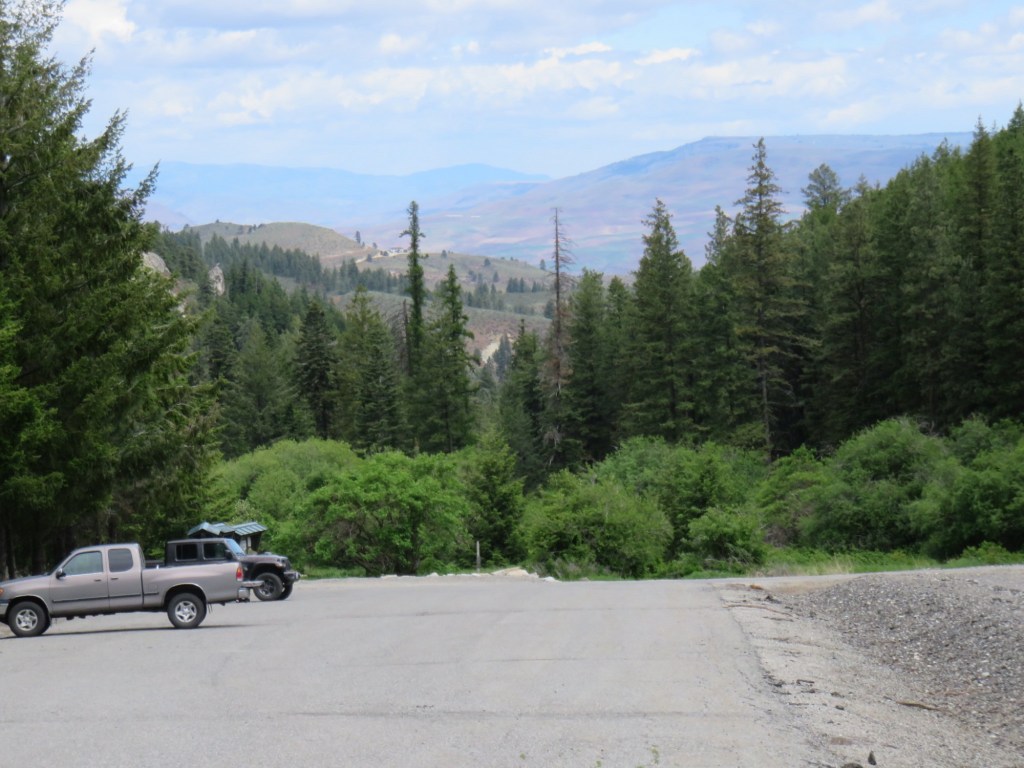
Then we drove through the city of Wenatchee towards the next park, Squilchuck. We were disappointed by this park, which consisted of a huge empty parking lot, a mountain bike track, and a lodge that was only accessible to those who had rented it for events. The one picnic table we saw in the park looked rather shabby even. However,it did have a nice but distant view of the Wenatchee valley.
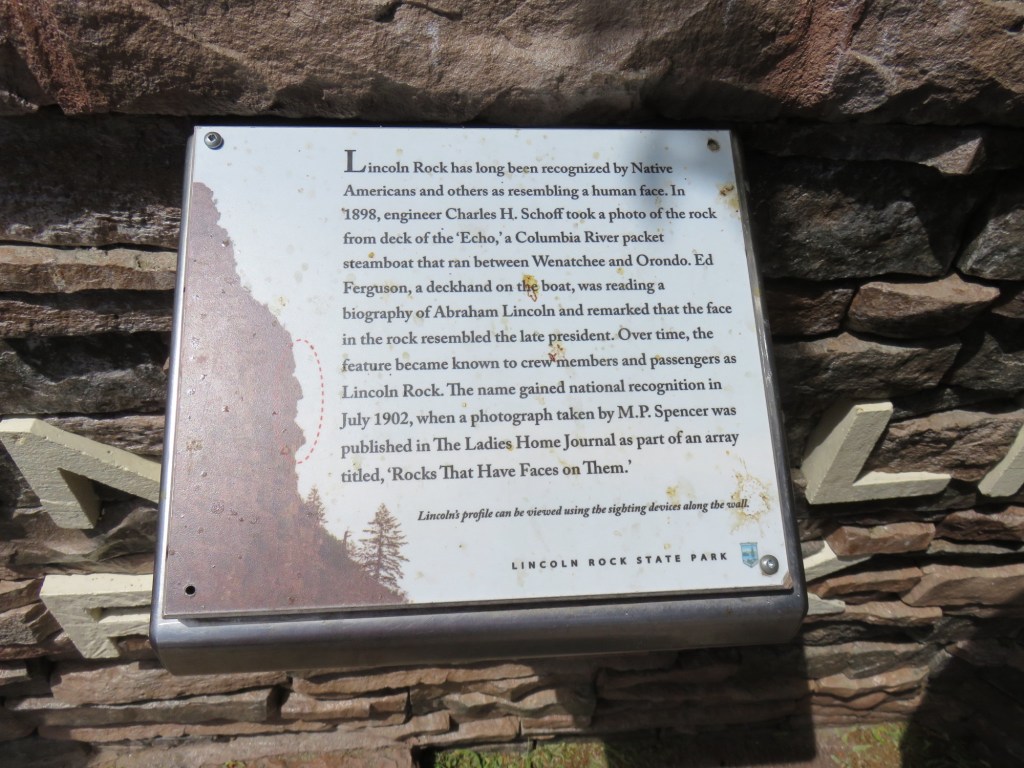
It was about lunchtime then and we drove back to the valley, crossed the Columbia River to East Wenatchee and stopped in a city park. There we walked down to the river and did a little birding while walking along a bike path and the river shore. For lunch, we ate some snacks we had brought along. Although we had planned to spend the night in Wenatchee, we changed plans because it was so early, and drove towards Chelan as the day’s destination, stopping at two more parks along the way: Lincoln Rock and Daroga. Both were pleasant places along the Columbia River upstream from Wenatchee, with huge expanses of grass and boat launching ramps. Lincoln Rock’s name was derived from the similarity a distant cliff face has to the shape of Abraham Lincoln’s face. What do you think?
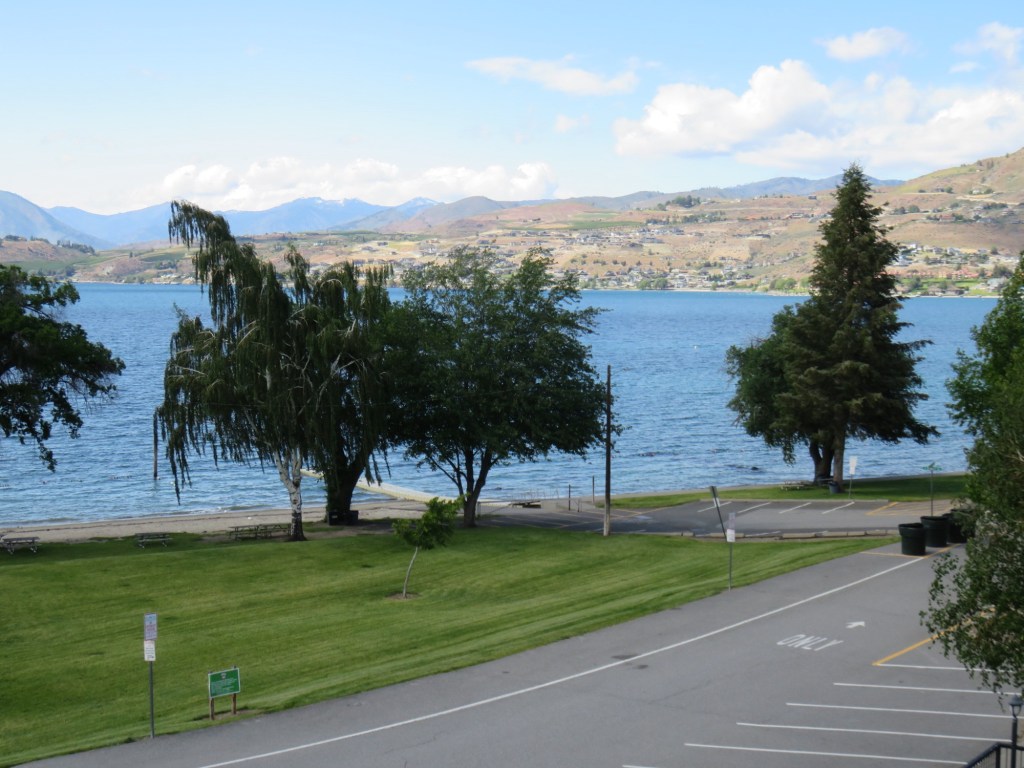
We finished the day in Chelan at a brew pub offering trivia night during dinner hour. We didn’t win anything in the trivia contest, but their fish tacos and hard apple cider were great. Our Chelan hotel is on the shore of the lake and has a nice view.
(This post is delayed because the internet connection at Pacuare was unavailable during our last two days there.)
On Wednesday, we awoke at Pacuare Reserve with the howler monkeys again, before dawn, even though it had been a very short night after seeing the leatherback nesting. We had a 6am nature walk scheduled with Angel and didn’t want to miss it because it was a chance to see the trails leading away from the maintained grounds. Guests aren’t supposed to go on trails without a staff member/guide for safety reasons, i.e. snakes. So we again met Angel and he took us on a wide, flat, but very buggy trail that paralleled the beach. The walk was about an hour round-trip, with the farthest point being a large pond in the forest where Agami Herons nest in May and June. They weren’t there now. He showed us various interesting plants, animals and birds along the way, but there were so many mosquitoes and other pestering bugs that we were continuously slapping them away. We returned a few minutes before breakfast and were happy to go into the screened dining area.
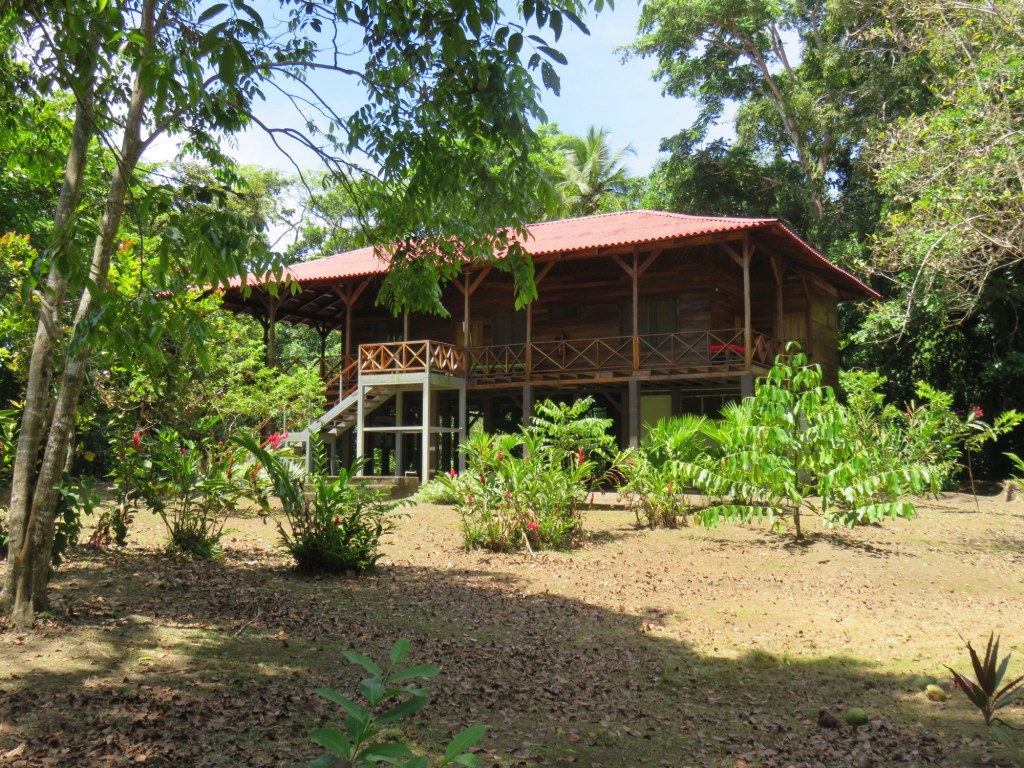
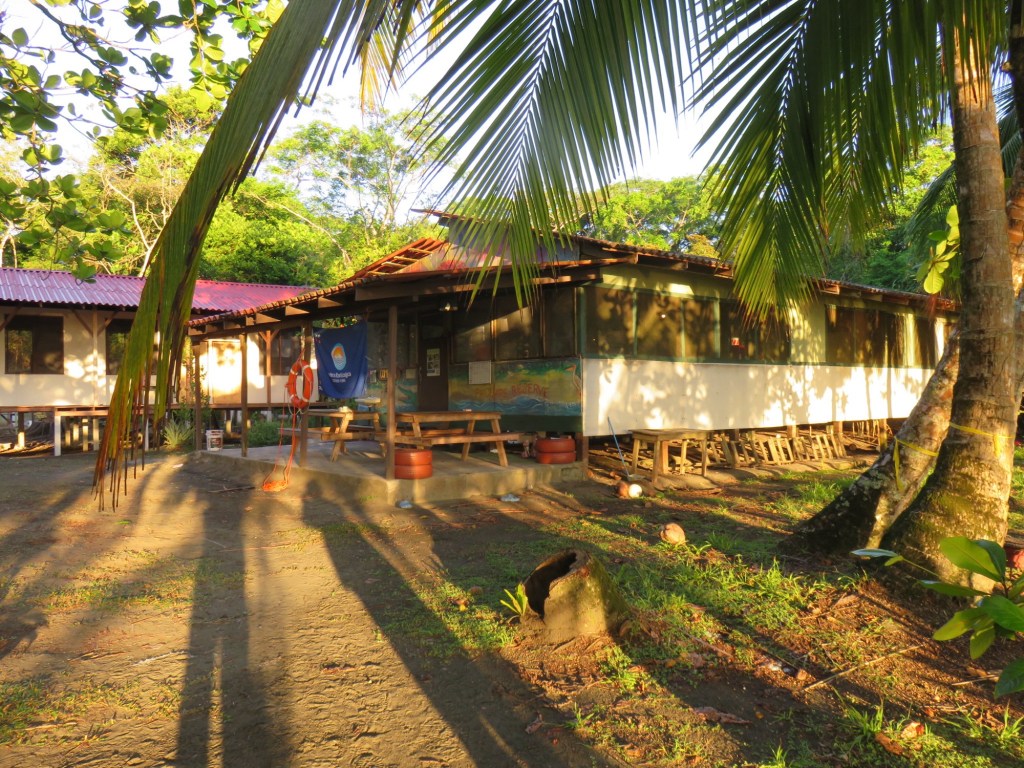
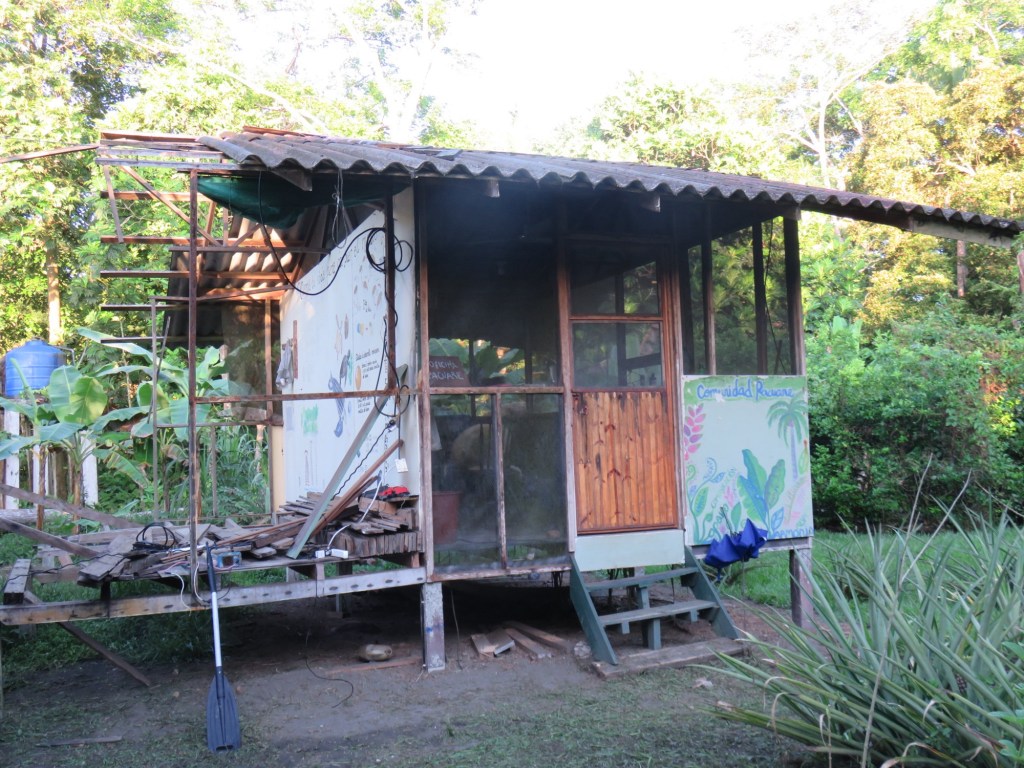
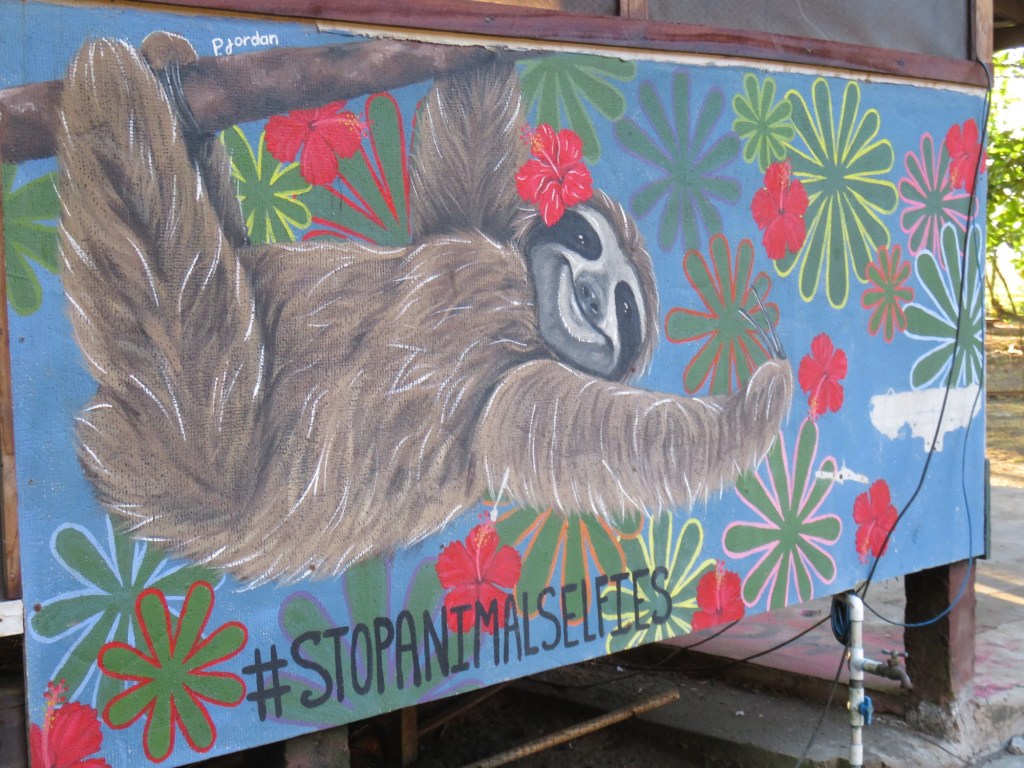
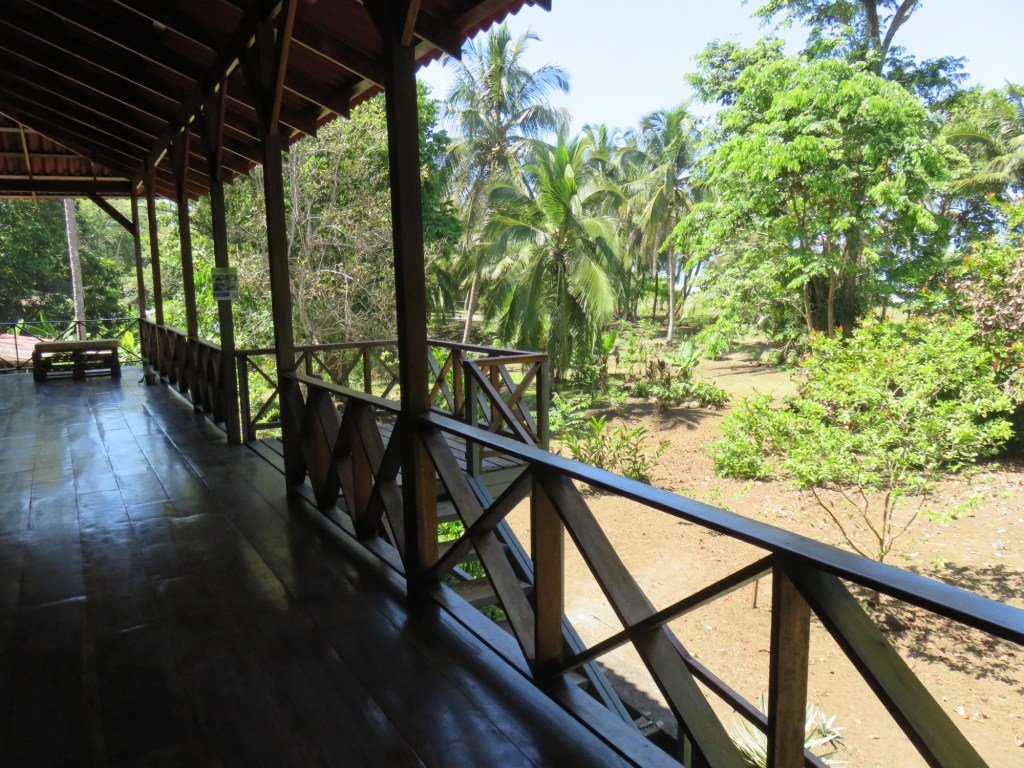
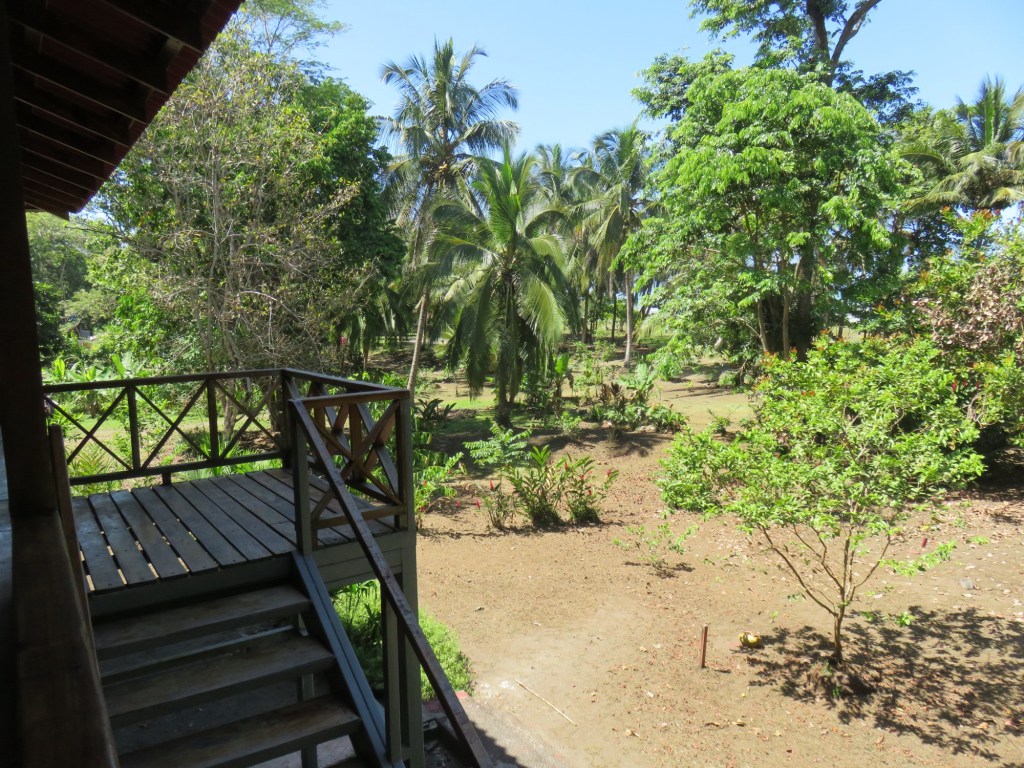
Casa Grande, where our room was on the 2nd floor, left cornerDining roomRarely-used office with guest/employee device charging area outsideMural on the wall of the dining roomSome pics of Pacuare Reserve’s grounds
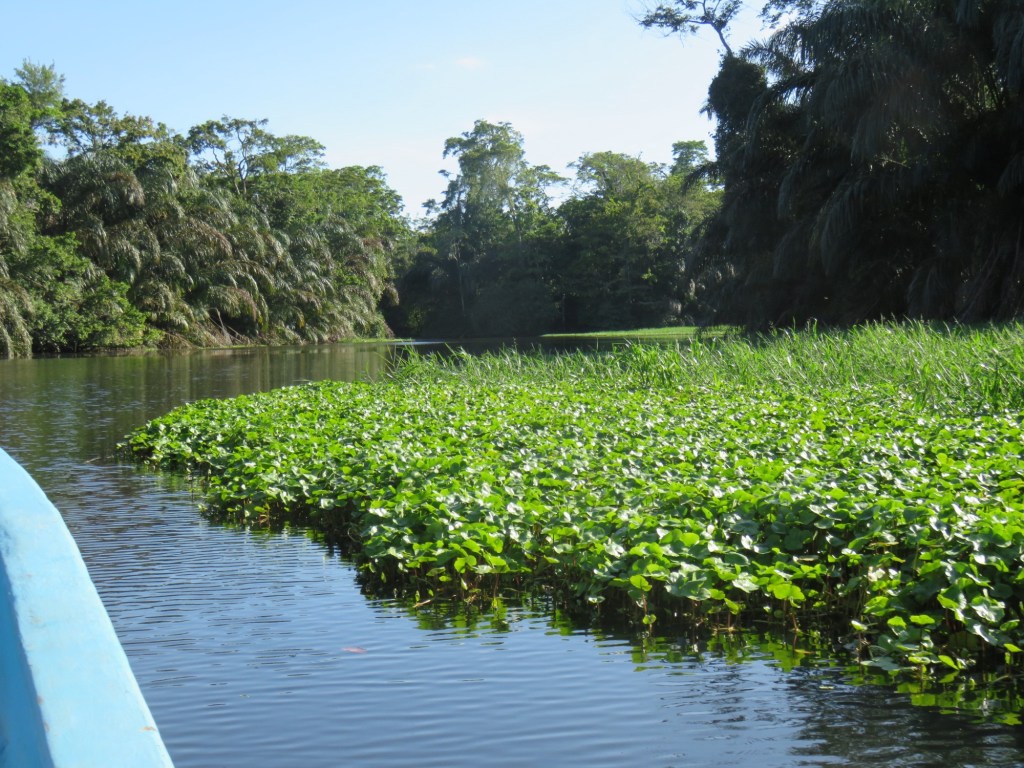
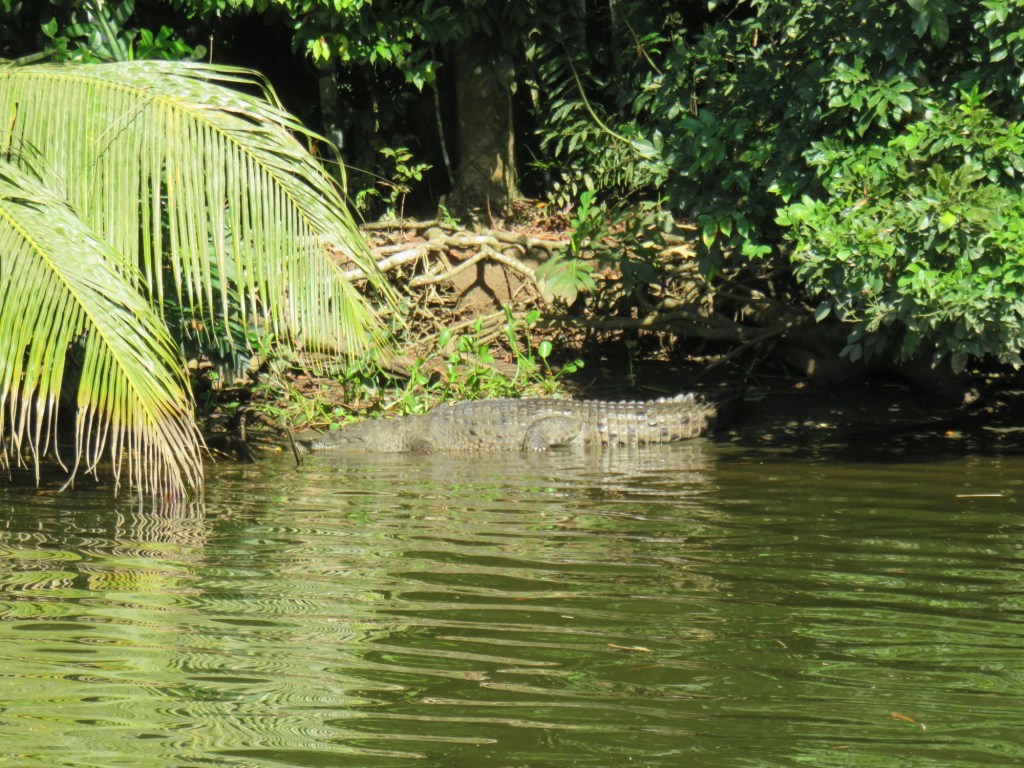
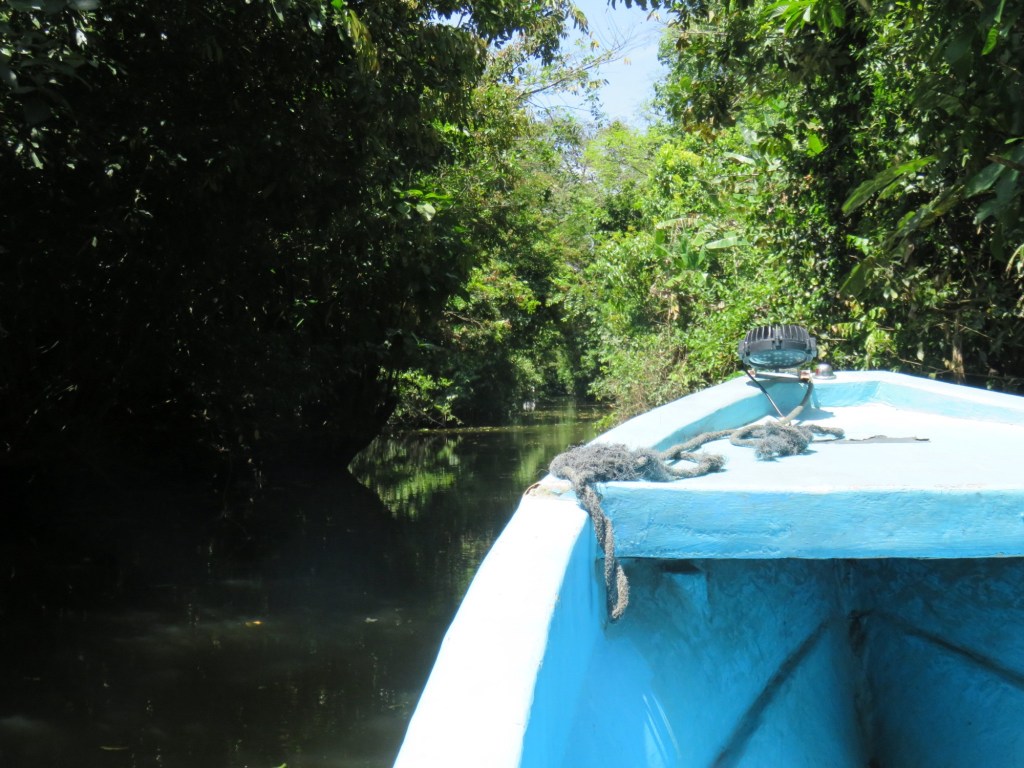
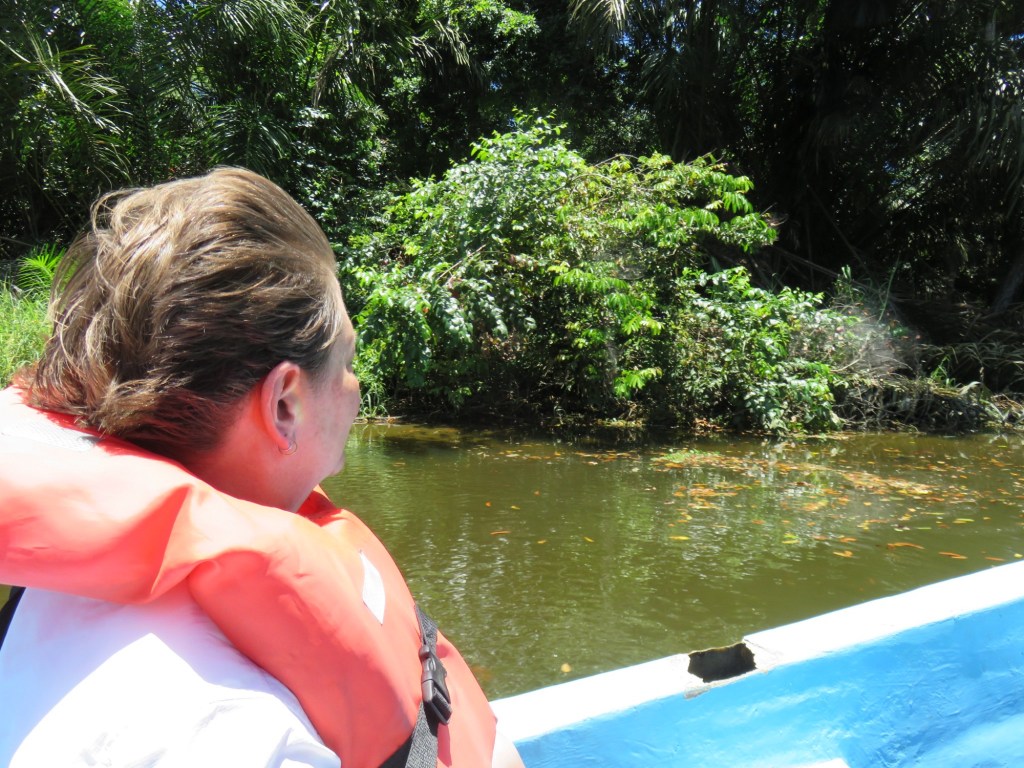
Our afternoon activity was a boat ride scheduled at 3pm. We joined Eder, two French-speaking guests, and Lola, a French-speaking employee. The breeze felt wonderful as we sped through the canals looking at birds. We saw a crocodile sunning itself too. Before returning about 5pm, we stopped at a dock on the main canal where there was an open-air bar. Stephanie and I bought a bottle of beer each and a bottle of Coke for Eder. The beer tasted great but we were badly pestered by mosquitoes the whole time and were happy to get back in the boat.
Floating plants in the canalCrocodile
After dinner back in the Pacuare dining room, we returned to our room in the dark, took cool showers, and went to bed.
Howler monkeys in the morning next to our room (turn sound on to hear)
On Thursday, our final full day at Pacuare, we looked forward to two more boat rides, one of which was an afternoon trip to the mouth of the Pacuare River. From there we would walk to the northern Pacuare Reserve station, a smaller location associated with our southern location, where a few scientific assistants were staying to conduct turtle surveys from there. We really liked this trip, which included only Eder, Stephanie and I. Michael took us three by boat to the river mouth, then we got out and began a slow and interesting walk along the shoreline of the Caribbean on a trail that also led through a very small community. As we walked, Eder told us (in Spanish) about residents who fish in the surf on the bar where the river meets the sea and about Costa Rican life and issues for residents. It was a very relaxed walk and fun to talk with him and learn about non-touristy things in Costa Rica. We ended the walk at the northern Pacuare station, where Michael picked us up in the boat on the canal side of the island and returned us to our accommodations at the southern station of Pacuare.
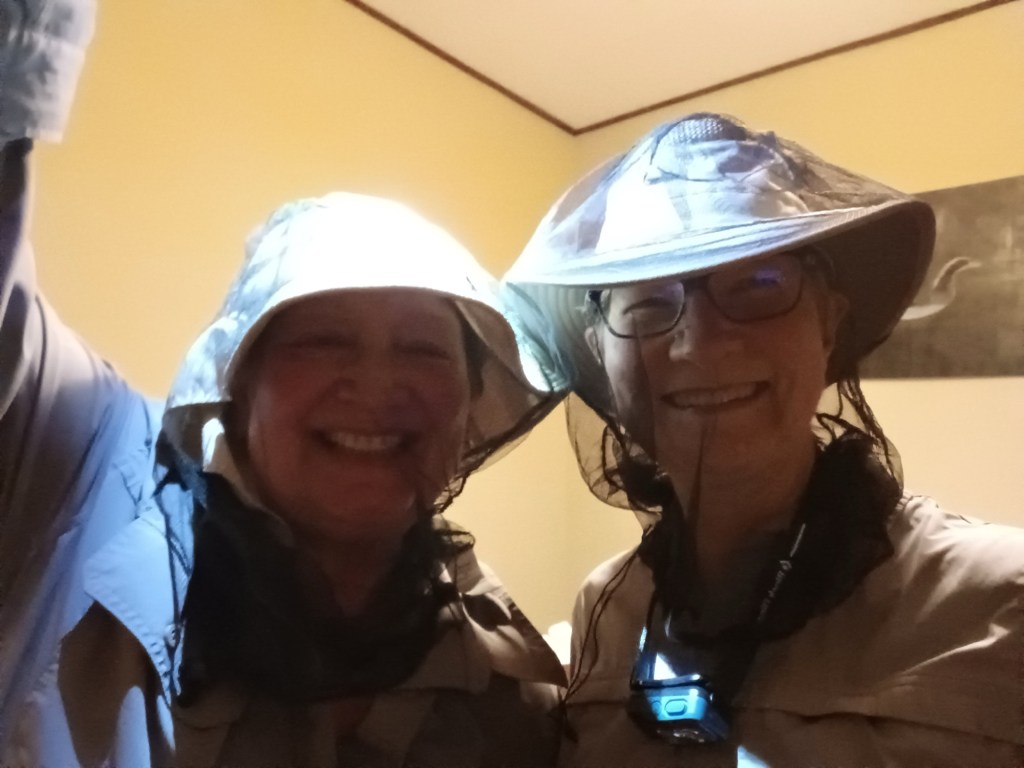
After dinner, we were guided by Eder on a night walk of the grounds around our Casa Grande, where we encountered large land crabs, spiders, army and leaf-cutter ants, and a kinkajou in a tree. No snakes, thankfully. Earlier in the day Eder had also pointed out a two-toed sloth in a tree close to our room. Before this night walk, Stephanie and I had prepared as well as possible for all the mosquitoes that we knew would be out there, with head nets and liberal repellent application.
Ready for the night walk
Friday was our travel day, returning to San José for our flight home. After breakfast we packed up and got in the launch at 10am with Michael for the ride back to Goshen dock.
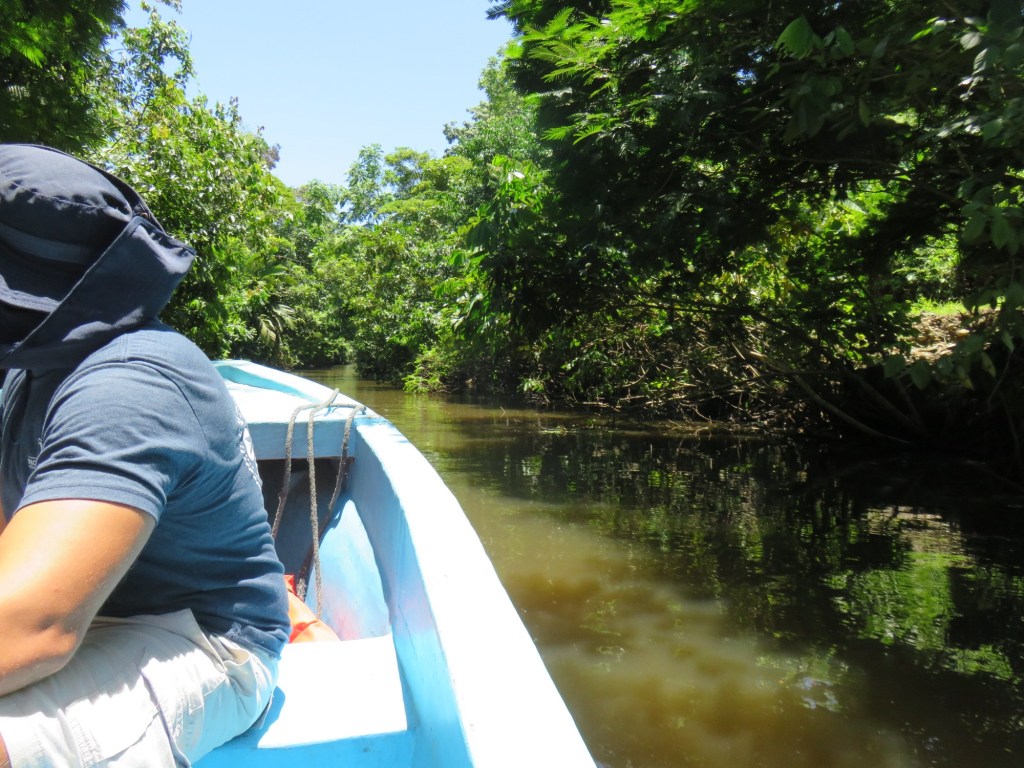
Returning up the narrow Pacuare River to Goshen dock.
Rolando was at the dock with his car, ready to drive us halfway across the country. We were happy to see him and quickly got in the car to avoid the horrible mosquitoes at the dock. During the drive, we told him about our stay at Pacuare and other parts of our trip. He is a very good driver, patient with our poor Spanish, and a very nice man. He even indulged our desire to make a short stop to buy Churchills for each of us. It’s a shaved ice, condensed and powdered milk confection that’s flavored with fruit syrup, which we found in the town of Siquirres en route.
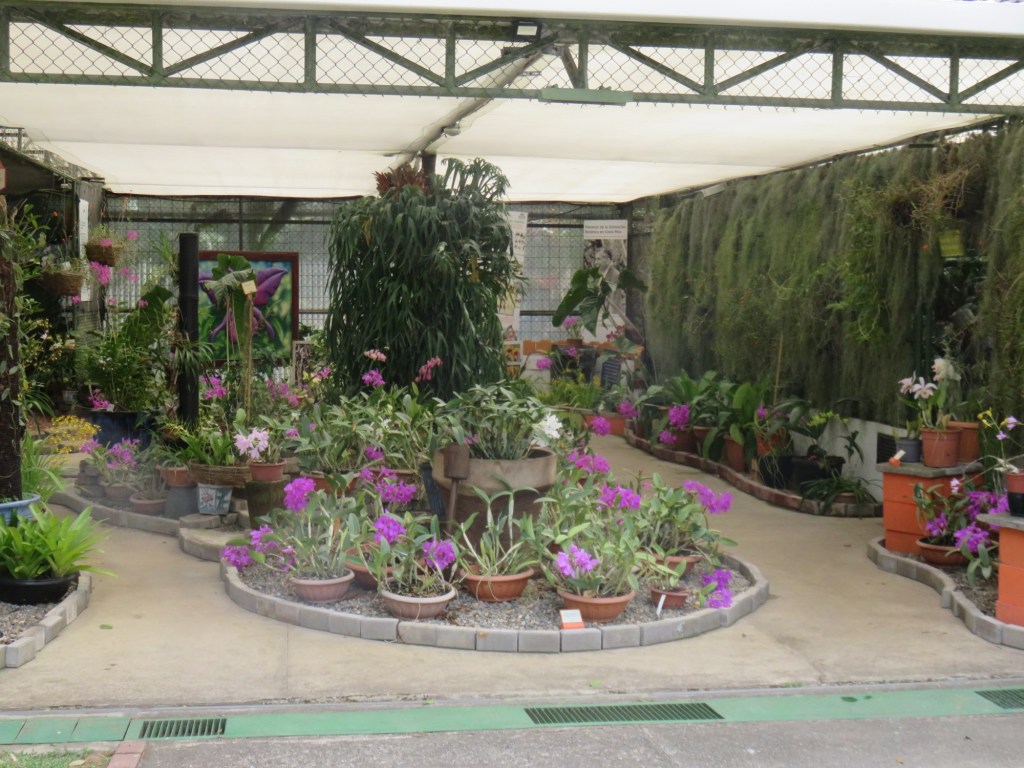
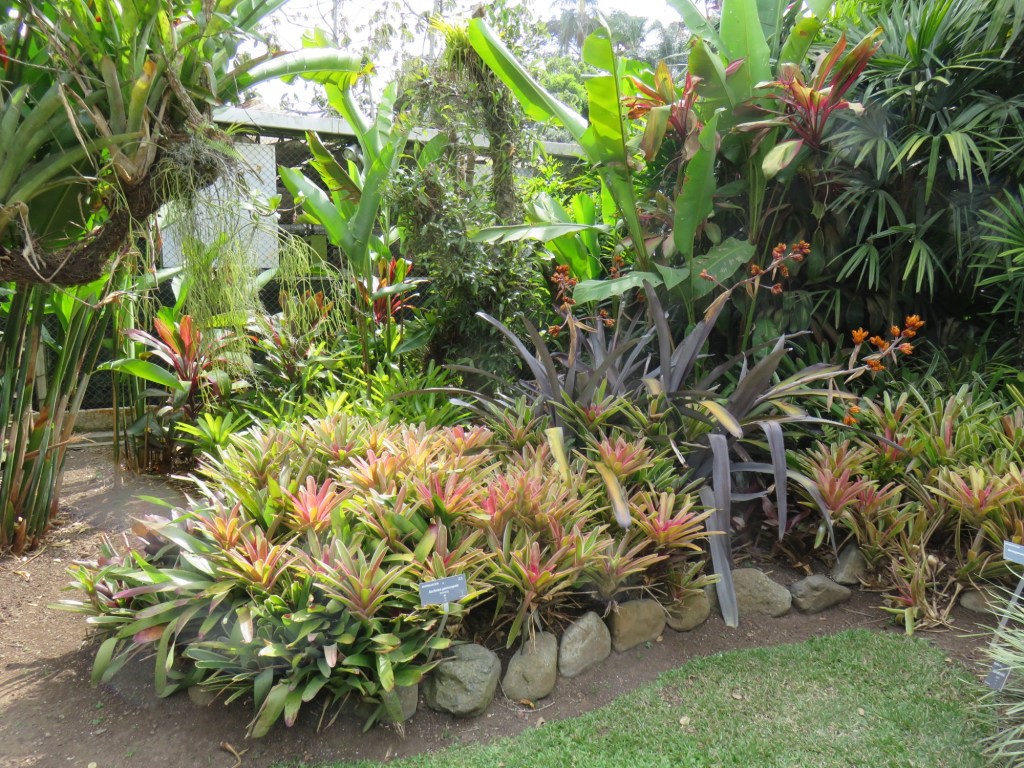
We had arranged to stop at Lankester Gardens in Cartago during the drive and we got there a little after 2pm. It’s a large and beautiful garden associated with the University of Costa Rica. Stephanie and I walked through the gardens for about an hour while Rolando waited in the car for us.
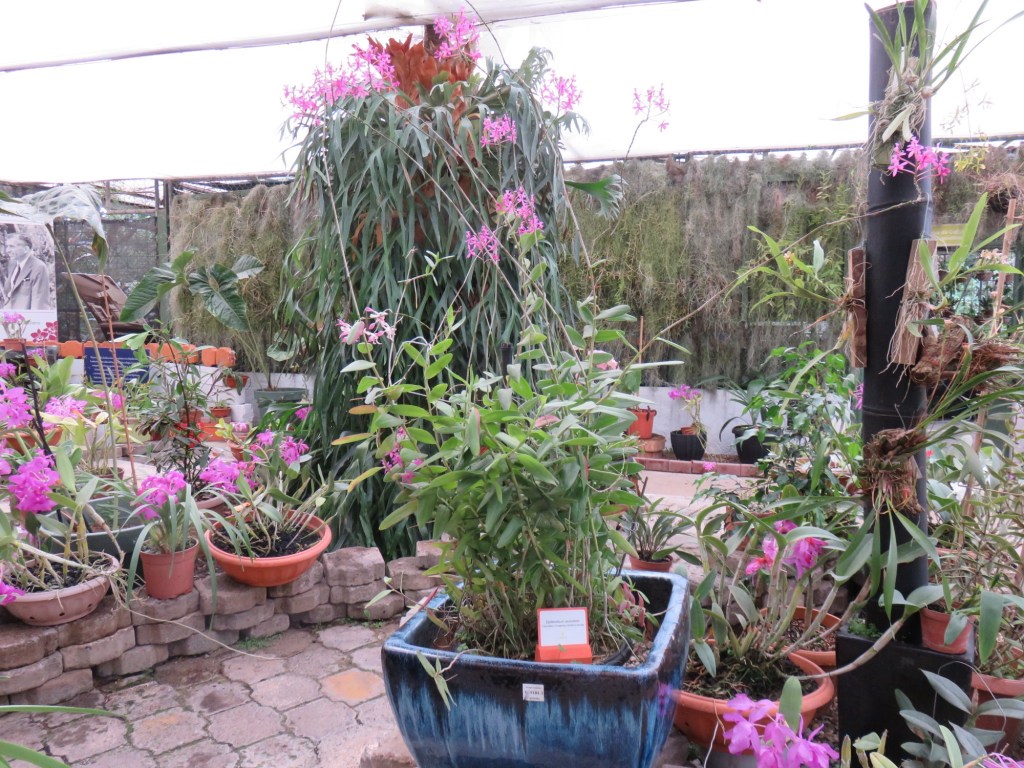
Orchids and bromeliads at Lankester Garden
Then we headed across San José through rush hour traffic on this Friday afternoon. Traffic was horrible, just crawling along. It took us about 2.5 hours to cross the big city from Cartago to Alajuela, where our hotel was. Around 6pm, we stopped at a soda near the hotel that Rolando knew of, and happily ate casados consisting of chicken or fish, rice, beans, picadillo made from chopped potatoes and vegetables, tamarindo juice and rice pudding at the end. Then Rolando dropped us off at Hotel de la Rosa, where we had spent the first night in Costa Rica.
Our flight returning to the US was scheduled for about 1am Saturday, and we had reserved the hotel room so we could freshen up before going to the airport. So we showered, changed to clean and comfortable travel clothes, then took a short nap in preparation for the long travel day ahead. At 10pm a taxi came to pick us up to go to San José airport. Our flights to LAX and SeaTac were on time and not full. We both enjoyed empty seats beside us, which made it a little easier to sleep en route. Arriving in Seattle around noon, we were very happy to be home after a great vacation.
Yesterday, Tuesday, we checked out of Yatama Eco Lodge and we moved on to Pacuare Reserve, on the coast of the Caribbean Sea. Before light, we had been woken by howler monkeys again, but very close this time. When it got light, both Stephanie and I went out to watch them. It was a group of about a dozen. After a light breakfast at 7:15, we were driven down the horrible rocky road from Yatama in the 4×4 by one of Pedro’s employees, Luis. He was very good at navigating between boulders and ditches, returning us to the Palmitour restaurant where we had eaten lunch on Sunday. Our new driver, Juan Carlos from Costa Rica Drivers was waiting there for us. We loaded up our luggage into his tourist van and set off to Pacuare. About 10am we arrived at the Goshen dock on the Pacuare River, where we would be transported by boat to the reserve.
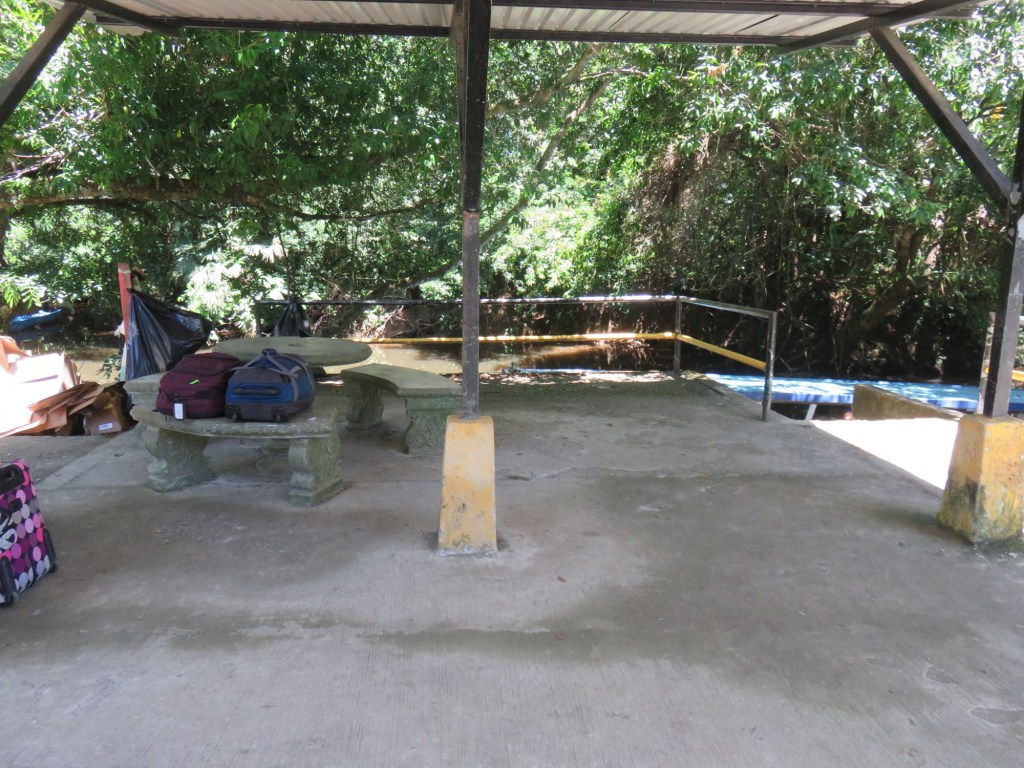
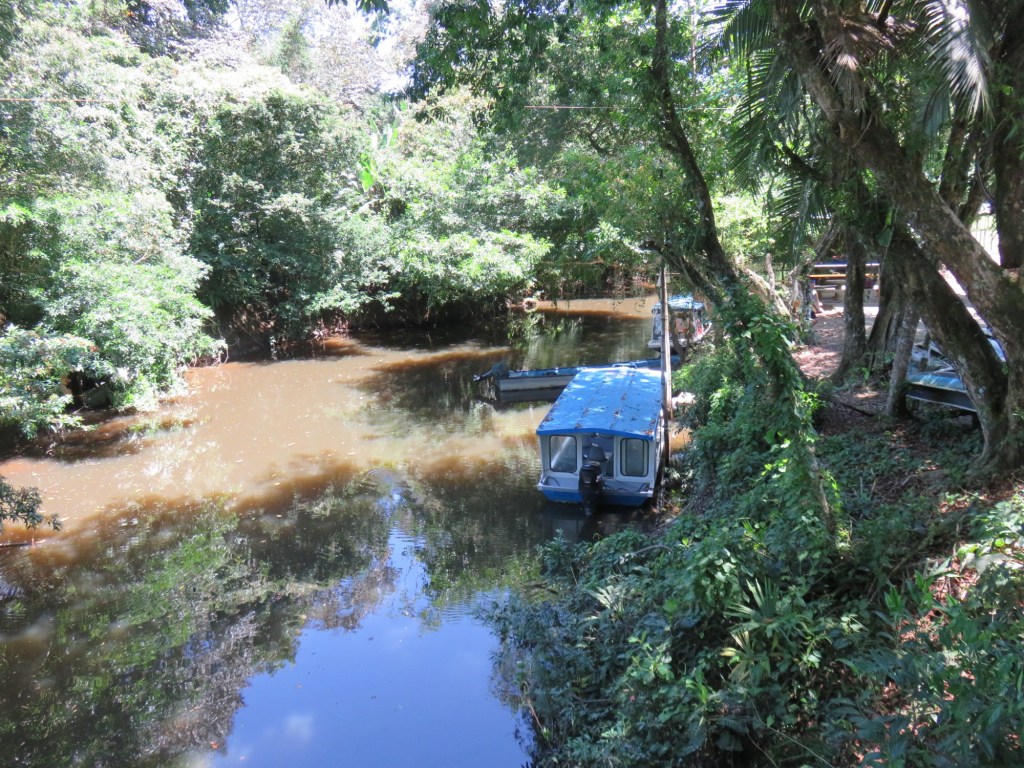
Our luggage at the Goshen dockPacuare River at the dock
Juan Carlos waited with us at the dock, where there were lots of huge mosquitoes. We had to keep walking around and swatting them, even with bug repellent on, to avoid getting bitten. And it was hot and humid. At 11am, the launch from Pacuare came to pick us up. Eder, an employee at Pacuare, and Michael the boat driver, took us on a speedy 15-minute ride down the river and into the canal that parallels the Caribbean coast.
The Pacuare River over Eder’s shoulderStephanie and I enjoyed the breezy boat ride down the river and through the canals
We arrived at the reserve and got out on the sandy bank of the canal. Eder took our bags to the Casa Grande where there are 4 guest rooms on the second floor, looking out at the beach through the trees. And it was hot and humid. (I bet I mentioned that already, huh?)
The grounds at Pacuare from in front of our room.
Eder showed us around a little and explained some basics about the grounds. It’s totally solar powered, therefore electricity is very limited, and wifi is only available around the dining building, “el comedor” in Spanish, but not in our room. We also can’t charge anything in our room. We have to use a communal device charging area near the office. There are scientists studying the leatherback turtle and other animals here, plus scientific assistants who are young men and women, plus groups of high school students passing through, plus a few employees. We ate lunch with all of them at 12pm, cafeteria style. Everyone had to bus and wash their own dishes afterwards.
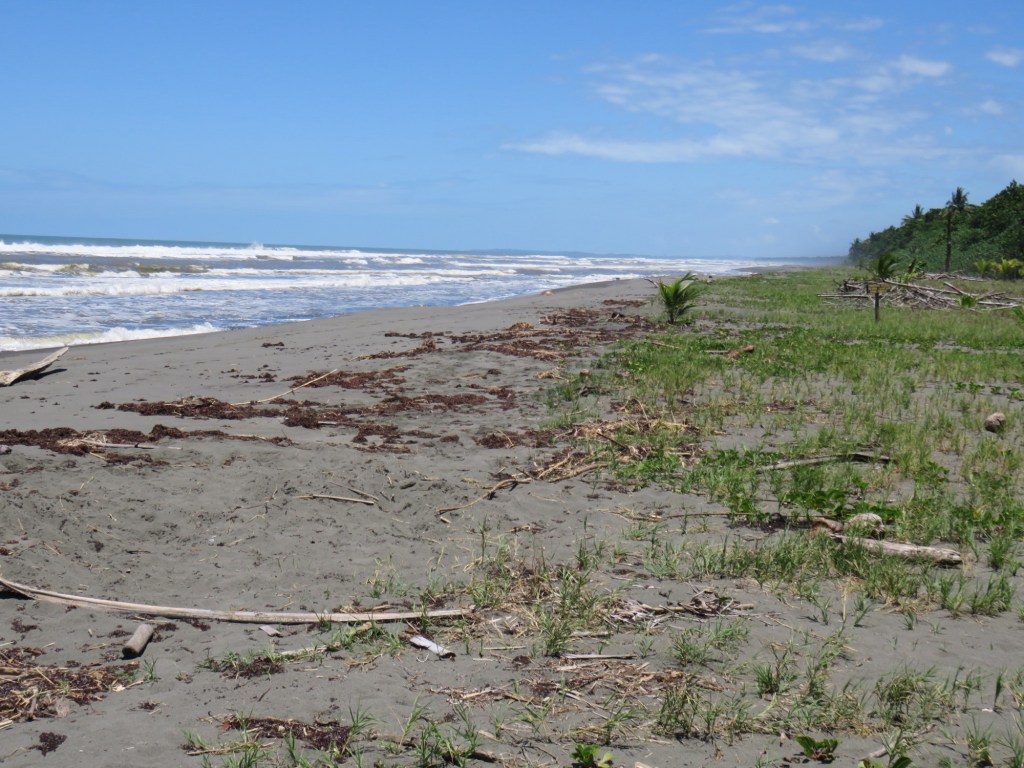
The beach in front of the reserve
We got an orientation and history briefing from Angel, an English speaking Costa Rican staff member, and then another briefing on the leatherback nest moving work that the scientific assistants are doing each night by Mollie, an American assistant working here for a few months from Montana.
Because this is one of the few nesting sites for endangered leatherbacks, they try to move all the eggs from the nests as soon as they’re laid each night to protect them from predators and poachers. The eggs are moved to a hatchery on the beach, where they are reburied in the sand in a marked, gridded, covered and guarded area. Mollie showed us the hatchery and explained the process.
We ate dinner with everyone at 6pm, with the same cafeteria style service and washing our dishes afterwards. There aren’t any overhead lights outside on the grounds because the turtles are sensitive to light. We used our flashlight and headlamp to find our way back to the room. Even after dark, it’s hot and humid…probably more humid than during the day. There isn’t much of a breeze from the Caribbean.
We took showers after dinner to remove sweat, bug repellent and sunscreen. The water isn’t heated here, but warms up to tepid in the black plastic cisterns outside the Casa Grande. I thought the cool shower felt great.
At 9pm, which felt so late to us, we met Angel and a Spanish-speaking scientific assistant woman who would take us for a walk along the beach to look for nesting leatherbacks. It was a hot and humid walk, following in the tracks of the assistant while she scanned the dark beach, lit only by the moon and her red light, looking for turtles. We could barely see anything except the moon and the very bright, beautiful stars. Then, after walking 1.4 kilometers, she spotted a turtle just digging her nest in the dry sand at the top of the beach. The turtle was huge: about 4.5 feet long and nearly 3 feet wide. Her back reflected the moonlight a little.
When the turtle finally had dug deep enough, she started laying her eggs. The assistant was there to catch them in a plastic bag, about 85 of them. Angel recorded measurement data from the assistant as the turtle covered up the now-empty nest. Then she returned to the sea. The whole process took about 90 minutes and Stephanie and I watched all of it, an amazing process. Then we walked back to our room with Angel, while the assistant took the eggs to the hatchery area. We showered again, because we had sweated through our clothes, then went to bed about midnight.




 Lori's Travels