Thursday was our day to travel from Yachana Lodge to Quito. The power had been out for 3 hours overnight plus there was a thunderstorm with rain overhead sometime in the very early morning. I didn’t get quite enough sleep. But we packed up and brought our backpacks to the dining area before our 7 a.m. breakfast, and spotted a few birds from the deck with Jefferson and Guillermo again. Breakfast was pancakes and fried eggs, toast, pineapple, watermelon and tamarindo juice, all very good.
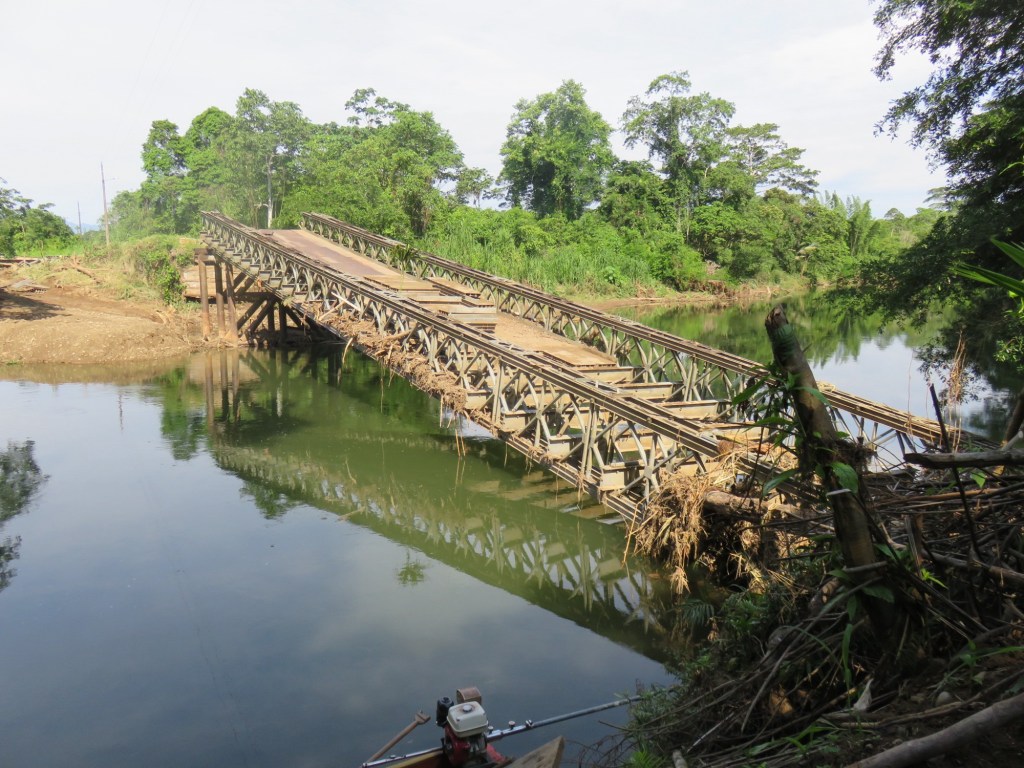
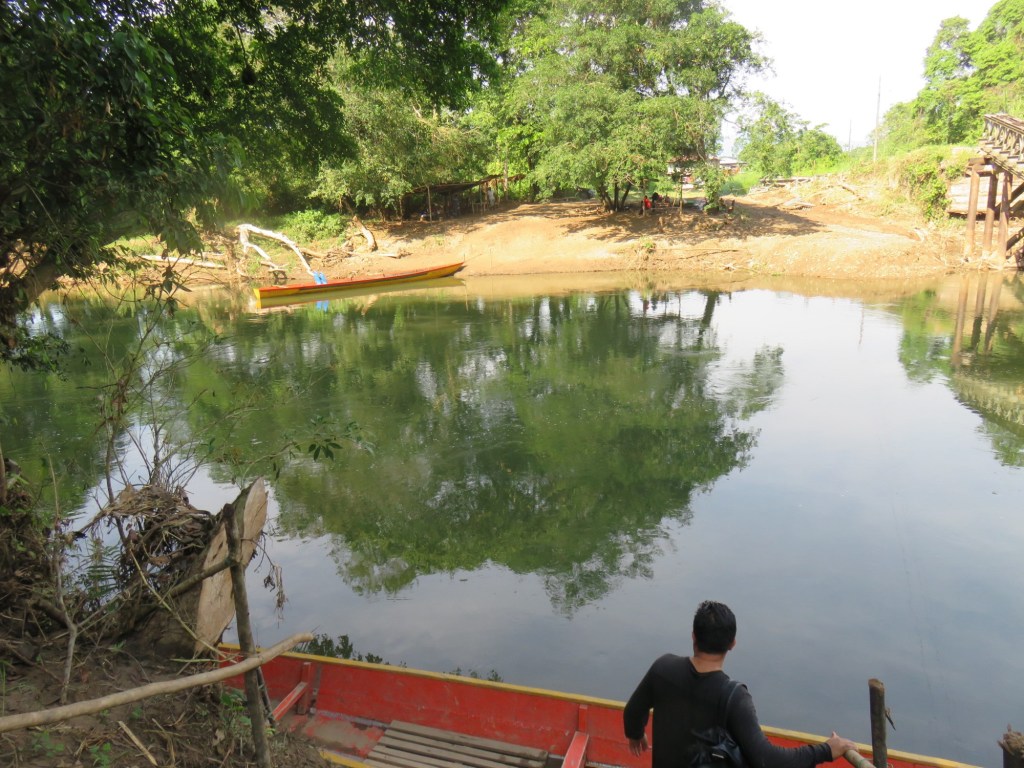
At 8 a.m. we got into the Yachana truck for the last time and drove about 40 minutes to a river bridge that had collapsed a couple of months ago. It appeared like the steel had just given up and collapsed. The day’s driver, Luis, was waiting on the other side of the river. Nathan, Robert and I got into a canoe on our side and then Robert and another man used poles to push the boat to the other side. Voila, problem solved the Ecuadorian way! We said goodbye to Robert and loaded our backpacks into Luis’ Kia.
The collapsed bridgeOur canoe waiting on this side of the river
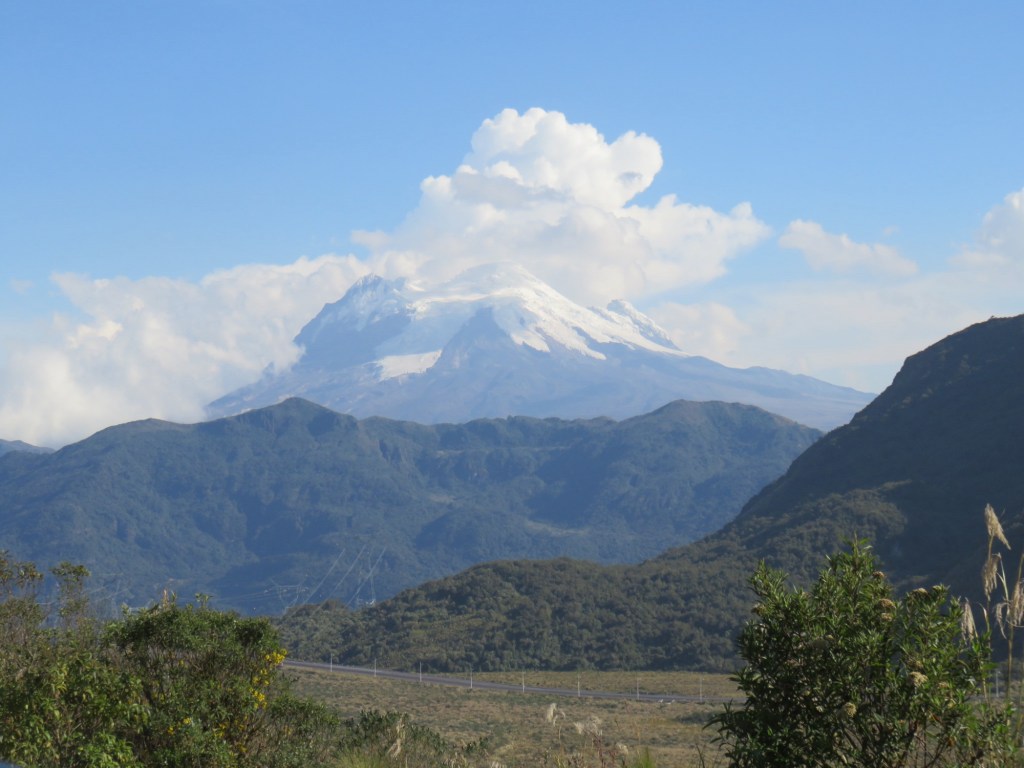
Luis is a birding guide who had been arranged by Mercedes, the owner of our Quito hotel. We set out on the road to Quito, stopping a few times along the way to look for birds. We also stopped for lunch at a restaurant in the city of Baeza. I had trout a la plancha and some fried plantains (patacones) for lunch. At the highest point of the drive, we saw the volcano Antisana which was snow-covered and beautiful.
Antisana volcano
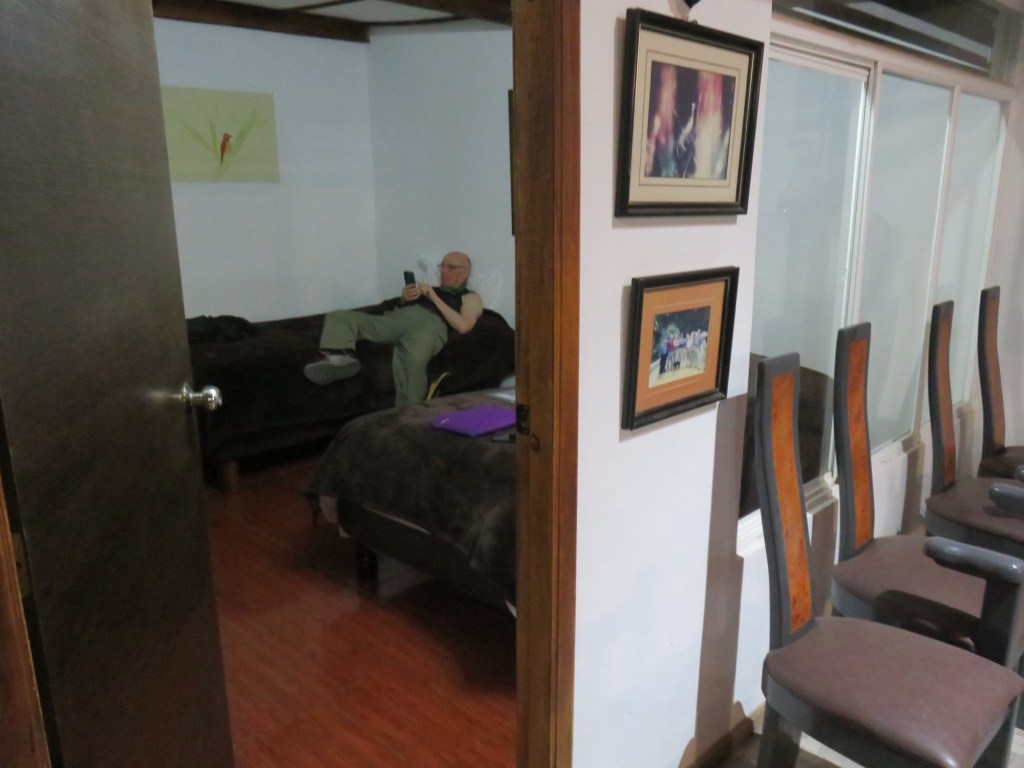
We arrived at our hotel at 4:30. It’s in a wealthy-looking neighborhood of Quito and is called Puembo Birding Garden. It’s popular among birders arriving in Quito.
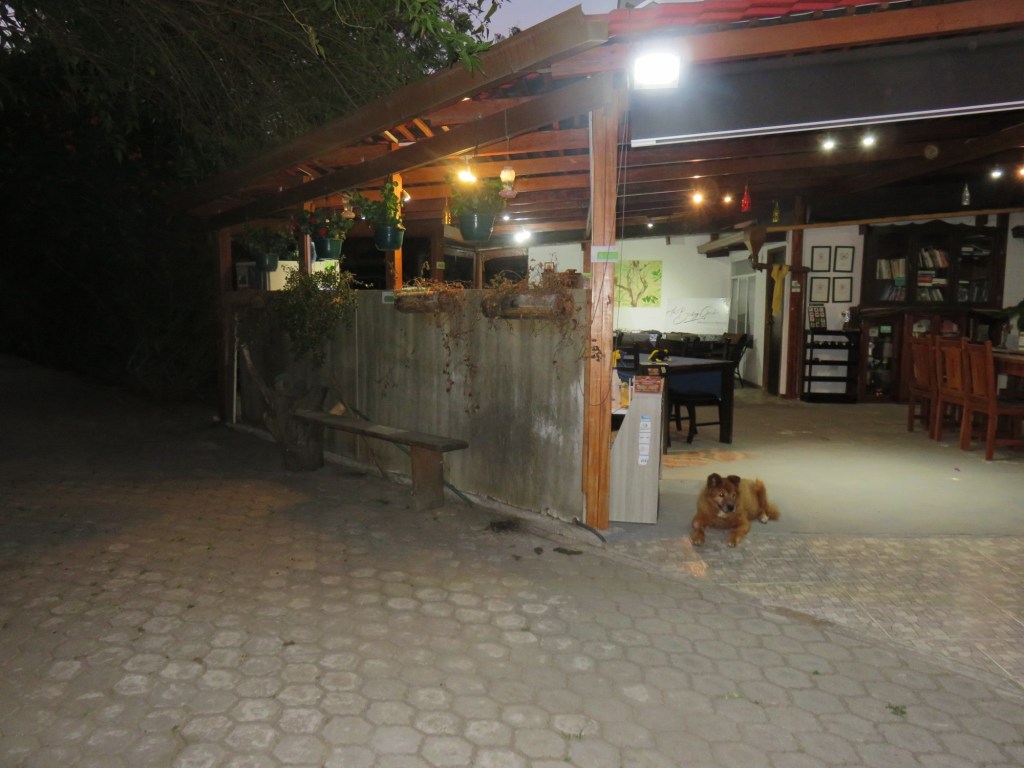
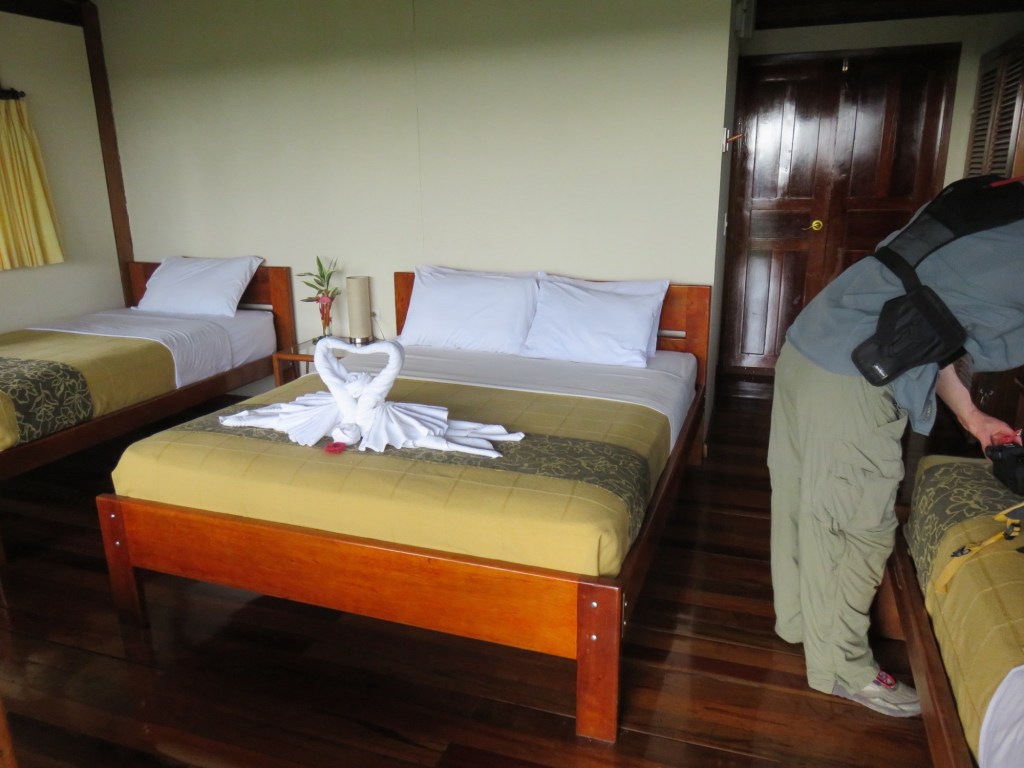
Nathan relaxing in the Puembo roomOutside our room is the open air dining area and hotel dog
Our dinner at the hotel is scheduled for 7 p.m. and it will be interesting to see if it measures up to the good food we’ve had so far. I’ll be too tired afterwards to write more and we’ll be losing power later, so I’m signing off on this post early.
Each night before going to bed here at Yachana, I’ve been purposefully taking a cold shower. It’s the most refreshing part of the day and allows me to get going much faster in the morning. I woke up before the 6 a.m. sunrise again this morning (Wednesday), quickly got dressed and walked up to the dining and river overlook area to see birds. Jefferson and Guillermo were already there and invited me out on a short bird walk before breakfast. Actually it was more of a ride in the Yachana truck to a birding area a ways down the gravel road. Again we saw quite a few birds and some new ones for me. More than 400 species of birds have been seen in the Yachana area. Amazing!
Just returned from a bird walk
We returned for a 7:30 breakfast, with Nathan passing time in the dining area by talking to Hilary, the American volunteer. At the end of breakfast, Robert described the day’s three activities: visiting a local farmer, seeing the health clinic being built by the Yachana Foundation, and then visiting a local Kichwa healer in the afternoon.
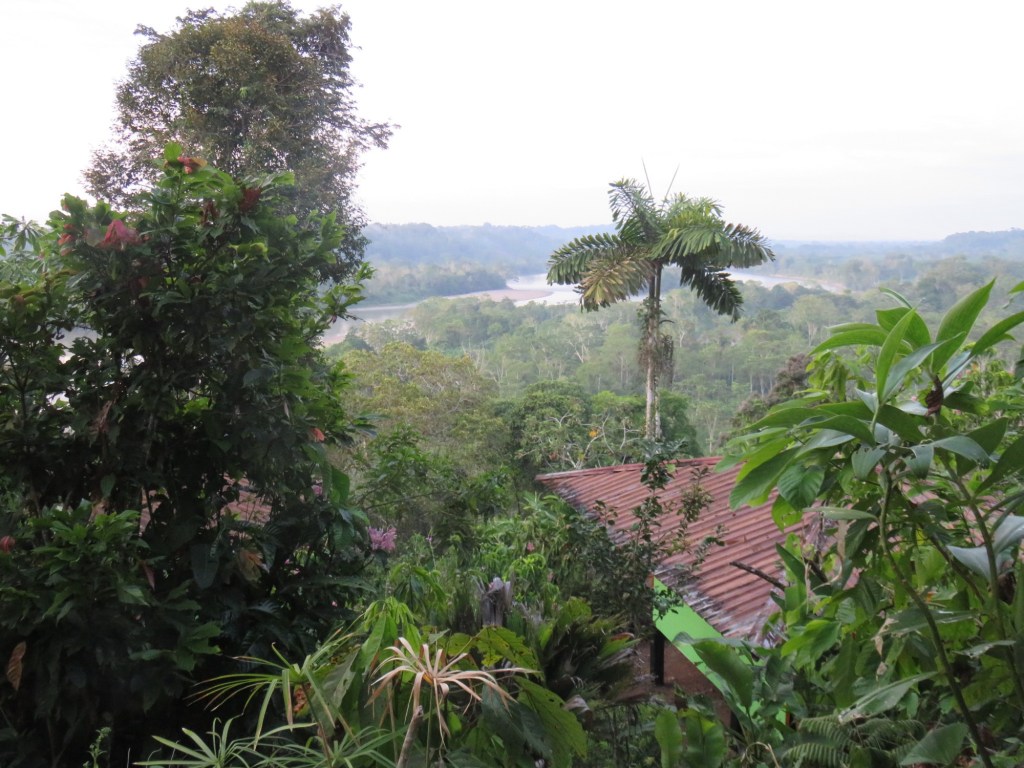
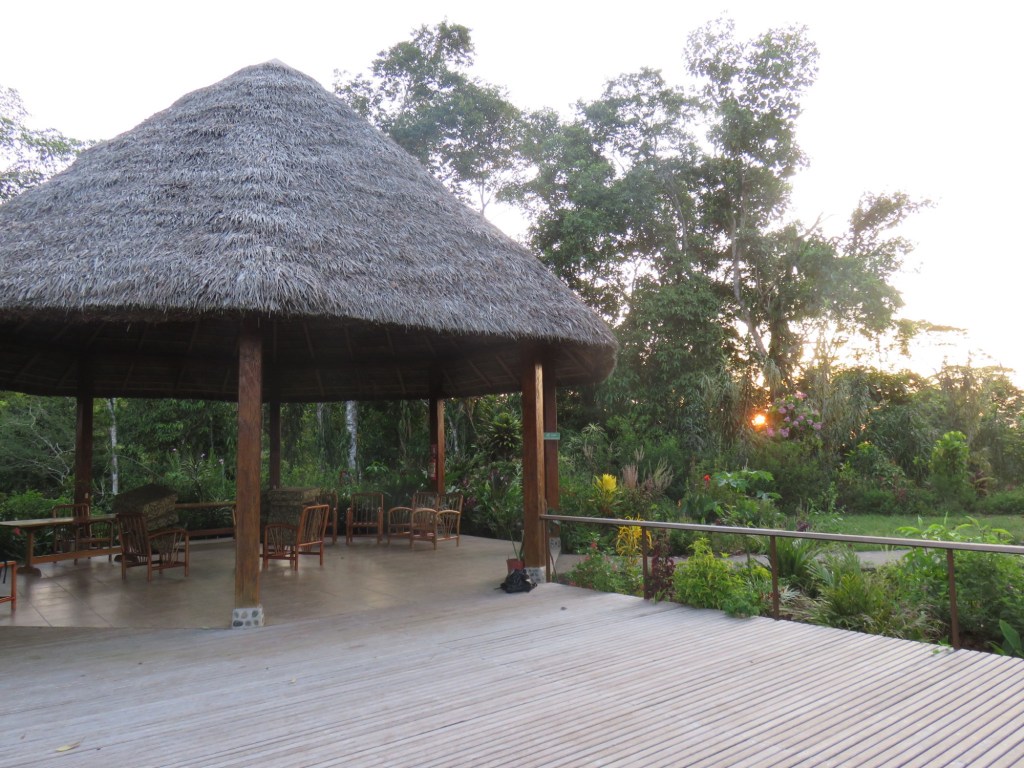
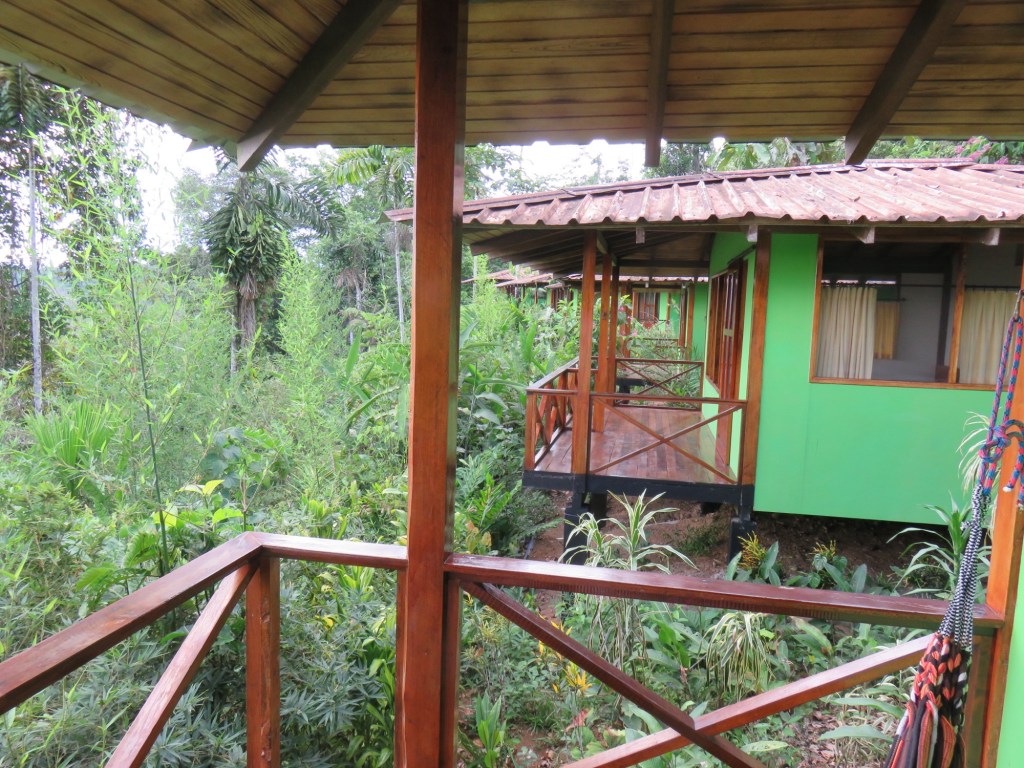
View from behind the roomsThe dining area in the morning
The Yachana truck took Robert, Nathan and I at about 9 a.m. to the farm, where the farmer, Fabian, told us about the native stingless bees he has that pollinate and make special medicinal honey. He also showed and talked about the cacao and other fruit he grows and we were able to sample them all. Native Ecuadorian oranges have green peels, which is interesting.
About 10:30 we were driven to the Yachana health clinic that is still being built, and Douglas McMeekin was there to explain the funding, staff and volunteers they’re looking for to get it running. We also saw the Foundation’s permaculture projects. Douglas has invested 30 years of his life to this endeavor and it’s impressive.
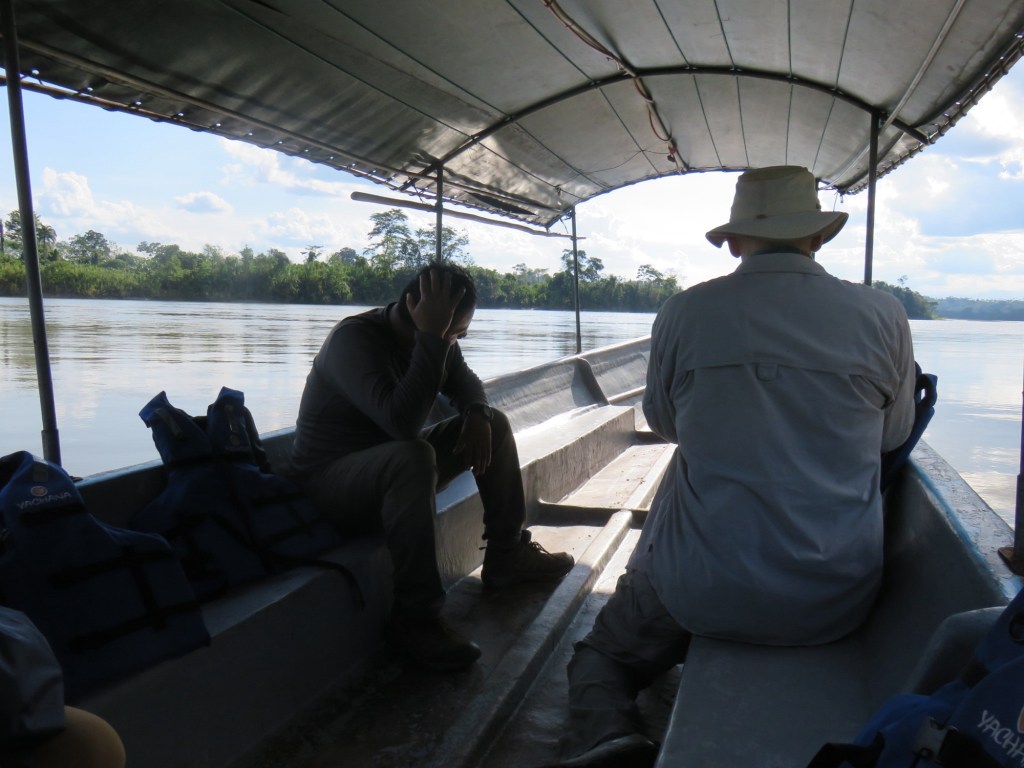
We returned to the lodge for a lunch of tilapia fish, a staple of their diet because it’s easy to raise in ponds. Before lunch was served Nathan helped Robert with some audio recording equipment that will be used to record Yachana’s bird songs. Then about 3:30 Robert, Hilary, Katty (an Ecuadorian staff member), Nathan and I were driven to the Napo River. There, a motorized boat awaited to take us to the Kichwa village that was about 10 minutes away down the river. So we climbed aboard.
In the village Jose, the 84-year-old healer, performed a cleansing ceremony for each of us, meant to restore a healthy balance. The ceremony involved smoke from a traditional Kichwa cigar and a small bunch of leaves brushed over us. Robert provided a description of the background before Jose started.
A few seconds of Nathan’s cleansing ceremony
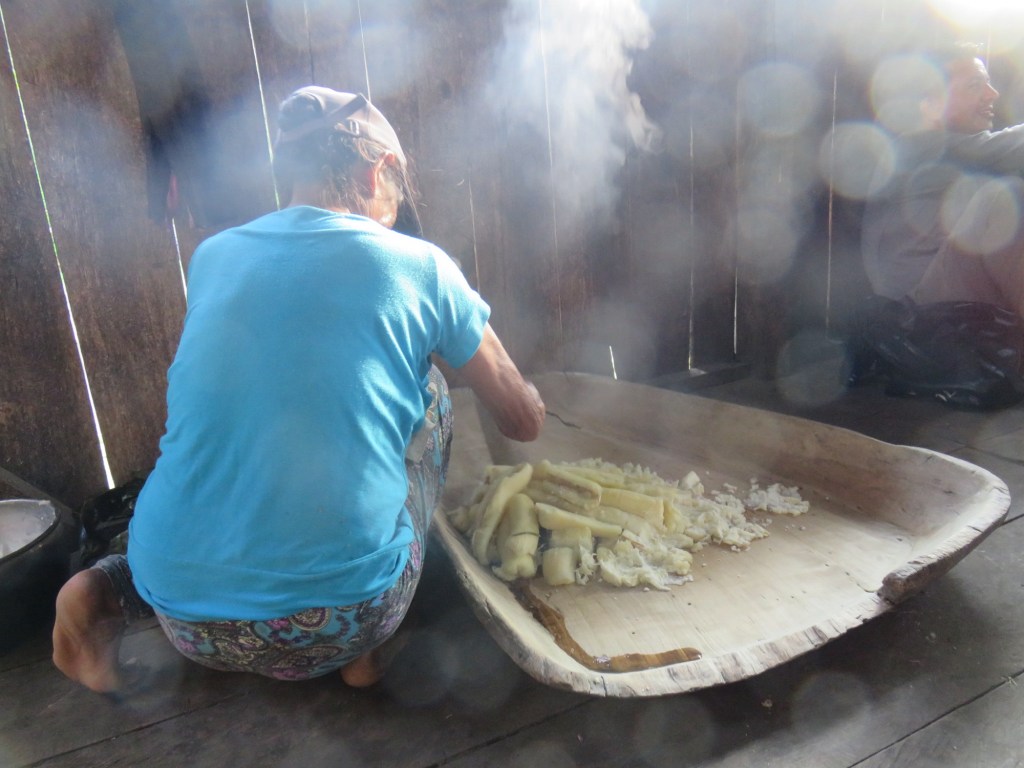
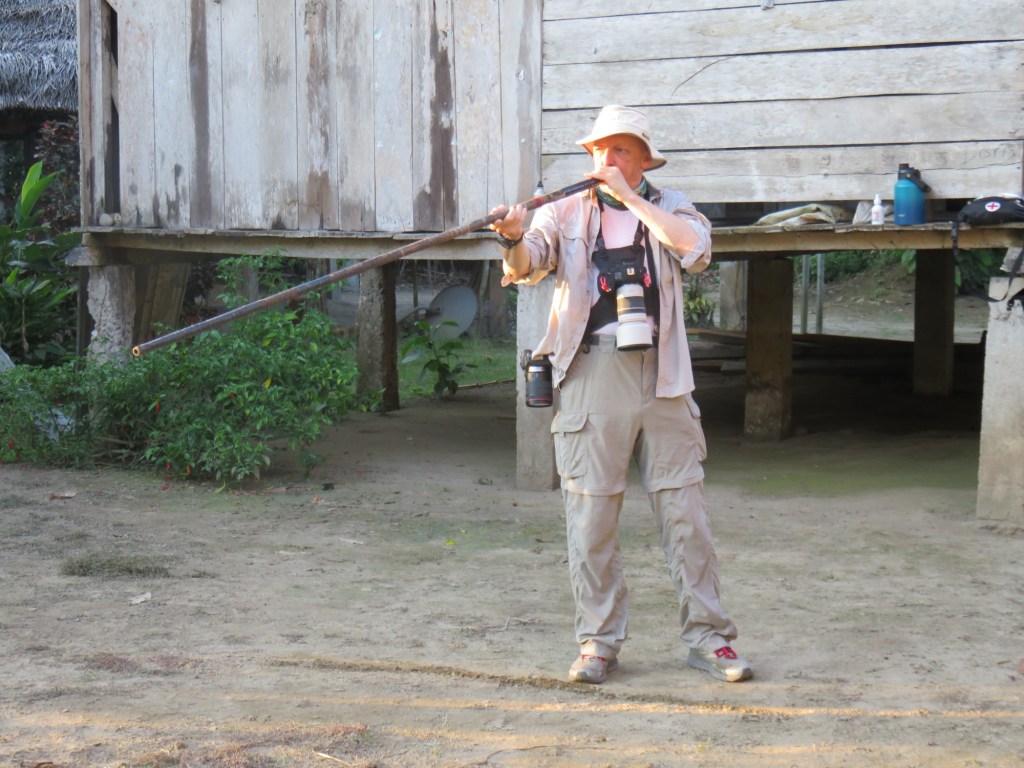
After the cleansing, we went up into the home of her and his wife, where Rosa, his wife, showed us how boiled yuca root was pounded into chicha, a fermented liquid that’s a staple of the Kichwa diet. As the last demonstration in the village, we were shown how to use a blow gun and spear, important tools the Kichwa use still to kill local wild animals for food.
Making chichaNathan trying the blow gunKichwa homes
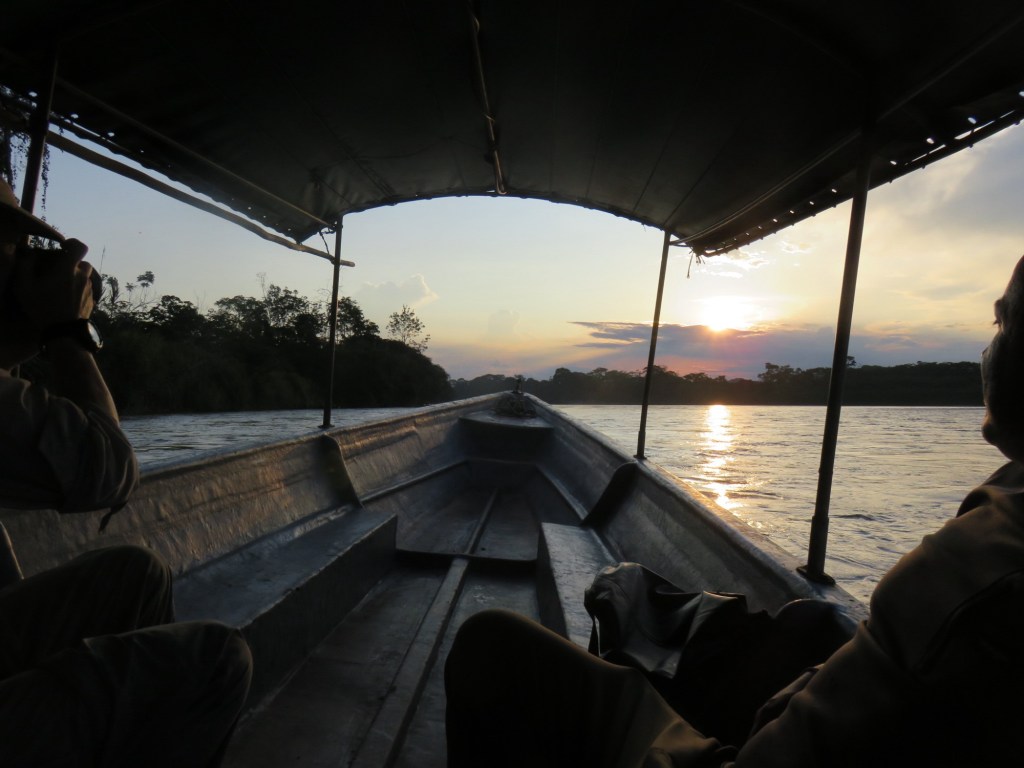
Then we returned in the motorized boat, stopping to drift down the river a bit while watching a beautiful sunset at 6 p.m. Dinner was at 7:30 and was another delicious meal with tiramisu as dessert.
Sunset on the Napo River
Although it was very hot and humid again today, it was easier to take because our activities were less strenuous. But it reached 94 degrees again. We’re just more used to sweating constantly.
It’s 9 p.m. now and the power just went out. I probably won’t be able to publish this until Thursday morning.
Thursday update: the power came back on at midnight but the internet never became available before we left Yachana Thursday morning, so that’s why this post was delayed.
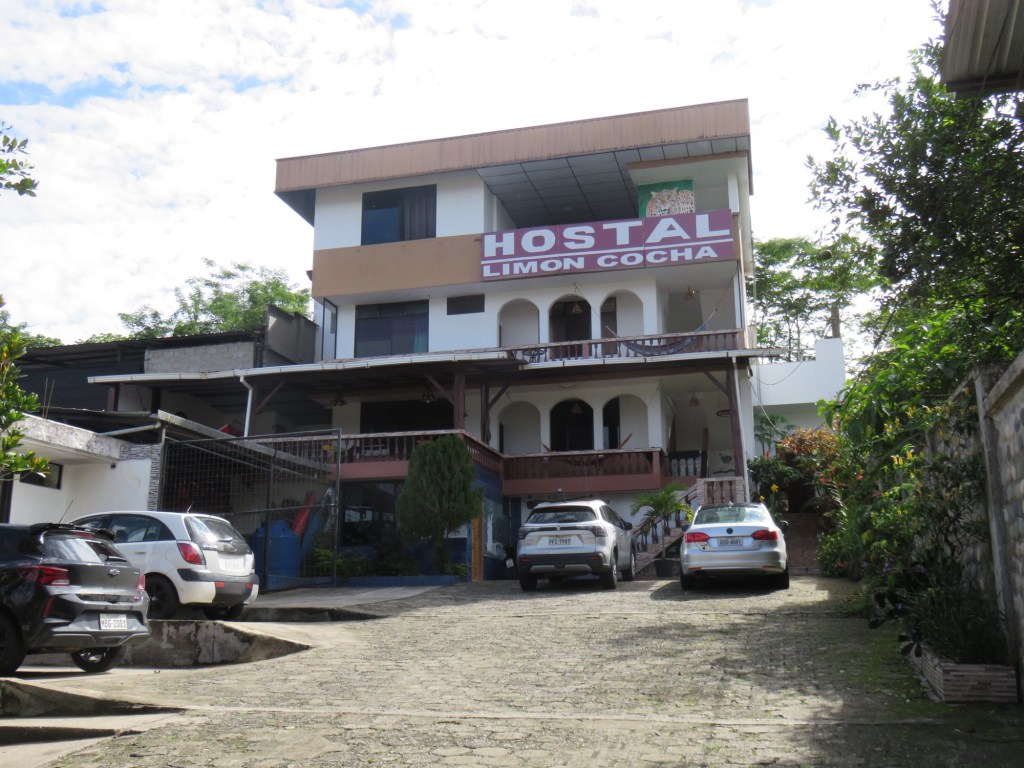
Yesterday we checked out of Hostel Limoncocha after good breakfast and having our laundry done for us. It was a holiday for Ecuadorians, the Independence of Cuenca, and the people in Tena were also celebrating their centennial with some food booths set up.
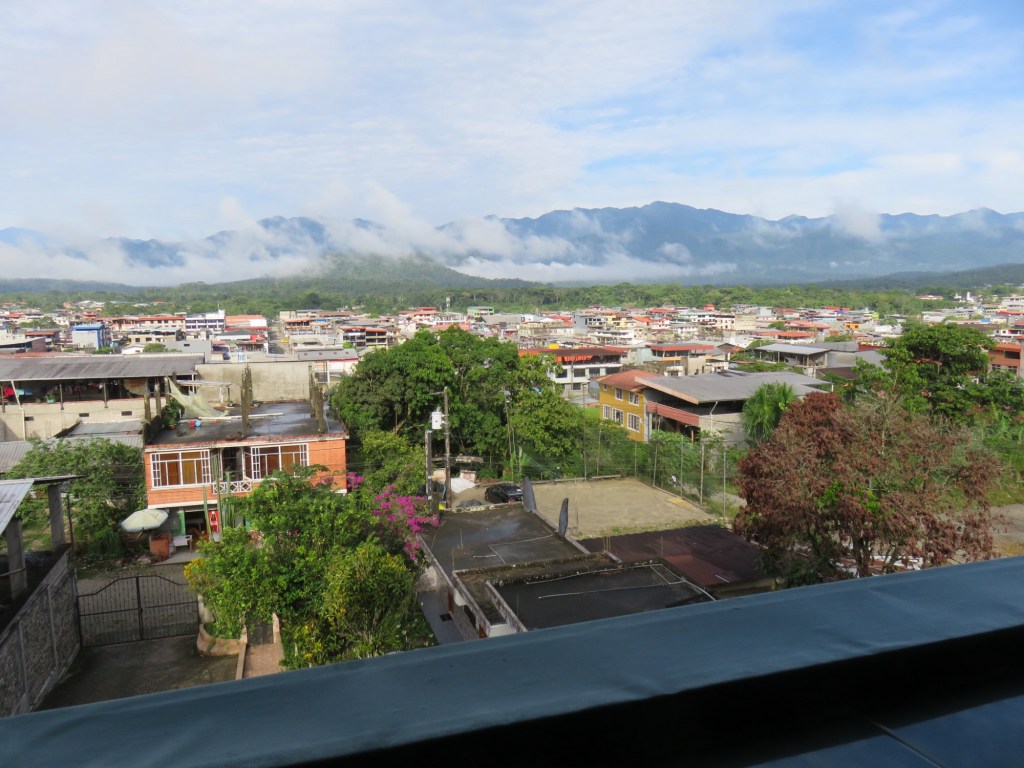
Our room was on the third floor, left side window.The view of Tena from the room
We had requested a private driver to take us from the hostel to our next destination, Yachana Lodge, about two and a half hours away. Arturo, an employee of the lodge, showed up right on time at 12 p.m. in his one-month-old Chevy club cab truck that was beautiful. A bridge had failed on the main road between the two places, so he had to take another route that included many miles on gravel. He was a careful driver but the gravel didn’t slow him down.
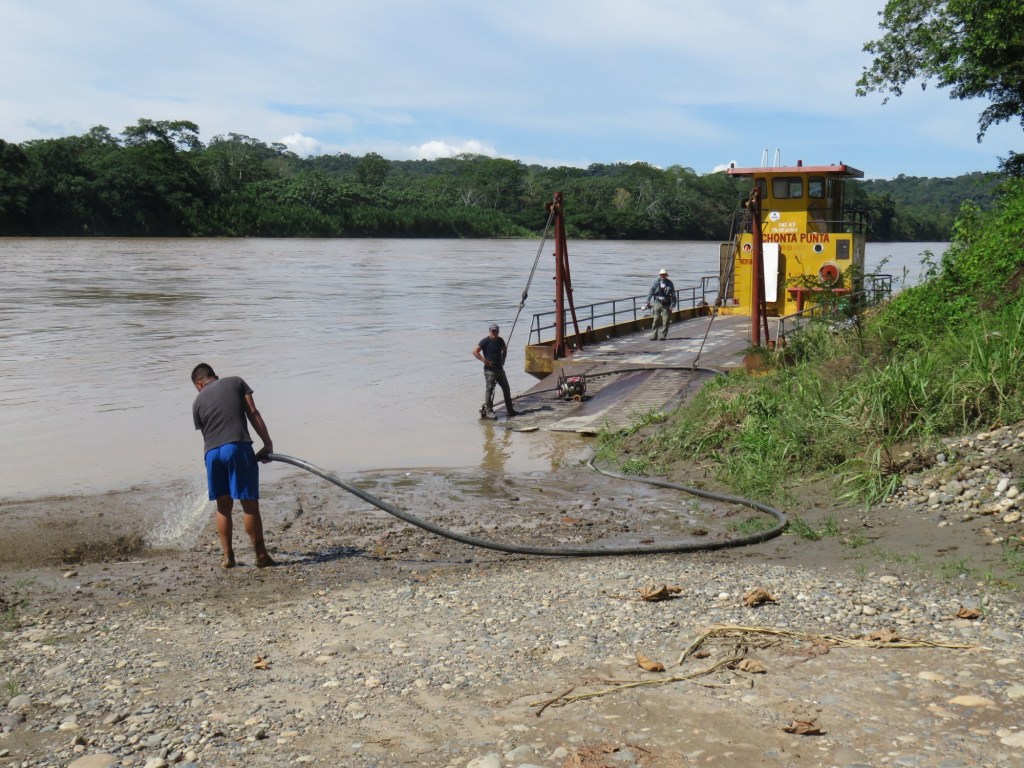
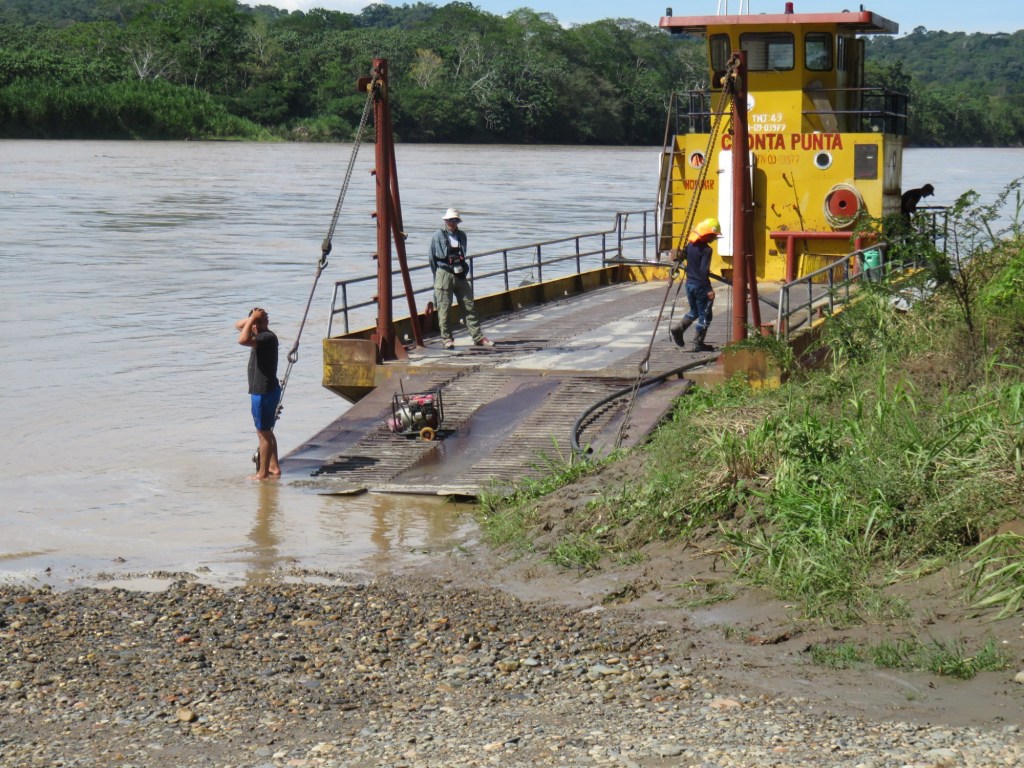
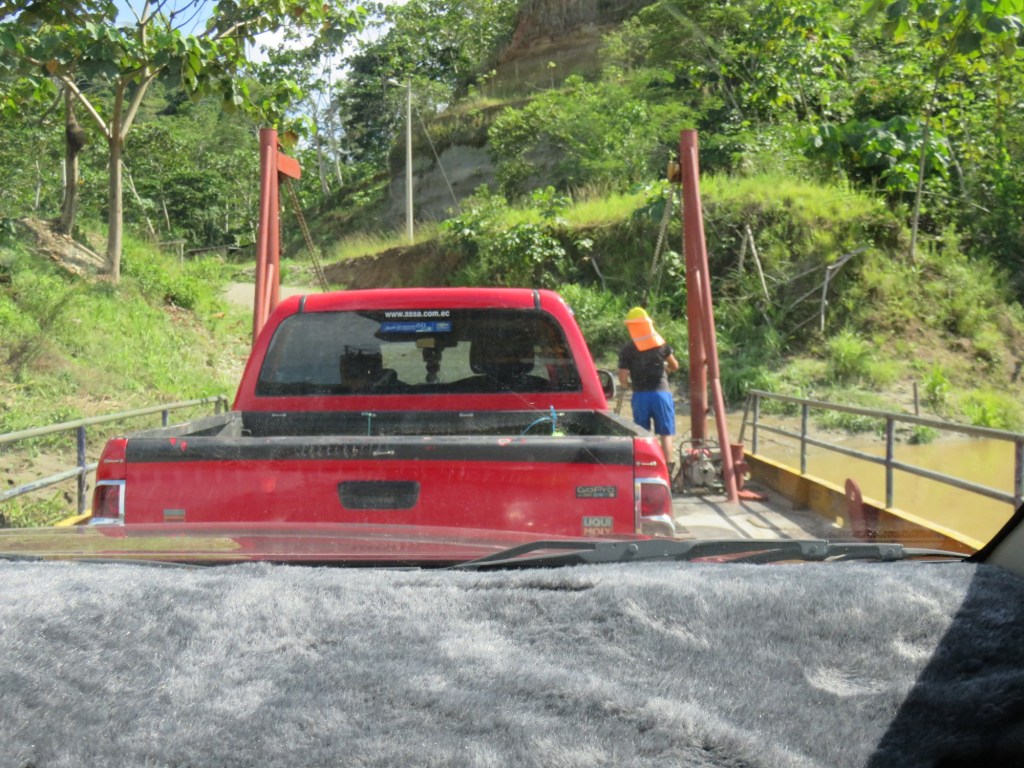
What did slow us was the fact that a ferry crossing the Napo River couldn’t take on its normal payload of two cars because overnight the gravel ramp was covered with mud from a high river flow. (Remember all the rain during the previous evening in Tena?) As we watched and while Nathan took pictures, a man with a high pressure water hose washed the mud away from the gravel ramp. At 2 p.m., we were the first to use the ferry to cross the river that day. But we only had to wait about 15 minutes while the clearing was done. It took maybe five minutes to cross once we were on.
Power washing the mud awayNathan taking photos while the ferry was powered into placeThe view from Arturo’s truck of the second truck on the ferry
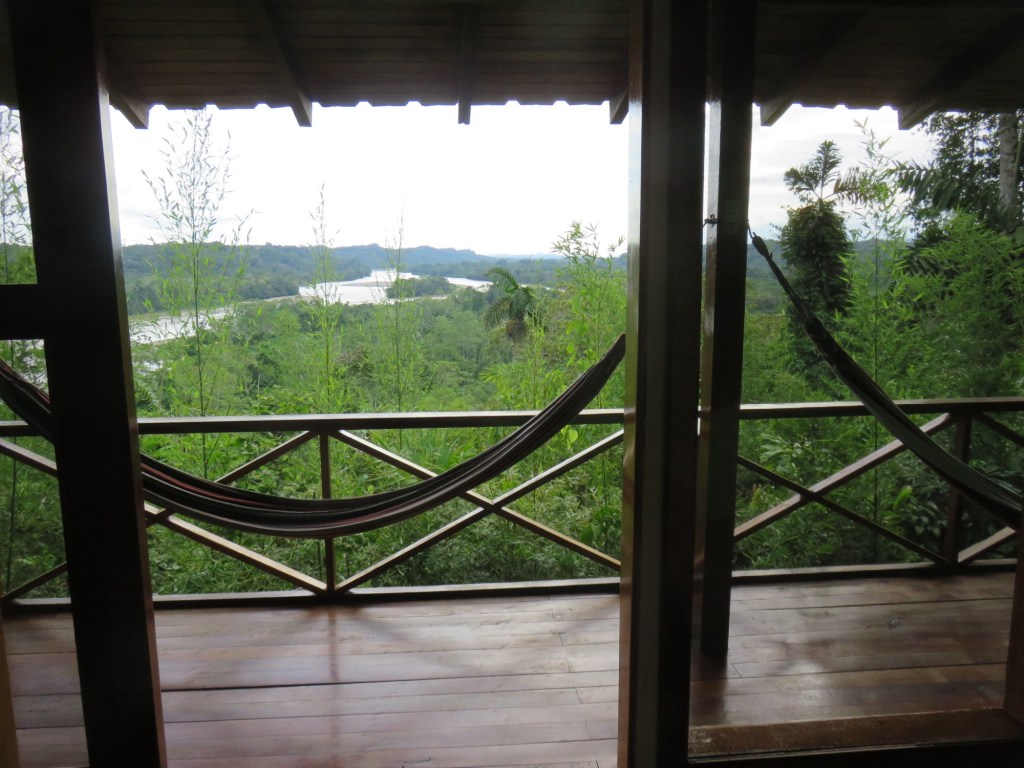
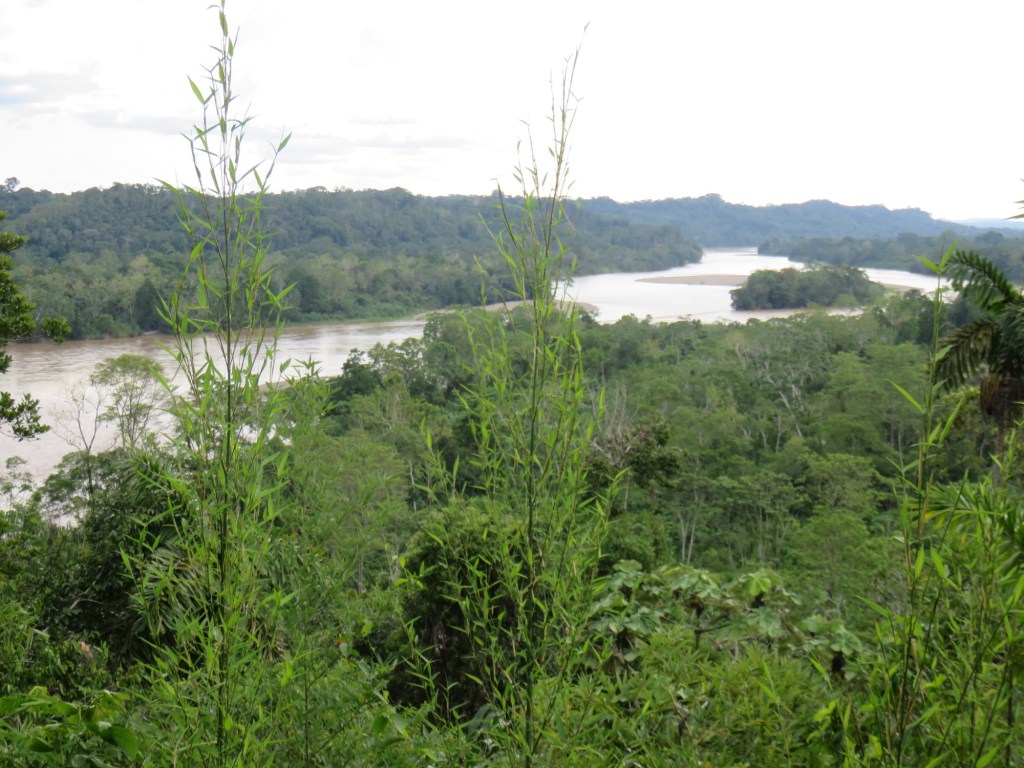
We arrived at Yachana Lodge about 2:30 p.m. and were welcomed by Robert, the manager of operations. He is Ecuadorian and has great English. We were given refrigerated wet hand towels to freshen up, juice and a wonderful lunch right away. Robert explained a few things about the lodge and nonprofit foundation that it supports, then he showed us to our cabin. It’s elevated on a hillside overlooking the Napo River. Spectacular!
Our cabin and its view
He invited us to the deck next to the open air dining area at 4:30, where he had set up a bird spotting scope. The deck also had a view of the river. Jefferson, a 17-year-old Kichwa birding guide, joined us. We saw quite a few birds from the deck. Dinner was another delicious meal at 7 p.m. and then we went on a night walk for a ways down the gravel drive and back, spotting lots of grasshoppers, katydids, and spiders including two different types of tarantulas.
We returned about an hour later. It had been hot and humid, so I took a refreshing cold shower (even though there was lots of hot water) and went to sleep early to be ready for more birding on Tuesday morning at 5:30 a.m.
Today, Robert, Jefferson and his father Guillermo (who is the real birding expert), Hilary, an American volunteer here, and I left in a utility truck in which the bed was fitted with several bench seats. The driver brought us to a partially cleared area where we birded for about 3 hours while walking along a gravel road.
We returned in the truck to the lodge for breakfast and Nathan joined us. Then after lunch and 30 minutes to prepare, we left again to go to a trail that led to three bird blinds. It was quite a hike in the heat and humidity, up and down hills, but we saw four species of manakins and many other birds. It lasted about 2.5 hours and tired me out.
Returning again to the lodge, we were greeted by the owner, Douglas McMeekin, who has lived in Ecuador for more than 30 years and started the Yachana nonprofit to provide a local health clinic, plus the lodge. Over lunch he told us his interesting history and that of Yachana. He’s 82 years old now.
Now we’re taking a break before going on a shorter bird walk to see other species at dusk. And when I arrived in the cabin to write this, at 2:30 p.m., my phone said that it’s 94 degrees but feels like 103 due to the humidity. It’s hot but beautiful here!
Today, Sunday, was a travel day. After getting up, showering and getting dressed, I repacked everything for the trip. Nathan and I met at 8 a.m. and checked out of the Hotel La Liria. It had been a good choice because it never lost power due to its location near a hospital, a zone that’s never shut off. (Thank you, Maritza, for this recommendation!)
We took a taxi to a restaurant in downtown Macas that Maritza had suggested for breakfast and sat at an outside table outside and enjoyed a good breakfast, both of us choosing avocado toast with juice. I also ordered guayusa tea.
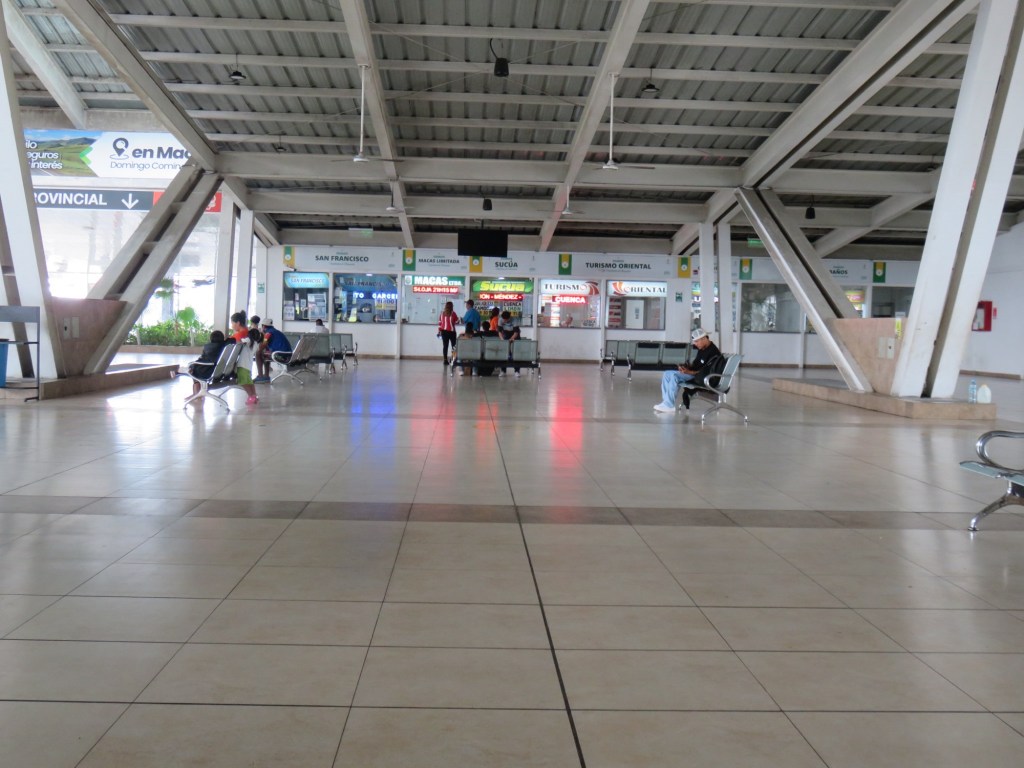
Then we walked a couple blocks to an ATM to pull out more cash and waited at the adjacent taxi stand. A taxi quickly took us to the bus station, which was impressively large, clean and not too busy. We bought bus tickets to Tena, our next destination city, for $9.50 each.
The Macas bus terminal
At 10:20 a.m., 20 minutes before our bus was due to leave, Maritza and her family came to the terminal to say a final goodbye. She also gifted me one of her books in Spanish, a novel. (The previous night I had given her a book of American English sayings and Seahawks attire for her husband and the two boys.)
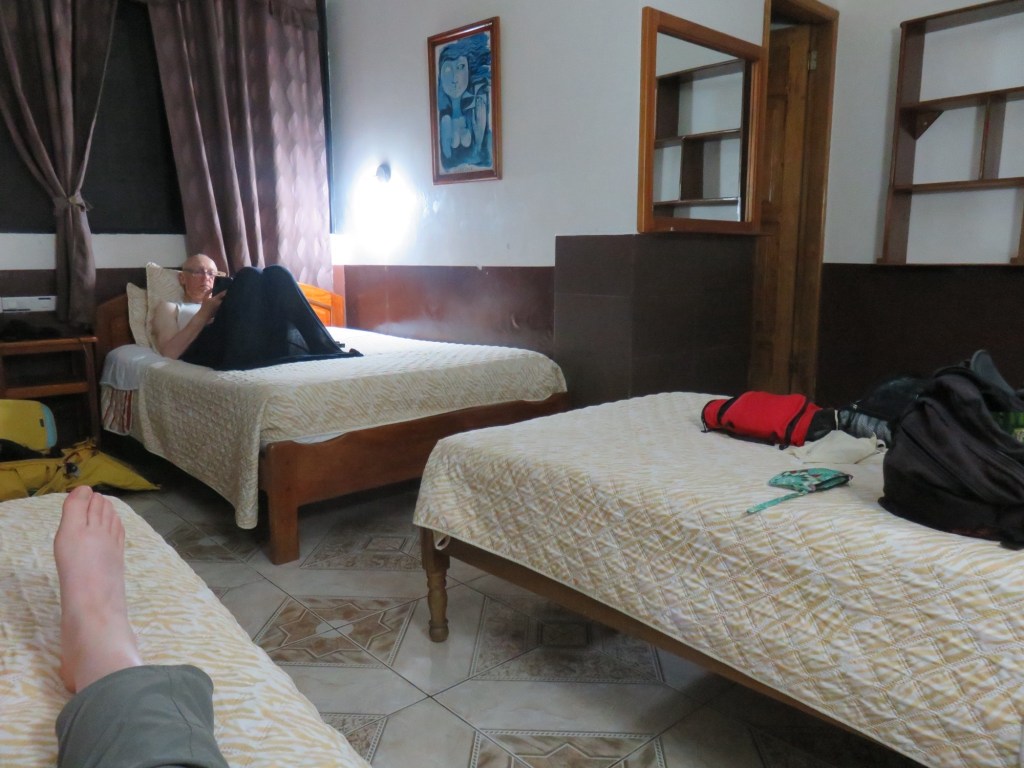
The bus departed on time and drove to the city of Puyo, picking up and dropping off lists of local,people along the way. It was a trip of 3 hours or so. At Puyo we changed to another bus from the same bus company that left immediately to go to Tena. We finally arrived about 4:30 and found a taxi (fare of $1.50) to take us to the Hostal Limoncocha, our accommodation for the night, where a room with three beds and a private bathroom cost $24. There was no power when we arrived, but it was still plenty bright to see.
We were really hungry since we hadn’t eaten any lunch, so as soon as we checked in and dropped our bags, we got a recommendation from the front desk person for a restaurant downtown Tena and took another $1.50 taxi ride to it. We enjoyed panini sandwiches there but we were still hungry, so we walked next door and ordered a small pizza. We were finally satisfied.
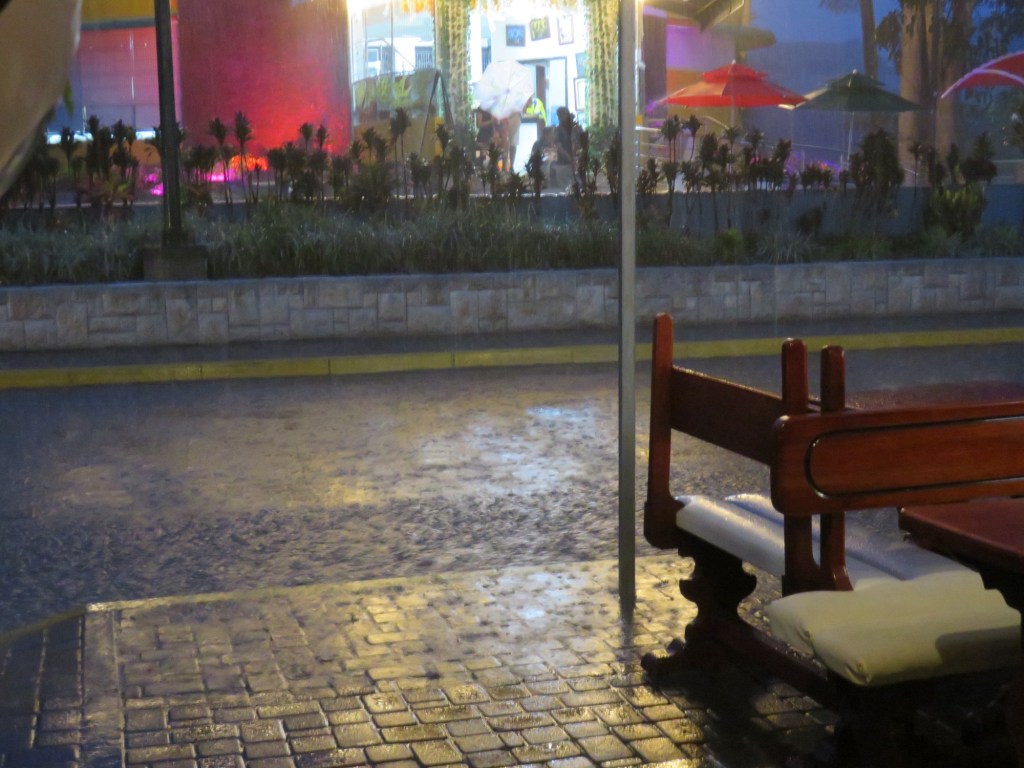
But while we were eating it started to pour rain. Absolutely pour! A river started running down the street. About 78 degrees, 100% humidity, lightning and thunder. After we finished and paid for the pizza, we waited under the restaurant awning for an available taxi. We had to wait 10 minutes or more, with lots of full taxis and cars going by, but we finally found an available one.
Looking at the river of rain in the street outside our Tena restaurant
Even now, more than two hours later, it’s still pouring down rain and thundering. The room is on the third/top floor of the hostel so it’s very loud. Either it will be a soothing sound for sleeping, or it might keep me awake. I’m not sure yet. I can’t even hear my phone when it’s sitting next to me! And did I mention that it’s really humid? Welcome to the Amazonian region!
Yesterday and today were busy, beautiful, adventurous days. Friday morning started with another fruitful bird walk with Fabricio at Buglas, adding more first time bird species. I’ve lost count of how many new ones I’ve seen. We sat in a bird blind with our arms leaning on a large board to steady the binoculars, focused on birds in the trees. Then Fabricio spotted a huge bullet ant walking toward his elbow. Yikes! He called my attention to it, then flicked it off the board into the woods. I was so glad it had been walking toward him, not me!
We returned for another delicious breakfast. I learned that the name Buglas comes from the local name for oropendula birds, which are quite common there. Nathan and I repacked our backpacks, then we relaxed in the garden to wait for a taxi that was scheduled to come at noon.
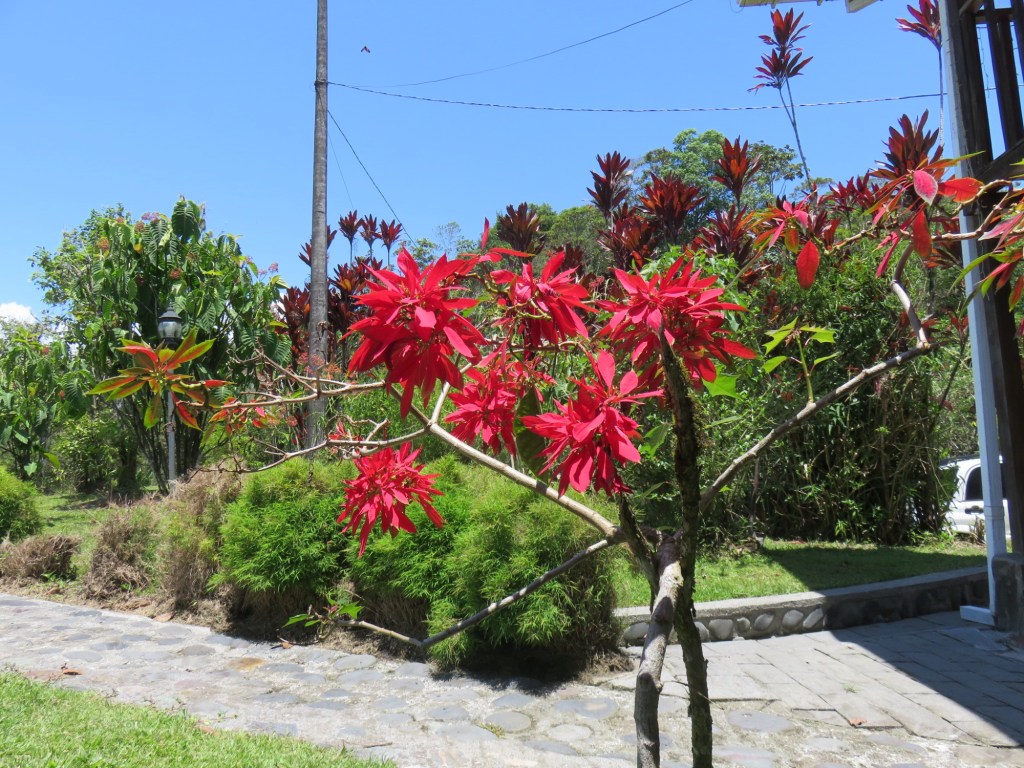
A poinsettia-like plant in the Buglas garden
The taxi took Nathan and I and our packs to downtown Limón once again, where we ate lunch in a restaurant next to the bus terminal. It was a sunny day that felt hot and humid to us. The planned next step was to take a taxi to Las Cascadas Coloradas (Colored Waterfalls) where my Ecuadorian conversation partner, Maritza, and her husband would pick us up about 4 p.m.
We had to wait a few minutes at the taxi stand for a taxi to show up. Then the pickup truck taxi took us 12 kilometers up a gravel road to the waterfalls park, charging us $8 for the ride. The entrance fee to the park was only $3 each.
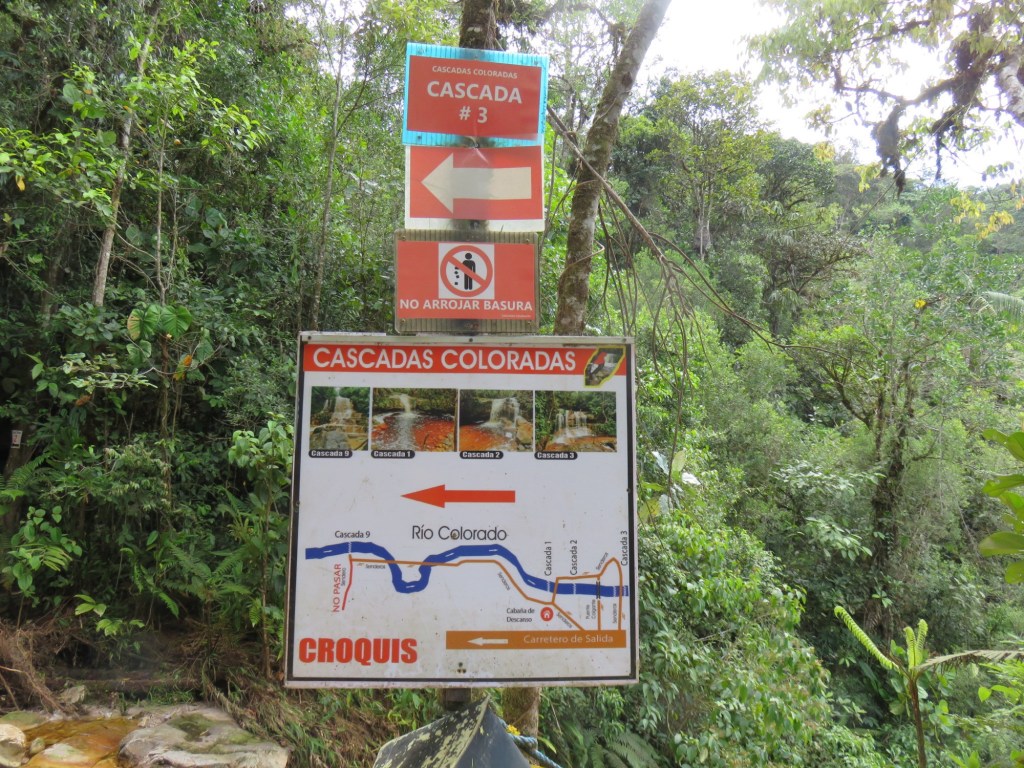
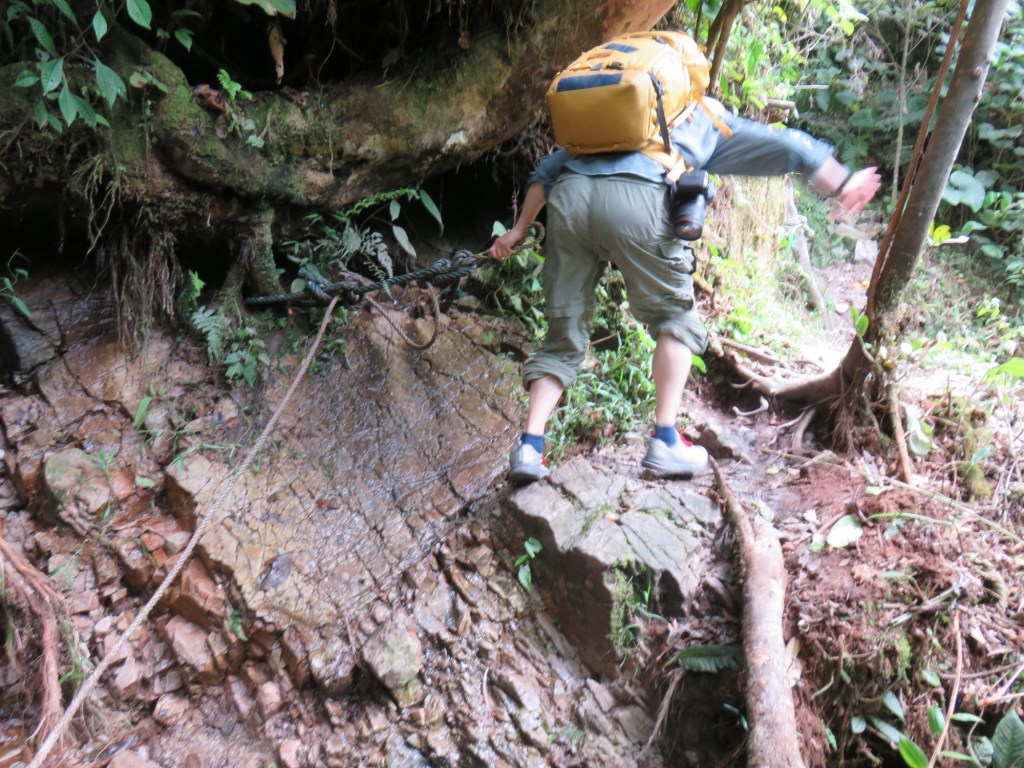
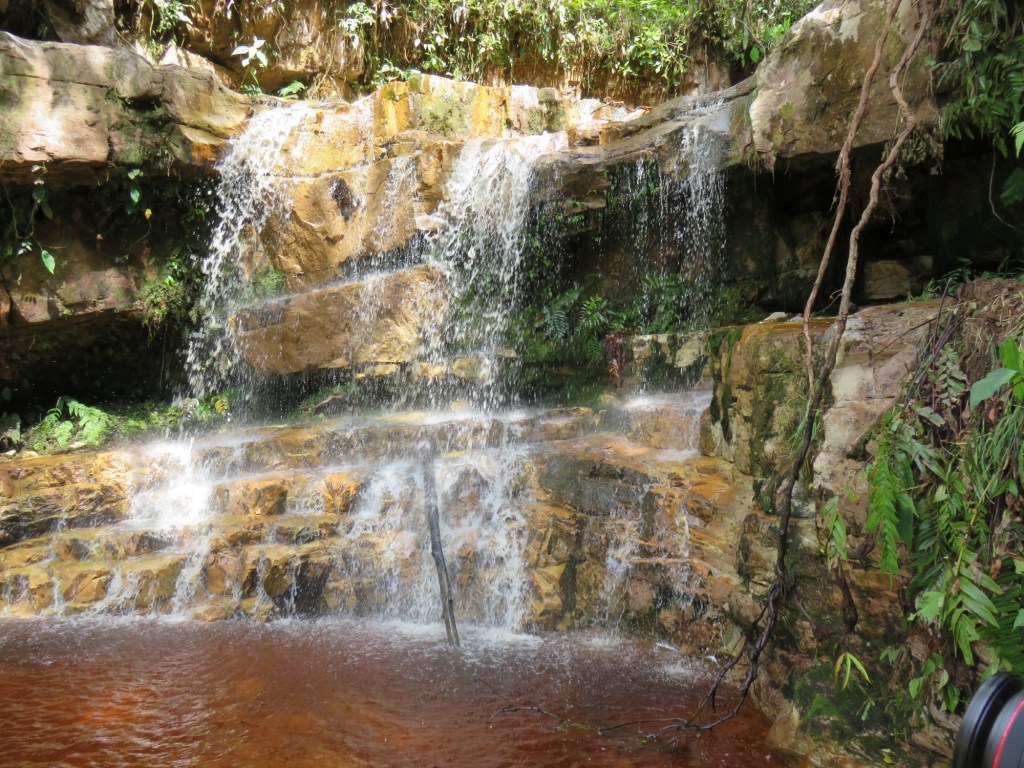
In the park, there were a few small cabins for overnighters, a volleyball court, restaurant and a hiking route to see the waterfalls, which was described to us in Spanish after I left my backpack in a storage area in the restaurant. So Nathan and I started down the hiking route. It turned out to be a relatively strenuous hike in which we needed to use ropes attached to rocks to go up or down the path. It was challenging but doable. The waterfalls were pretty, with orange colored water that was probably from a high iron content, although that wasn’t explained.
The route mapNathan ascending the trail in front of meColorful water of the fallsOne of the three waterfalls
The hike was about 45 minutes out and then back on an easier trail. At the last falls before we turned around, there were two nuns in full-length white habits, having done the route we thought was relatively strenuous. It really surprised us!
It was about 3:15 when we finished, so we cooled off for a while. I bought a $1 colada morada, which is a sweet berry drink, and Nathan got a $1 fruit-filled ice cream. We spent a few minutes talking to an Ecuadorian lady who teaches English and her sister and nephew while observing several Cocks-of-the-Rock emerge for their ritual displaying in the park.
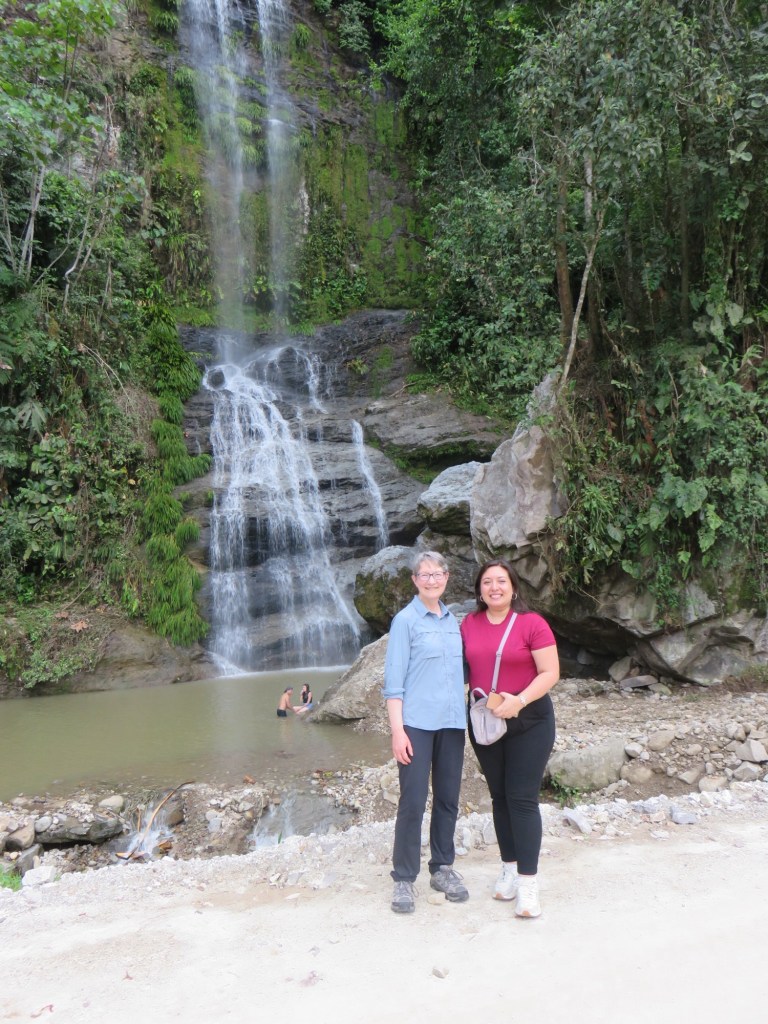
Then Maritza and her husband Johnny arrived. I was so happy to meet them in person, after more than a year of twice weekly conversations online. We talked for a few minutes while they ate some fries as a snack, then we all got into their Nissan Pathfinder to go to their home city of Macas. It was a 4-hour drive that included several short stops along the way, including one at another waterfall.
Maritza and I, happy to finally meet in person
When we arrived in Macas about 8 p.m., we dropped off our luggage at the hotel Maritza where had reserved two rooms for us, Hotel La Liria in downtown Macas. Then we went to a restaurant for a late dinner and lots of conversation in both English and Spanish. Her husband teaches English at a Catholic middle school. After dinner, they returned us to the hotel and I went to sleep much later than usual.
This morning it was thundering and raining in Macas. That ruled out the small airplane ride around Sangay volcano that we were hoping to take. But we enjoyed a good breakfast together, with Nathan and I trying the traditional Ecuadorian tigrillo dish made of green plantains and cheese, topped with a fried egg and avocado, plus hot guayaba which is a traditional tea.
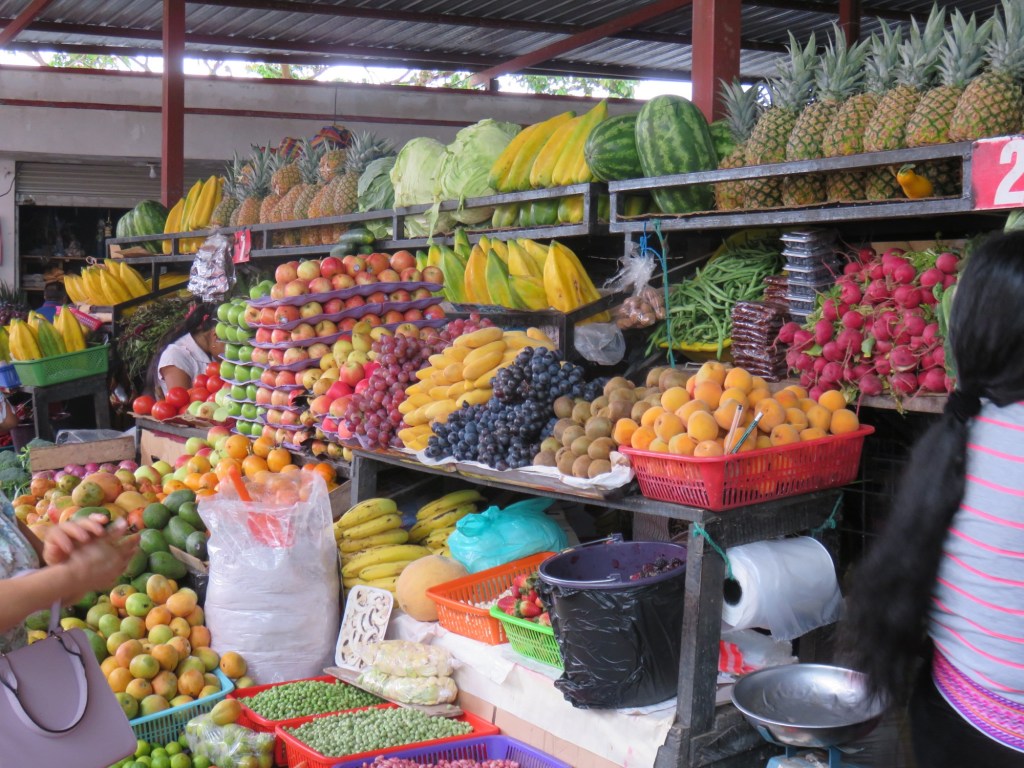
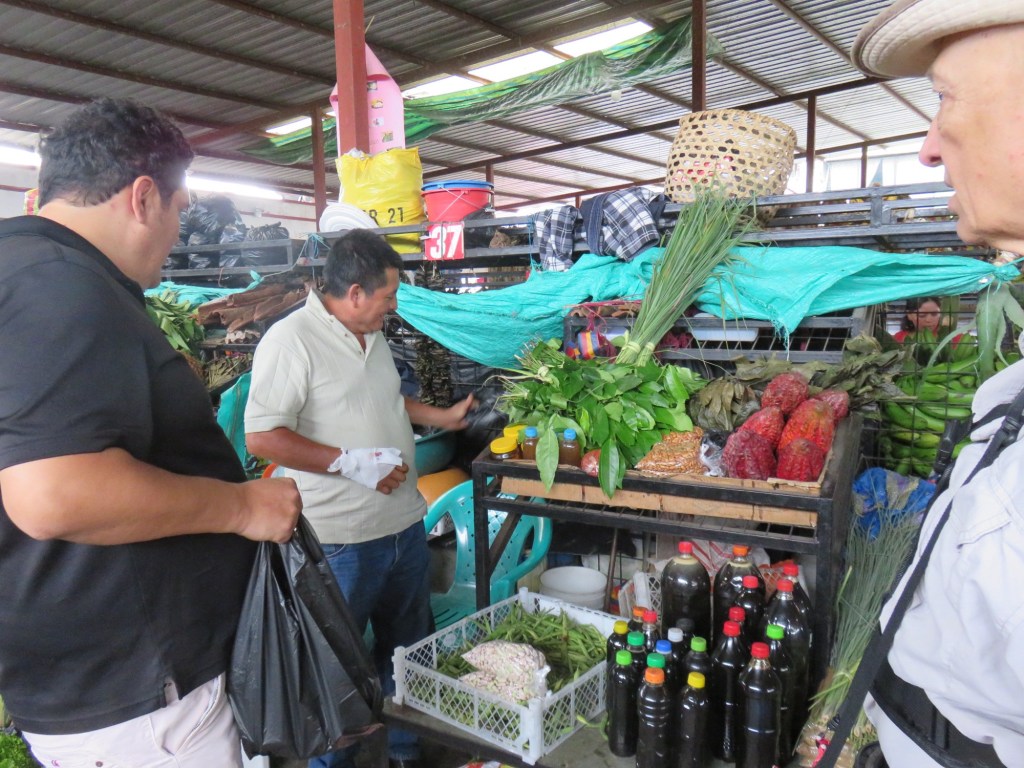
Then we walked through a market in which Johnny bought several samples of Ecuadorian vegetables or fruits for us to try.
At the marketJohnny in black and a vegetable vendor
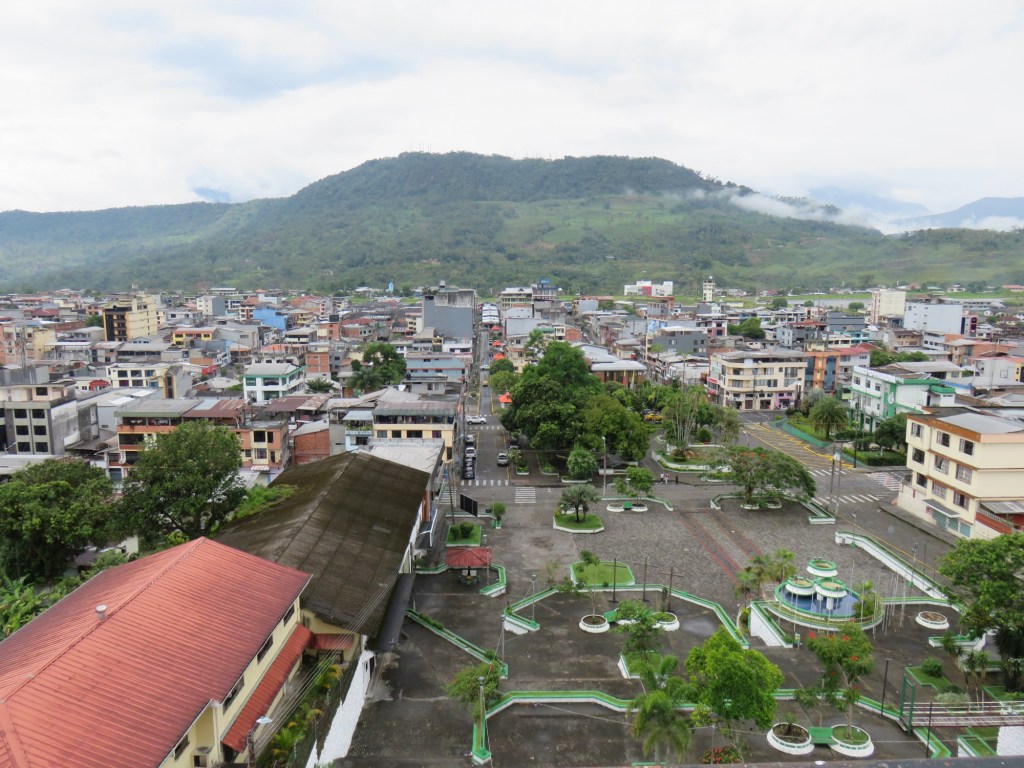
We also went to the Catholic Church in town which is attached to the school where Johnny teaches. We went inside the sanctuary and even up to the belfry to have a great view of the town.
A view of Macas from the church belfry
We walked in a park, sampled “guaguas de pan” which are sweet rolls shaped like a baby with icing added to create a baby’s face and are available only in the days before El Día de los Difuntos (Day of the Dead). Then we waited for the owner of Chiguazas Labyrinth to pick us up and take us there, something that Maritza had arranged for us.
The owner, Romulo! His mother and his 7-year old daughter Gabriela, arrived about 12 to take us to the park. It was a 90 minute drive through heavy rain and lightning. Once we were there, it stopped raining, thankfully. A family of 5 joined us there. Romulo took us on a hike through the park, natural stone labyrinth and quite a strenuous trail to see fossils, caves, and two fast moving rivers., while narrating in Spanish. I understood about 70% of the explanations. We finished about 2 hours later and we returned to a late lunch that Rómulo’s mother had cooked: rice, lentils, boiled purple potato and chicken.
After cleaning up, Romulo returned us to Macas and our hotel. We met Maritza, Johnny and their two sons at 7:30 for dinner and more conversation. We capped off the night at an ice cream shop. At both the restaurant and ice cream place, we ate outside where it was pleasantly warm. Then they drove us to our hotel for the final night in Macas.




 Lori's Travels