
Yesterday, Tuesday, we checked out of Yatama Eco Lodge and we moved on to Pacuare Reserve, on the coast of the Caribbean Sea. Before light, we had been woken by howler monkeys again, but very close this time. When it got light, both Stephanie and I went out to watch them. It was a group of about a dozen. After a light breakfast at 7:15, we were driven down the horrible rocky road from Yatama in the 4×4 by one of Pedro’s employees, Luis. He was very good at navigating between boulders and ditches, returning us to the Palmitour restaurant where we had eaten lunch on Sunday. Our new driver, Juan Carlos from Costa Rica Drivers was waiting there for us. We loaded up our luggage into his tourist van and set off to Pacuare. About 10am we arrived at the Goshen dock on the Pacuare River, where we would be transported by boat to the reserve.
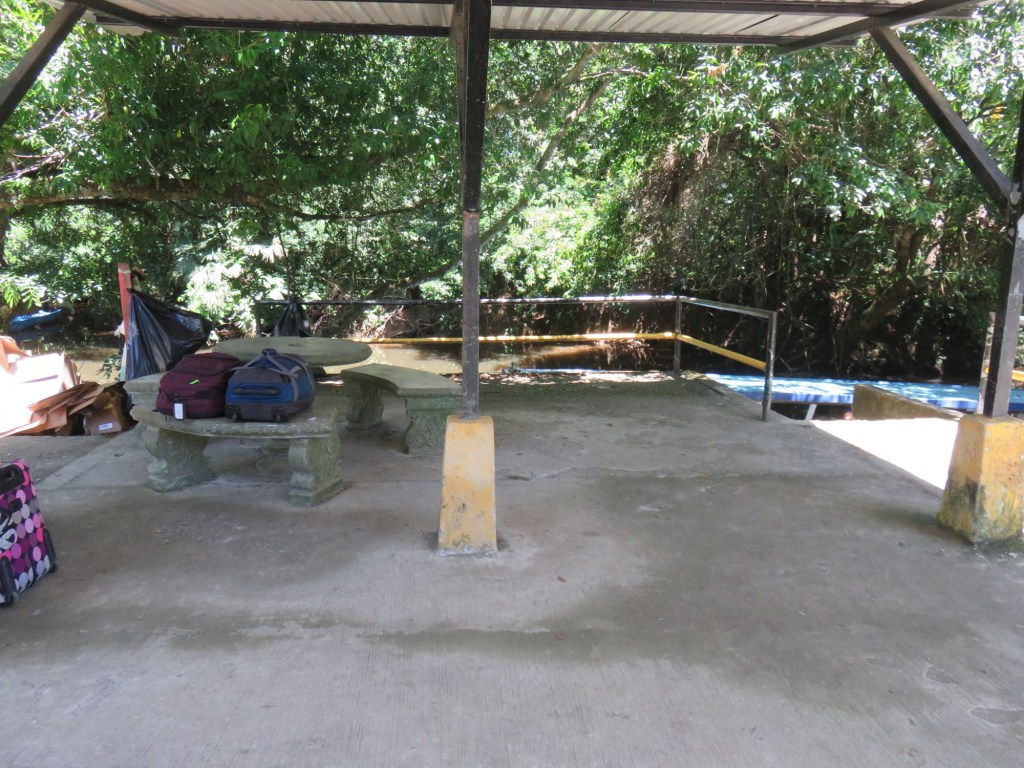
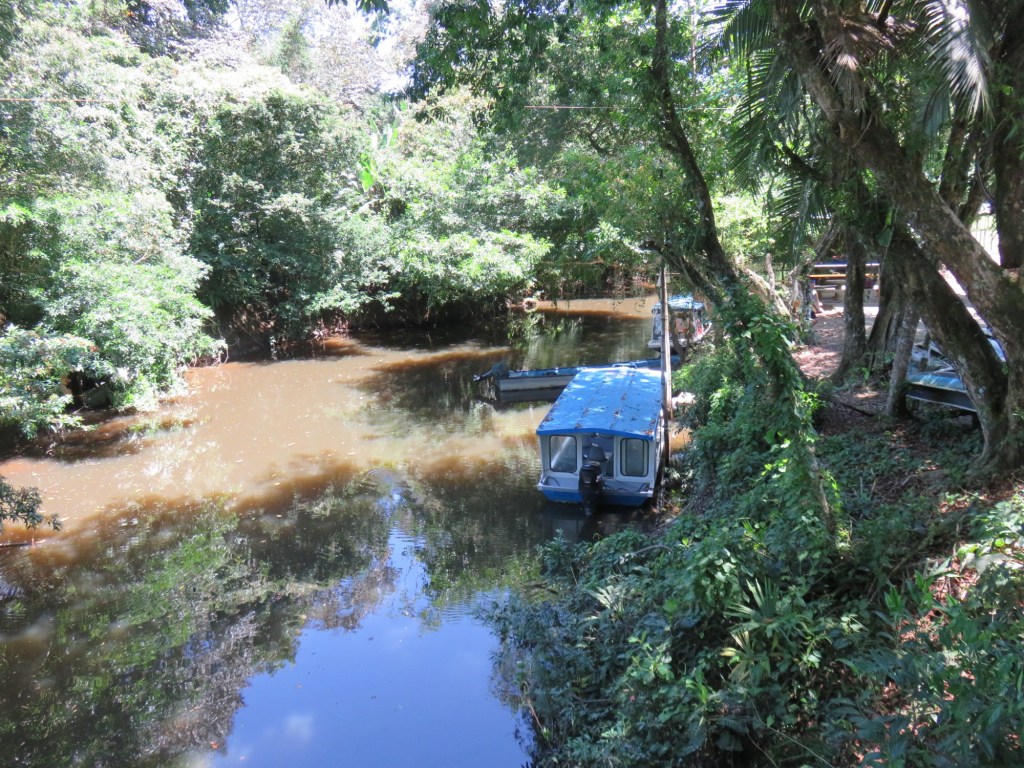
Juan Carlos waited with us at the dock, where there were lots of huge mosquitoes. We had to keep walking around and swatting them, even with bug repellent on, to avoid getting bitten. And it was hot and humid. At 11am, the launch from Pacuare came to pick us up. Eder, an employee at Pacuare, and Michael the boat driver, took us on a speedy 15-minute ride down the river and into the canal that parallels the Caribbean coast.
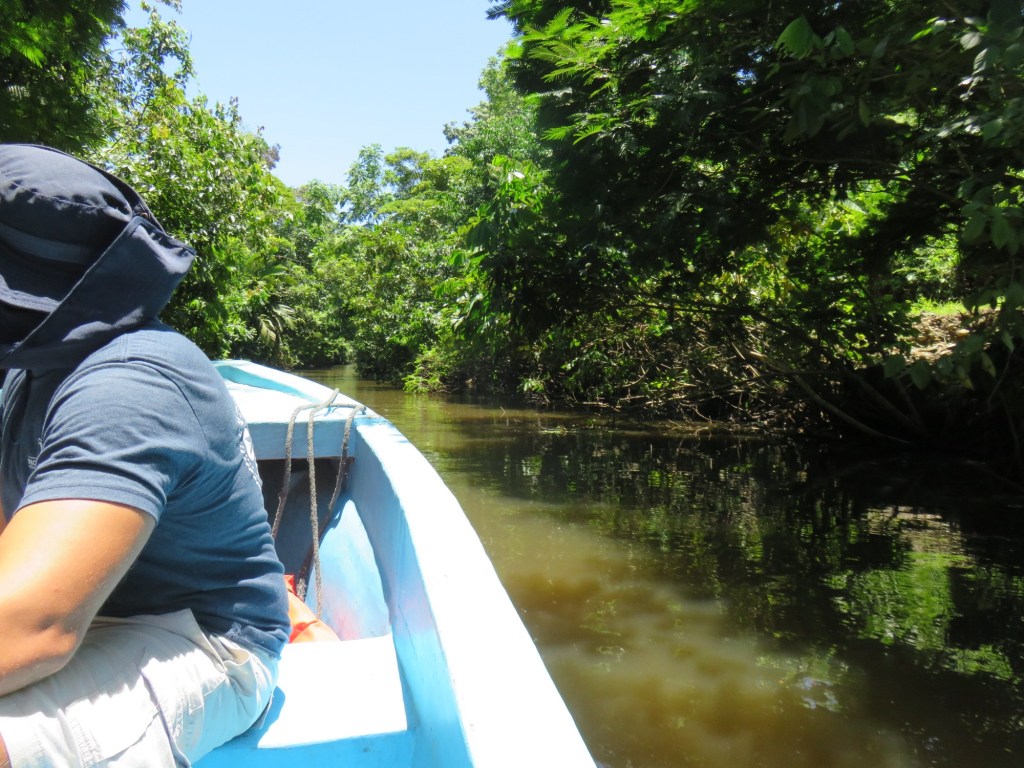
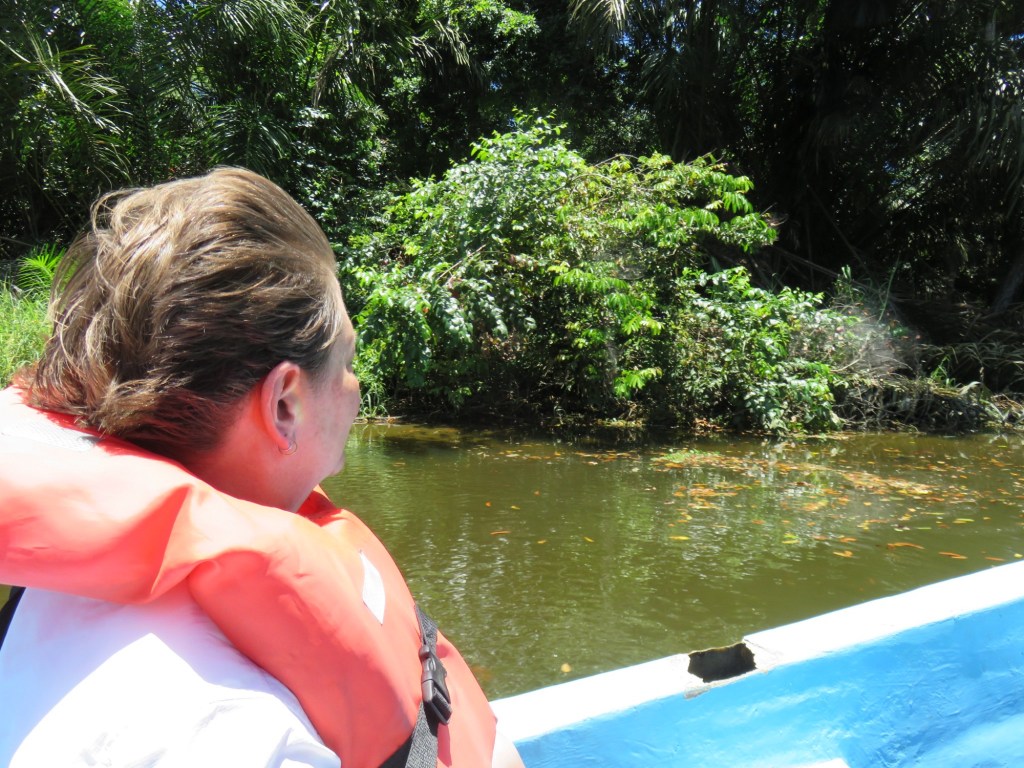
We arrived at the reserve and got out on the sandy bank of the canal. Eder took our bags to the Casa Grande where there are 4 guest rooms on the second floor, looking out at the beach through the trees. And it was hot and humid. (I bet I mentioned that already, huh?)
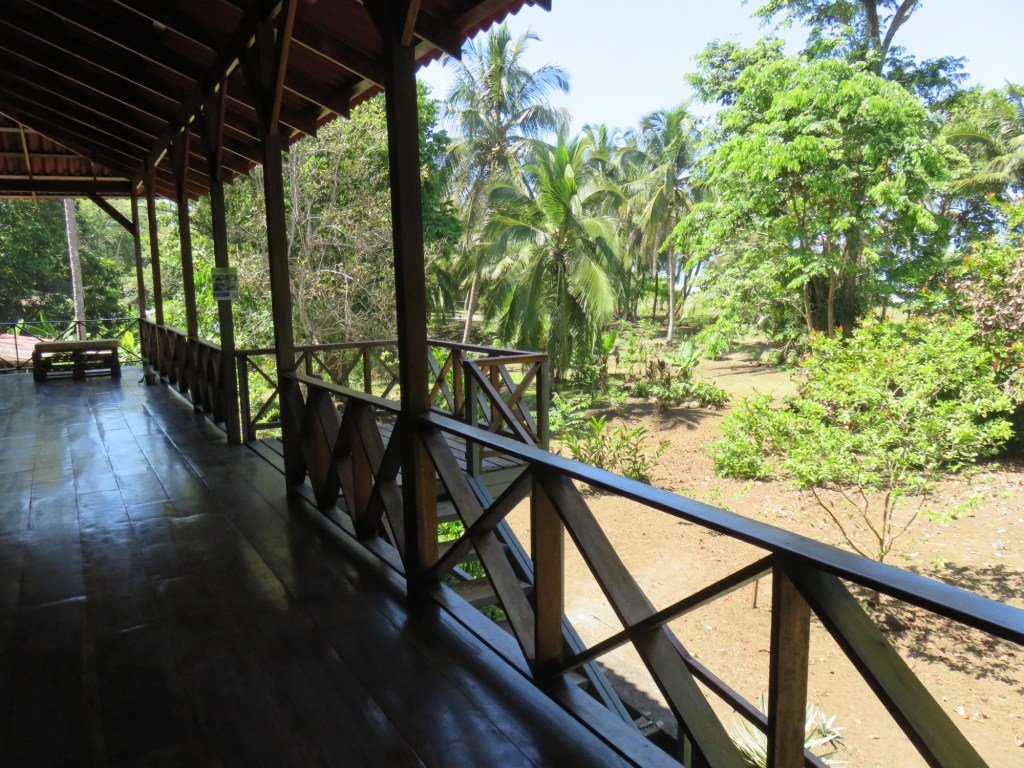
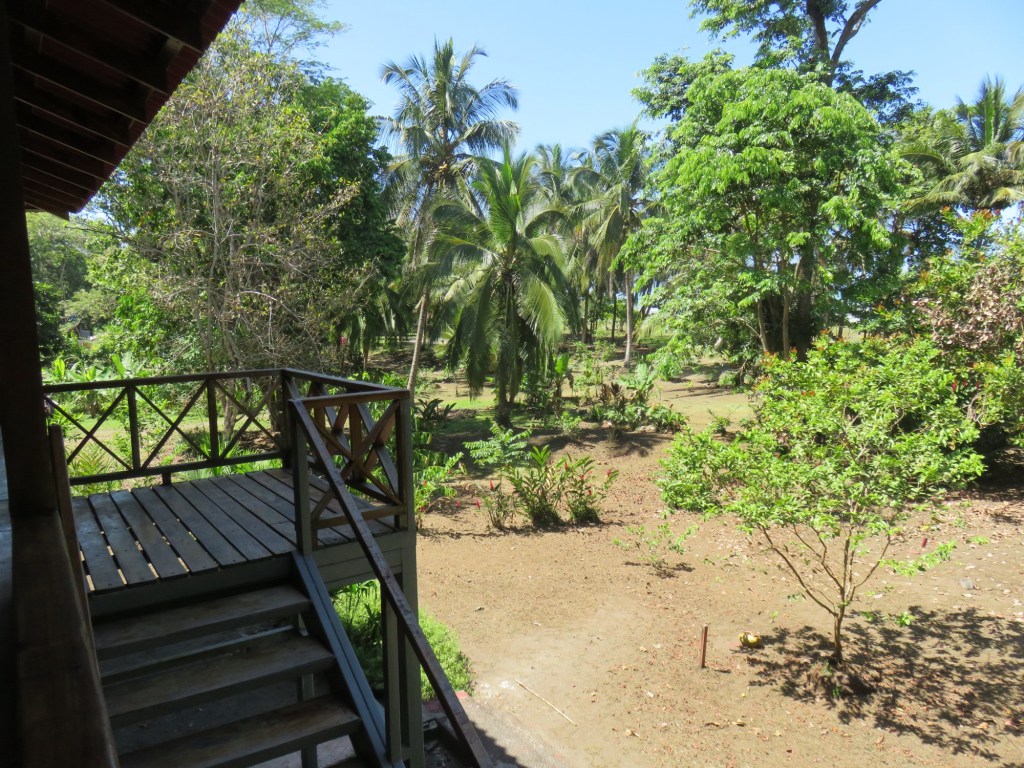
Eder showed us around a little and explained some basics about the grounds. It’s totally solar powered, therefore electricity is very limited, and wifi is only available around the dining building, “el comedor” in Spanish, but not in our room. We also can’t charge anything in our room. We have to use a communal device charging area near the office. There are scientists studying the leatherback turtle and other animals here, plus scientific assistants who are young men and women, plus groups of high school students passing through, plus a few employees. We ate lunch with all of them at 12pm, cafeteria style. Everyone had to bus and wash their own dishes afterwards.
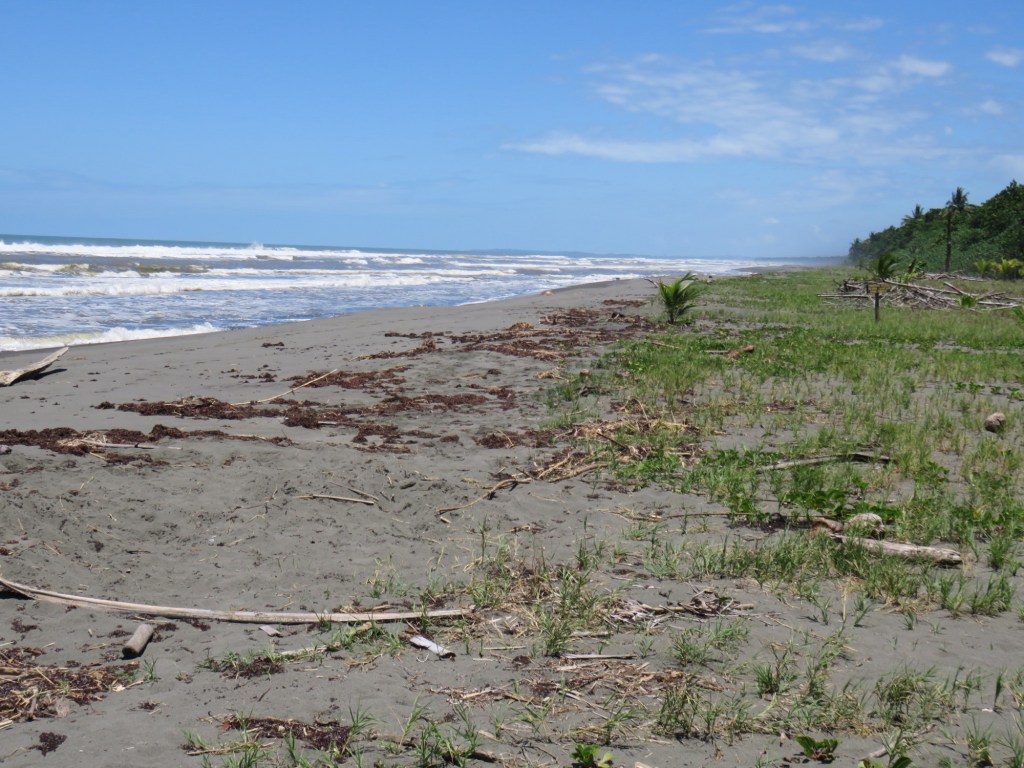
We got an orientation and history briefing from Angel, an English speaking Costa Rican staff member, and then another briefing on the leatherback nest moving work that the scientific assistants are doing each night by Mollie, an American assistant working here for a few months from Montana.
Because this is one of the few nesting sites for endangered leatherbacks, they try to move all the eggs from the nests as soon as they’re laid each night to protect them from predators and poachers. The eggs are moved to a hatchery on the beach, where they are reburied in the sand in a marked, gridded, covered and guarded area. Mollie showed us the hatchery and explained the process.
We ate dinner with everyone at 6pm, with the same cafeteria style service and washing our dishes afterwards. There aren’t any overhead lights outside on the grounds because the turtles are sensitive to light. We used our flashlight and headlamp to find our way back to the room. Even after dark, it’s hot and humid…probably more humid than during the day. There isn’t much of a breeze from the Caribbean.
We took showers after dinner to remove sweat, bug repellent and sunscreen. The water isn’t heated here, but warms up to tepid in the black plastic cisterns outside the Casa Grande. I thought the cool shower felt great.
At 9pm, which felt so late to us, we met Angel and a Spanish-speaking scientific assistant woman who would take us for a walk along the beach to look for nesting leatherbacks. It was a hot and humid walk, following in the tracks of the assistant while she scanned the dark beach, lit only by the moon and her red light, looking for turtles. We could barely see anything except the moon and the very bright, beautiful stars. Then, after walking 1.4 kilometers, she spotted a turtle just digging her nest in the dry sand at the top of the beach. The turtle was huge: about 4.5 feet long and nearly 3 feet wide. Her back reflected the moonlight a little.
When the turtle finally had dug deep enough, she started laying her eggs. The assistant was there to catch them in a plastic bag, about 85 of them. Angel recorded measurement data from the assistant as the turtle covered up the now-empty nest. Then she returned to the sea. The whole process took about 90 minutes and Stephanie and I watched all of it, an amazing process. Then we walked back to our room with Angel, while the assistant took the eggs to the hatchery area. We showered again, because we had sweated through our clothes, then went to bed about midnight.
 Lori's Travels